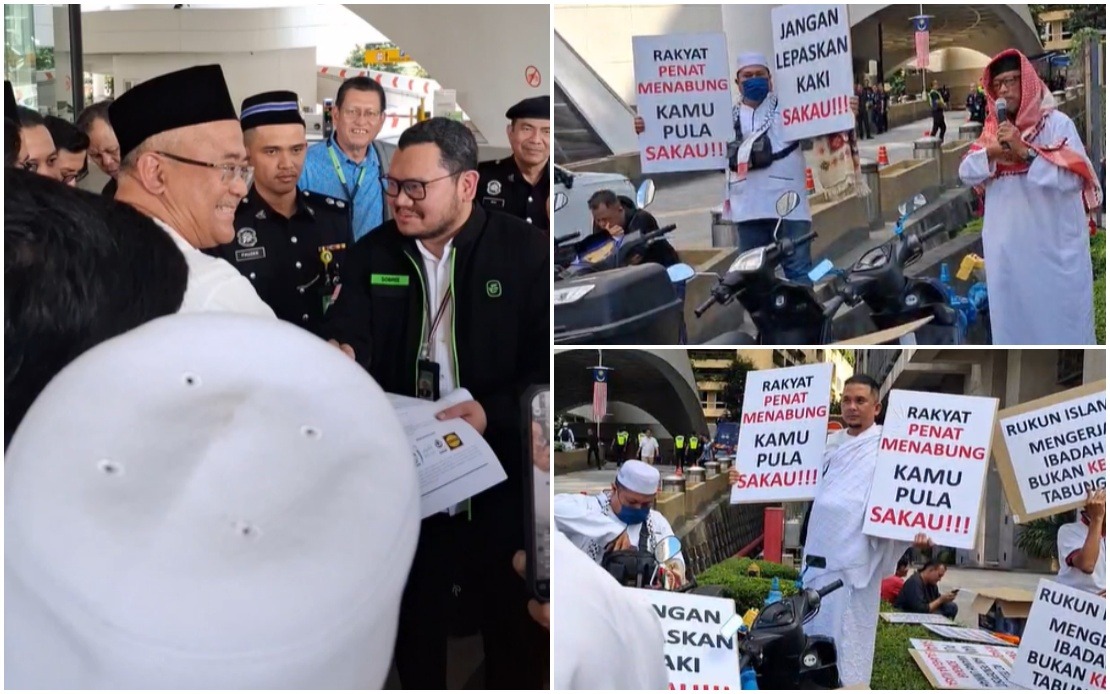
The Royal Commission of Inquiry into Lembaga Tabung Haji's management has set the stage for a critical test of Malaysia's institutional independence and anti-corruption resolve. Speaking at a solidarity gathering in Kuala Lumpur, Daie MADANI chairman Amir Zuhair Abdull Khalid articulated a straightforward expectation: investigations stemming from the RCI's findings covering the 2014 to 2020 period must proceed with full transparency and without political meddling of any kind.
The urgency of this message reflects deeper anxieties within Malaysia's Muslim community about the stewardship of Tabung Haji's finances. As a savings institution managing funds for millions of Muslim depositors, particularly those performing the Hajj pilgrimage, breaches of trust carry moral and spiritual weight beyond conventional financial scandals. This dimension transforms the RCI investigation from a routine governance matter into a test of institutional values and public confidence in financial stewardship.
Amir Zuhair's call for non-interference specifically invoked the Prime Minister's commitment to action while simultaneously cautioning against the kind of political involvement that could undermine investigative credibility. His reference to the Malaysian Anti-Corruption Commission highlighted the importance of allowing professional law enforcement agencies autonomy in their work. The distinction between supporting accountability and allowing proper processes to function represents a careful navigation of Malaysia's political landscape, where accusations of selective prosecution and political influence in enforcement have periodically surfaced.
The RCI report itself identified troubling patterns within Tabung Haji's governance structure during the seven-year review period. Among the concerns documented were suggestions of political interference in key decisions, particularly regarding the appointment of board members. Such institutional capture—where political considerations override professional competence in staffing crucial positions—undermines the effectiveness of organizations responsible for safeguarding public resources. For Malaysian stakeholders already concerned about governance quality, these findings validate long-standing worries about how political patronage networks can compromise organizational independence.
A coalition comprising the Malaysian Islamic Movement Coalition (HIKAM) and affiliated non-governmental organizations has moved beyond general calls for accountability to advance a concrete agenda. Their ten-point submission encompasses not merely investigation and prosecution but comprehensive remedial action: recovery of identified losses and assets, full implementation of the RCI's reform recommendations, and sustained governance restructuring. This holistic approach recognizes that investigations without systemic reform risk repeating cycles of institutional failure.
The membership of HIKAM—including WADAH, IKRAM, HALUAN, and ABIM—represents significant constituencies within Malaysia's Islamic civil society. Their collective intervention signals that religious community organizations view this matter through the lens of fiduciary responsibility and ethical stewardship. This mobilization reflects a broader pattern in Muslim-majority societies where Islamic organizations increasingly assert oversight functions regarding institutions bearing religious significance. For Malaysian governance, this represents both accountability pressure and an opportunity to strengthen institutional legitimacy through community engagement.
Amir Zuhair's legal reasoning proved equally important as his political exhortations. He emphasized that determinations of guilt cannot be made through public speculation or political assertion but only through proper investigation followed by court proceedings. Individuals facing potential charges, he acknowledged, will naturally maintain innocence until proven otherwise. This insistence on due process, even while calling for accountability, underscores a commitment to rule-of-law principles that Malaysian institutions depend upon for their legitimacy. Without such distinctions, investigations risk becoming instruments of political score-settling rather than justice.
The timing of these demands carries significance within Malaysia's current political moment. The MADANI government has staked considerable credibility on anti-corruption initiatives and institutional reform. The Tabung Haji investigation represents an early test case where campaign promises encounter practical complications: delivering meaningful accountability without appearing to engage in selective prosecution or political vengeance. International observers monitoring Malaysia's governance improvements will scrutinize whether the RCI leads to substantive change or becomes absorbed into Malaysia's occasionally opaque political settlements.
For ordinary Malaysians with funds deposited in Tabung Haji, the investigation's outcome carries immediate practical consequences. Recovered assets translate into potential restitution or preserved savings. Governance reforms influence the security of future deposits. This direct connection between institutional investigation and household financial security differentiates this case from abstract anti-corruption initiatives. The millions of Tabung Haji depositors represent a powerful constituency with vested interests in seeing investigations proceed seriously rather than theatrically.
The regional dimension merits consideration as well. Across Southeast Asia, savings institutions and pilgrimage funds serve crucial financial roles within Muslim communities. How Malaysia handles this investigation potentially influences expectations in neighboring countries regarding institutional accountability and religious organization governance. A Malaysia that demonstrates serious, transparent responses to institutional failures sends signals about regional governance standards. Conversely, investigations that falter or become compromised by political considerations reinforce skepticism about enforcement capacity across the region.
Amir Zuhair's call for pressure against the investigation process to cease reflects awareness that investigations of this magnitude attract various stakeholders with competing interests. Some actors might hope to slow proceedings, suppress findings, or negotiate settlements outside public view. By explicitly demanding that authorities resist such pressure, MADANI coalition leaders seek to build a protective barrier around the investigative process. Whether such calls prove sufficient depends ultimately on institutional resilience and political commitment.
The RCI report itself represents substantial institutional work: examining seven years of complex financial transactions, governance decisions, and personnel matters. Translating these findings into prosecutions requires additional investigative work by enforcement agencies, evidence gathering, legal analysis, and case construction. Amir Zuhair's exhortation to allow the investigation to proceed and continue acknowledges this extended timeline while insisting that momentum be maintained. In Malaysian governance contexts where bureaucratic delays sometimes serve as informal obstruction mechanisms, such reminders of the need for sustained urgency carry practical importance.
Ultimately, the Tabung Haji investigation stands at a crossroads common to many post-election transitions in developing democracies. New governments enter office promising reform and accountability, while inheriting institutional legacies created under previous administrations. How Malaysia navigates this particular test—whether investigations proceed transparently, whether findings lead to proportionate consequences, whether reforms actually take root—will shape public confidence in institutional independence and anti-corruption capacity for years ahead.

