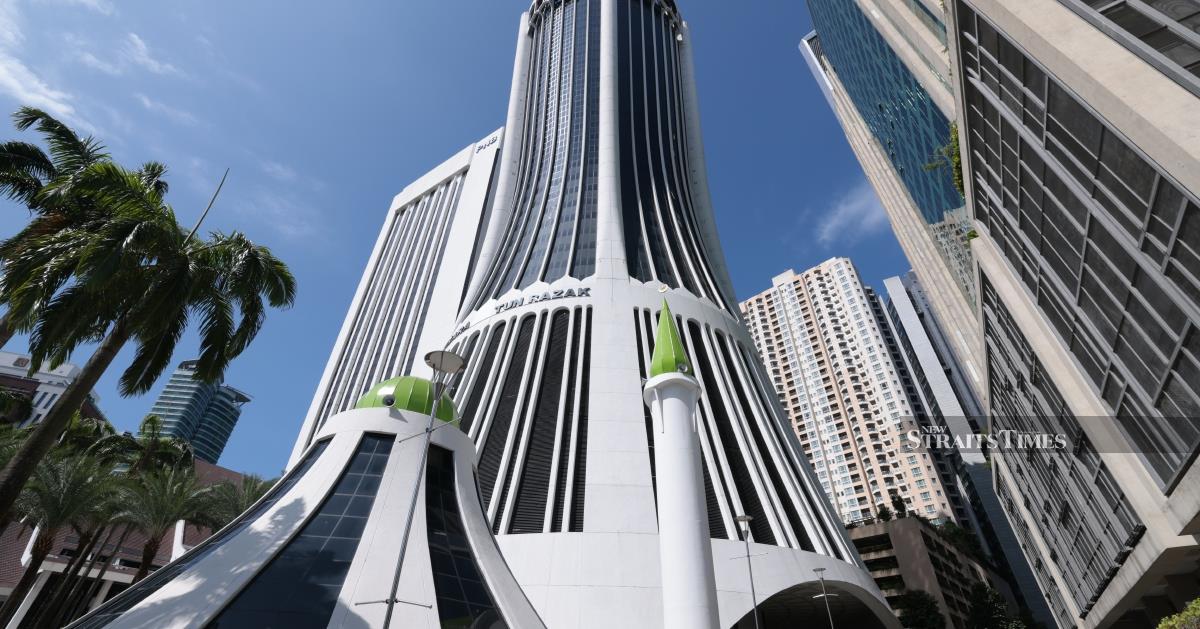
Prime Minister Anwar Ibrahim has clarified that investigations into Lembaga Tabung Haji, the Islamic pilgrimage savings institution, can extend considerably beyond the parameters originally set by the Royal Commission of Inquiry, potentially encompassing events and developments that occurred as recently as 2025. The statement offers significant latitude to investigators and signals a commitment to examining the full scope of issues that have affected the pilgrim-focused financial body, rather than adhering strictly to the historical boundary established by the RCI's initial mandate.
The Lembaga Tabung Haji has faced considerable scrutiny in recent years over governance concerns, financial management practices, and its overall institutional effectiveness. The Royal Commission of Inquiry was established to investigate historical matters related to the organisation, but the Prime Minister's remarks suggest authorities intend a more comprehensive examination than the original RCI remit would typically allow. This broader investigative approach reflects mounting public concern about the state of the institution and its ability to manage the savings and pilgrimage arrangements of Malaysian Muslims.
Anwar's clarification is particularly significant given Malaysia's historical approach to state institutions and corporate governance. The flexibility to investigate beyond initially-defined timeframes demonstrates a willingness to pursue accountability wherever evidence leads, rather than constraining scrutiny within predetermined temporal boundaries. This approach has implications for how similar institutions might be examined in future, setting a precedent that investigations into public bodies need not be artificially limited by initial RCI scope.
The expansion of investigative authority is likely to encompass more recent management decisions, appointment processes, and financial transactions involving Tabung Haji. Events occurring closer to 2025 would fall outside the traditional RCI period but within the expanded investigative mandate. This allows authorities to examine whether historical problems identified in earlier inquiries have been adequately addressed or whether new governance failures have emerged during the transition period following the RCI's initial conclusions.
For Malaysian Muslims who contribute to Tabung Haji as a mandatory savings mechanism for pilgrimage, the broader investigation offers potential reassurance that all significant concerns about fund management will receive proper examination. However, it also underscores the extent of institutional challenges that have necessitated extended investigation, suggesting problems may be more systemic or prolonged than initially apparent. Contributors have legitimate interests in understanding precisely how their accumulated savings have been managed and invested.
The decision to permit investigations beyond the RCI scope also addresses practical limitations inherent in time-bounded inquiries. Problems identified during an initial investigation often reveal the need to examine subsequent periods to determine whether corrective measures proved effective. Allowing investigators to track developments through 2025 enables a more complete narrative of institutional response and remediation efforts, rather than leaving a factual gap that could obscure whether systemic issues were genuinely resolved.
Tabung Haji's significance extends beyond financial considerations. The institution holds symbolic importance in Malaysia's Islamic governance framework and in the relationship between the state and Muslim citizens. The willingness to investigate comprehensively sends a message about institutional accountability and demonstrates commitment to examining religious institutions with the same rigour applied to secular bodies. This principle is particularly important in a multiethnic, multi-faith democracy where perceptions of unequal scrutiny can undermine institutional trust.
The Prime Minister's statement also reflects evolving standards of governance oversight in Malaysia. The ability to expand investigative scope acknowledges that rigid institutional boundaries can sometimes impede thorough examination of complex organisational failures. This flexibility, if applied consistently, could improve the effectiveness of future inquiries by permitting investigators to follow evidence and developments rather than stopping at predetermined dates. However, such expanded authority requires robust safeguards against politicised investigations or scope creep that strays from legitimate oversight.
For Tabung Haji employees and management, the extended investigation timeline creates prolonged uncertainty regarding potential findings and consequences. Investigation extending through 2025 means institutional personnel could face scrutiny of their actions over an unusually lengthy period, though presumably only where legitimate governance concerns exist. This environment may affect institutional morale and the ability to recruit capable management, though improved accountability standards may eventually strengthen the institution's capacity to attract leaders committed to proper governance.
The implications for Malaysia's broader institutional oversight framework are noteworthy. Other government-linked companies and state institutions may face similar expansions of investigative scope in future inquiries, particularly where historical concerns suggest patterns of recurring problems. This could represent either enhanced accountability or potential vulnerability to politically-motivated extended investigations, depending on how the authority is exercised and overseen by relevant bodies.
Regionally, Malaysia's approach to investigating major institutional failures receives attention from observers across Southeast Asia, particularly regarding how religious institutions and government-linked bodies are held accountable. The decision to permit investigation beyond standard RCI parameters demonstrates confidence in investigative processes and willingness to pursue thorough examination even when it requires extending beyond conventional limits. This contrasts with approaches in some neighbouring jurisdictions where institutional investigations may be curtailed for political or social stability reasons.
Moving forward, the effectiveness of extended Tabung Haji investigations will depend considerably on investigative quality, institutional cooperation, and credibility of eventual findings. The expanded scope provides authorities opportunity for comprehensive examination but simultaneously raises expectations for thorough, evidence-based conclusions. Malaysian Muslims and the broader public will assess whether extended investigation ultimately produces meaningful accountability and institutional reform, or whether the expanded mandate results merely in prolonged processes without substantive outcomes.

