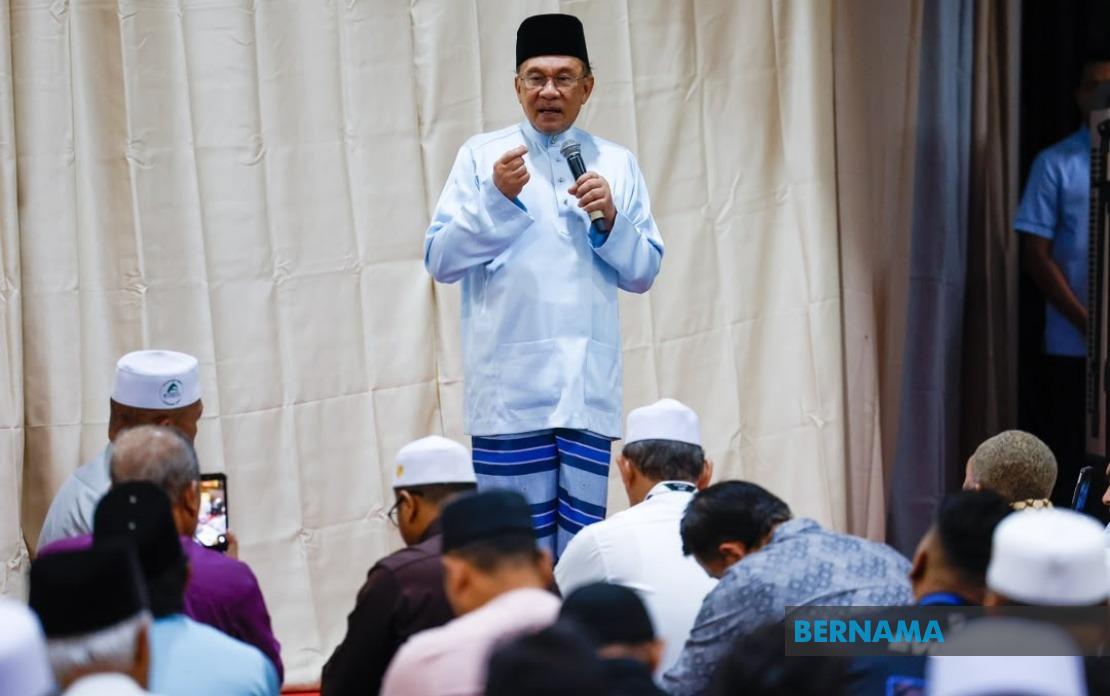
Prime Minister Datuk Seri Anwar Ibrahim has defended the disclosure of the Royal Commission of Inquiry report on Lembaga Tabung Haji as a necessary step to protect the financial interests of millions of Malaysian Muslims, rejecting suggestions that the move constitutes political point-scoring. Speaking at a community gathering in Port Dickson, Anwar emphasized that the decision reflects a fundamental obligation of governance rather than partisan advantage.
The RCI inquiry uncovered significant governance failures at the pilgrimage fund, most notably the manner in which critical warnings from Bank Negara Malaysia were handled over successive years. The central bank had raised concerns about TH's financial stability in both 2014 and 2017, yet these red flags did not prompt timely or adequate corrective measures from the institution's leadership. The revelation that years passed without appropriate action on such serious regulatory warnings represents a troubling gap in oversight and accountability.
Anwar, who concurrently holds the position of Finance Minister, stressed that the inquiry itself was not initiated by his current administration, thereby attempting to remove the decision from accusations of partisan motivation. By establishing this temporal distinction, he sought to frame the report's release as an obligation flowing from an independent investigative process rather than as a tool designed to embarrass previous administrations. This approach reflects the sensitive political terrain surrounding state-owned institutions, where accusations of using official bodies for political purposes can rapidly escalate.
The significance of the TH scandal extends beyond internal governance concerns, touching on the broader question of how retirement and savings vehicles for Muslim communities are managed. Tabung Haji serves as a dedicated savings and investment fund specifically designed for Malaysian Muslims preparing for the hajj pilgrimage, combining religious obligation with financial planning. When such an institution experiences financial stress due to management lapses, it directly impacts millions of ordinary Malaysians who have entrusted their savings to the fund, making the issue fundamentally about consumer protection rather than abstract fiscal policy.
The planned parliamentary debate on August 11 represents an attempt to institutionalize transparency around the RCI findings, allowing elected representatives from all political parties to examine the evidence and implications before the general public and media. By opening the discussion to the full legislature rather than restricting it to government statements, the administration signaled its willingness to subject the findings to rigorous scrutiny and cross-examination. This approach potentially strengthens the credibility of any corrective actions that follow, as they would emerge from a broader consensus rather than unilateral government direction.
For Southeast Asian observers and investors watching Malaysian governance standards, the handling of the Tabung Haji situation offers insights into institutional accountability mechanisms. The existence of a formal inquiry mechanism and parliamentary debate platform, despite the political sensitivities involved, demonstrates institutional resilience and a commitment to due process. However, the years-long delay between Bank Negara's initial warnings in 2014 and the eventual public disclosure also highlights potential weaknesses in the speed and effectiveness of regulatory intervention.
The political context surrounding this disclosure carries particular weight given Malaysia's recent political volatility and coalition shifts. Multiple administrations and finance ministers have served since the concerns first emerged in 2014, meaning responsibility for inaction is dispersed across competing political camps. This complexity may actually facilitate the current government's willingness to publicize the findings, as blame cannot be concentrated solely on the current leadership, though it certainly touches various predecessors.
Trust in financial institutions represents a cornerstone of economic stability, and damage to confidence in dedicated savings vehicles creates ripple effects throughout the financial system. When depositors lose faith in management competence or feel their savings were exposed to unnecessary risk due to neglected warnings, they become more cautious about committing funds to similar schemes. The Tabung Haji situation thus carries implications beyond the fund itself, potentially influencing how Muslims approach retirement planning and savings more broadly across the nation.
The government's approach to disclosure also reflects evolving standards around corporate accountability and public finance transparency. Rather than seeking to minimize or bury problematic findings, the stated position acknowledges that stakeholders and taxpayers deserve comprehensive information about institutional performance, even when that information is damaging. This represents a meaningful shift from historical practices in some ASEAN nations where unflattering official inquiries were often kept confidential or released only under extreme pressure.
Moving forward, the parliamentary debate and subsequent government responses will determine whether this episode strengthens public confidence through demonstrated accountability or merely provides a cathartic public moment without substantive institutional reform. The litmus test will involve concrete measures addressing the identified governance gaps, including changes to board composition, enhanced regulatory oversight mechanisms, and restored financial stability measures. For the millions of Malaysian Muslim depositors whose savings remain exposed, the quality of implementation following the inquiry's public release will ultimately matter far more than the political rhetoric surrounding its disclosure.

