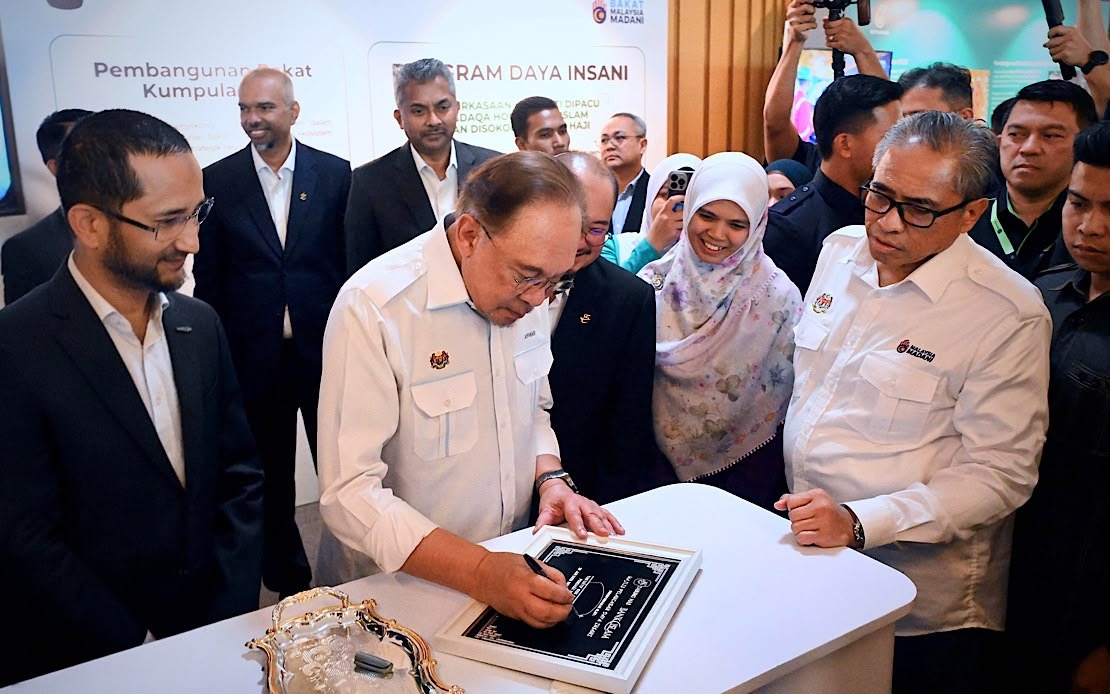
Tabung Haji (TH) and Bank Islam Malaysia Berhad have unveiled an ambitious initiative to transform the employment prospects of vulnerable youth in Malaysia. The DAYA INSANI programme, channelled through Bank Islam's social finance platform Sadaqa House, represents a RM1 million commitment to equip asnaf youth and orphans with marketable skills and direct pathways into employment. The scheme launched on Monday during Prime Minister Datuk Seri Anwar Ibrahim's unveiling of the broader MADANI Talent initiative in Sendayan, Negeri Sembilan, positioning this effort within the government's wider framework for human capital development.
The programme addresses a critical gap in Malaysia's social infrastructure by bridging the distance between disadvantaged young people and sustainable economic opportunities. Rather than offering temporary assistance, DAYA INSANI combines three interconnected components: specialised vocational and professional training, structured exposure to industry environments, and guaranteed placement support with pre-identified employers. This integrated approach acknowledges that skills acquisition alone is insufficient without industry connections and employment pathways—a reality that often leaves even trained candidates struggling to secure work.
TH Group Managing Director Mustakim Mohamad framed the initiative within the Islamic perspective on economic empowerment, articulating that long-term investment in human capital represents the most sustainable form of charitable work. His statement reflects a philosophical shift in how Islamic financial institutions approach social responsibility, moving beyond conventional welfare toward productive capacity-building. This resonates with Malaysia's broader policy environment, where successive governments have recognised that breaking cycles of poverty requires upgrading skills and income-earning potential rather than perpetual dependence on assistance.
The programme's partnership structure demonstrates sophisticated programme design. Collaboration with Kulim Hi-Tech Park Skills Centre targets technical manufacturing roles, addressing labour shortages in semiconductor and advanced manufacturing sectors that offer competitive wages. Simultaneously, partnerships with Kolej Universiti Bestari and Kumpulan Medic Iman for nursing training recognise healthcare's critical personnel needs—Malaysia faces persistent shortages in nursing staff, making this a sector where trained asnaf graduates can immediately contribute to national health infrastructure. The involvement of Malaysian Professional Accountancy Centre and INCEIF University adds a professional services dimension, acknowledging that financial and accounting expertise attracts premium employment.
Showme Education's inclusion for therapist training reflects emerging recognition of mental health and wellness services as growth sectors in Malaysia and regionally. These carefully curated partnerships suggest DAYA INSANI operates on labour market intelligence rather than arbitrary training selection, increasing the probability that graduates will secure sustained employment rather than temporary positions.
Existing pilot initiatives within this ecosystem demonstrate early promise. The nursing diploma programme begun in 2024 has enrolled 19 students with at least one graduate already employed, providing tangible proof of concept. A technical training cohort at Kulim Hi-Tech Park launched in June with 13 participants, with ambitious plans to scale to 100 participants. These numbers, while modest, represent foundational evidence that asnaf youth respond positively to structured opportunity when offered genuine skill development and employment prospects.
Bank Islam CEO Raja Datin Paduka Teh Maimunah Raja Abdul Aziz positioned the initiative within the bank's broader social finance philosophy, emphasising that providing access and appropriate support unlocks potential across demographics traditionally underserved by conventional financial institutions. This framing aligns Bank Islam's commercial interests with genuine community benefit—employed individuals generate tax revenue, reduce welfare dependency, and become consumers of financial products and services.
The programme's open fundraising model invites contributions from corporate entities, institutions, and individuals, potentially transforming it from a two-organisation initiative into a broader ecosystem commitment. This crowdfunding approach resembles successful models internationally where multiple stakeholders co-invest in social outcomes. For Malaysian companies facing skilled labour shortages, participating corporations gain workforce pipeline benefits while contributing to social objectives. The tax treatment of contributions would likely enhance appeal for eligible donors.
The regional context amplifies DAYA INSANI's significance. Southeast Asia faces demographic challenges where youth employment and skills gaps persist despite economic growth. Malaysia's position as a middle-income nation with aspirations toward developed-country status requires not leaving cohorts behind—asnaf populations, if systematically upskilled, represent additional human capital for economic expansion. Conversely, their continued marginalisation generates social costs through underemployment, crime, and intergenerational poverty transmission.
Alignment with the MADANI Talent initiative signals government commitment to embedding social inclusion within mainstream talent development rather than treating it as separate charitable concern. This institutional integration—where major government-linked companies like TH collaborate with Islamic finance on coordinated programming within broader national talent frameworks—suggests systematic rather than ad-hoc approach.
The RM1 million seed funding, while substantial for programme launch, will require continued resource mobilisation to achieve stated ambitions of benefiting over 100 youth initially and potentially scaling further. Success will depend on sustained employment outcomes, not merely training completion. Measuring whether graduates achieve stable income progression, advance within organisations, and transition from asnaf status represents the genuine accountability metric for this initiative.
For Malaysian readers, DAYA INSANI exemplifies how Islamic social finance principles can address structural economic inequalities when combined with genuine skills development and employer engagement. The initiative's success could provide replicable model for other Malaysian states and regional neighbours grappling with similar challenges. Its underlying logic—that vulnerable youth require not charity but genuine opportunity, supported by institutions with credibility and resources—positions inclusive growth at the intersection of moral obligation and pragmatic economic development.

