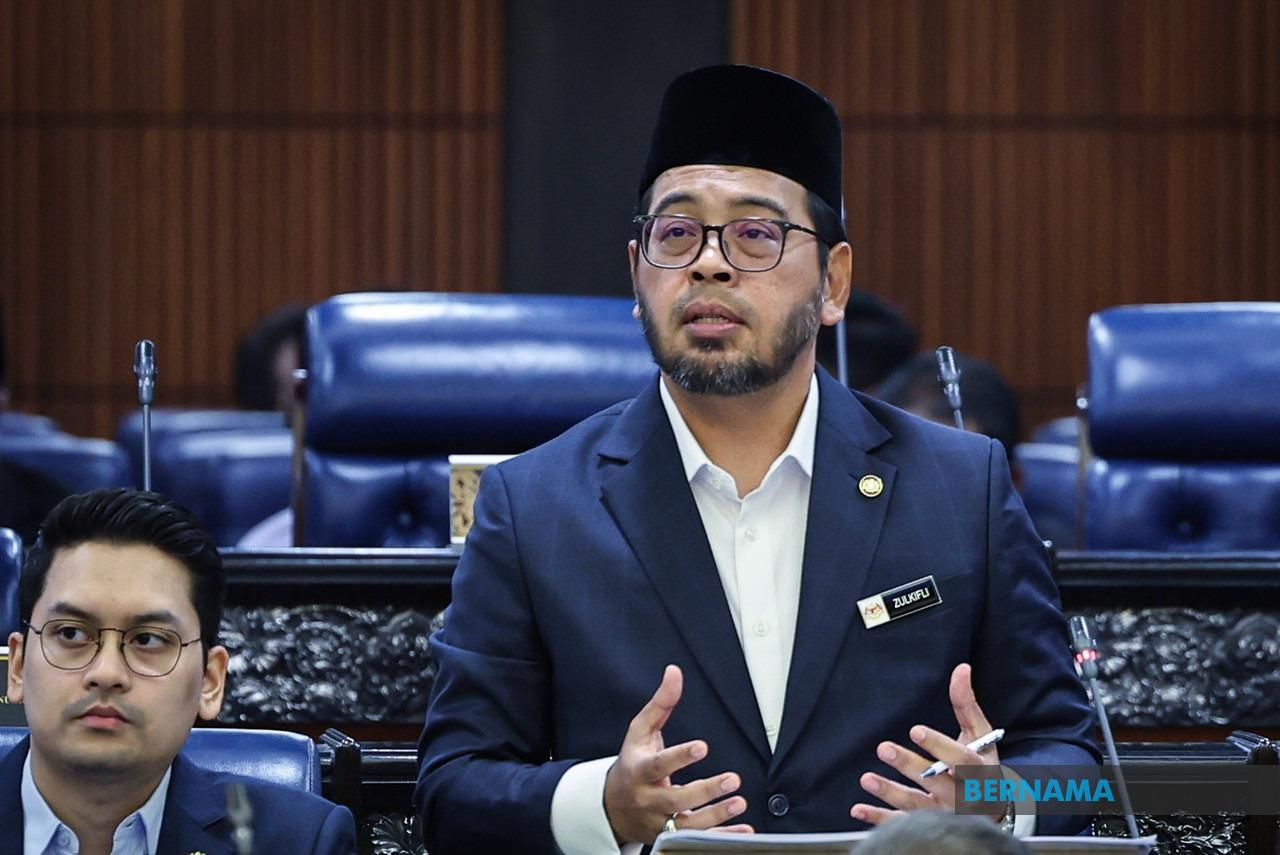
The Malaysian government is moving to tighten oversight of Tabung Haji through comprehensive amendments to its governing legislation, aiming to prevent the governance and financial management lapses identified in a major public inquiry. Minister in the Prime Minister's Department (Religious Affairs) Dr Zulkifli Hasan outlined the reform package during a parliamentary sitting dedicated to scrutinising the Royal Commission of Inquiry report released in July, which examined TH's stewardship between 2014 and 2020.
The proposed legal changes will introduce explicit provisions covering approved accounting standards alongside clearly defined punishments for those responsible for inaccurate financial disclosures. These measures directly address specific gaps highlighted during the RCI investigation, which documented significant governance shortcomings during the seven-year review period. By embedding these requirements into the foundational statute rather than relying on administrative practice, the government aims to create enforceable legal obligations that bind current and future TH leadership.
A key institutional innovation involves establishing a supervisory framework that assigns different regulatory responsibilities to distinct authorities. A task force comprising the TH chairman, Bank Negara Malaysia governor, and Securities Commission chairman has already approved a division of labour whereby the Securities Commission would assume direct regulatory authority over TH's fund management and investment operations. Importantly, haj operations and pilgrim services would remain under the Religious Affairs Minister's jurisdiction, with TH continuing as a unified organisation rather than being split into separate entities. This hybrid model reflects recognition that while financial stewardship requires specialist securities market expertise, the spiritual and administrative dimensions of haj warrant retention within the religious affairs portfolio.
The compensation practices that attracted RCI criticism are being substantially revised. TH has already discontinued the practice of awarding disproportionately high bonuses to staff, replacing it with a restrained remuneration approach tied explicitly to overall institutional financial performance and individual achievement of measurable targets. Such bonus determinations now require formal sign-off from both the religious affairs and finance ministers, creating multiple approval checkpoints. This represents a significant departure from the previous system where discretionary bonuses could be awarded with limited external oversight.
Profit distribution methodology has similarly been overhauled to enhance transparency and reduce scope for manipulation. Since 2022, TH has been announcing dividend rates only after completion of comprehensive annual financial audits, rather than estimating distributions in advance. This timing ensures that announced returns reflect verified financial positions rather than projections that might subsequently prove inaccurate. Additionally, TH's financial statements have maintained full compliance with internationally recognised accounting standards since 2018, closing a historical gap where reporting quality had fallen short of best practice.
Board governance standards are undergoing fundamental restructuring in accordance with RCI recommendations. The amended legislation will incorporate explicit eligibility benchmarks and competency-based selection procedures for directors, marking a transition away from appointment processes that may have been influenced by political considerations or patronage. A particularly significant reform explicitly prohibits sitting politicians from serving as TH chairman or board members, preventing potential conflicts of interest between partisan political obligations and fiduciary duties to beneficiaries. These provisions will align TH's board composition standards with those developed by Bank Negara Malaysia, ensuring consistency with central banking sector governance norms.
Zulkifli emphasised that leadership selection across TH has been recalibrated around the "fit and proper" framework that Bank Negara applies to financial institutions, prioritising integrity, technical capability, and professional experience. This approach explicitly acknowledges that Malaysia possesses numerous accomplished technocrats and individuals of demonstrated probity who can effectively manage a complex hybrid institution without reliance on political figures. The shift represents a recognition that fiduciary institutions require boards composed primarily of technically qualified professionals rather than political appointees, notwithstanding the government's ultimate ownership interest.
The government's decision to release the 211-page RCI report to the public in July—rather than keeping it confidential—signals commitment to transparency and accountability. By allowing parliamentary debate in a dedicated sitting, legislators can directly examine the inquiry's findings and government responses rather than relying on selective official summaries. This openness contrasts with historical tendencies to restrict access to sensitive government reports, suggesting a recalibration toward greater public oversight of state-linked institutions, particularly those managing significant sums of Muslim Malaysians' savings.
For Malaysian investors and haj intending pilgrims, these reforms address longstanding governance uncertainties that have periodically surfaced. TH manages billions of ringgit in savings alongside its core haj and umrah facilitation role, making financial soundness essential to both its commercial viability and its capacity to serve pilgrims reliably. The RCI inquiry had documented instances where financial management practices fell short of contemporary standards, creating reputational damage and investor anxiety about the safety of deposited funds. Strengthened legal frameworks and enhanced regulatory oversight should provide greater assurance that similar issues will be detected and corrected more rapidly in future.
The reform agenda also reflects broader regional trends toward enhanced financial institution governance. Across Southeast Asia, regulators and governments have progressively tightened requirements for fund management entities, investment disclosures, and board composition following various financial crises and corporate failures. TH's legislative upgrade aligns Malaysian practice with these international governance currents, potentially improving the institution's standing among international Islamic finance participants and rating agencies that evaluate institutional resilience.
The involvement of Bank Negara and the Securities Commission in oversighting TH's investment operations creates institutional firewalls that were previously absent. Rather than TH operating largely autonomously with oversight limited to the religious affairs ministry, dual regulatory engagement ensures that financial management benchmarks maintained across Malaysia's banking and securities sectors will apply equally to pilgrim fund operations. This integration into the broader financial regulatory architecture represents perhaps the most significant structural change emerging from the RCI inquiry's recommendations.
Implementation timelines for legislative amendments remain to be specified, though Zulkifli and Finance Minister II Datuk Seri Amir Hamzah Azizan were scheduled to conclude parliamentary debates, providing opportunity for detailed discussion of implementation sequencing and transition provisions. The breadth of recommended changes suggests amendments will proceed incrementally rather than through a single omnibus bill, though the government appears committed to embedding core reforms into statute law relatively promptly to restore stakeholder confidence in the institution.

