Terengganu's anti-drug authorities have achieved a notable milestone in combating substance abuse, with the state's National Anti-Drug Agency (AADK) reporting that nearly 5,640 individuals out of 6,000 enrolled participants have successfully completed rehabilitation programmes over the past 14 years. The sustained success rate underscores a shift in Malaysia's approach to drug dependency from purely enforcement-oriented strategies towards integrated treatment and community-centred recovery models that allow individuals to maintain their professional and personal lives while undergoing rehabilitation.
According to Ruzlin Hafinaz Redzuan, the assistant director of Treatment and Rehabilitation at Terengganu AADK, the agency's programmes employ a flexible, individualised methodology designed to accommodate the diverse circumstances and needs of participants. Rather than enforcing institutional confinement or rigid treatment schedules, the rehabilitation framework enables individuals to continue their employment, education, and family responsibilities whilst receiving structured therapeutic intervention. This pragmatic approach recognises that many drug dependants are functional members of society whose contributions to their families and workplaces remain valuable, and whose successful reintegration depends partly on maintaining these anchoring relationships and routines.
The demographic profile of those seeking treatment reveals important insights into Terengganu's substance abuse patterns. The majority of participants are aged between 35 and 50 years, suggesting that the state's rehabilitation efforts are effectively engaging middle-aged and mature adults rather than concentrating exclusively on younger populations. This age distribution may reflect delayed intervention—where individuals finally seek help after years of addiction—or it could indicate that older cohorts face particular vulnerability to substance dependency. Understanding these patterns is critical for policymakers designing prevention and early intervention strategies.
The treatment pathway diverges significantly depending on the legal circumstances of the participant. Those placed under court-mandated programmes must remain under community supervision for between two and three years, with regular monitoring to ensure compliance and sustained recovery. This extended timeline reflects the judiciary's assessment that court-ordered cases typically involve more severe addiction or individuals whose usage patterns necessitate prolonged oversight. In contrast, voluntary participants—those who independently recognise their substance dependency and seek help without legal compulsion—commit to a minimum six-month treatment duration without facing criminal penalties or legal consequences.
The distinction between court-ordered and voluntary rehabilitation participants has profound implications for Malaysia's broader drug policy. By offering non-punitive pathways for those who voluntarily seek treatment, Terengganu's programme reduces the stigma associated with addiction disclosure and encourages early intervention before substance abuse escalates to criminal involvement. This harm-reduction philosophy aligns with international best practices and contrasts sharply with countries maintaining strict criminal penalties that deter individuals from seeking treatment due to fear of prosecution. For Malaysia, a nation with historically stringent drug laws, this voluntary component represents meaningful policy evolution.
Voluntary clients undergo scheduled treatment sessions that remain flexible enough to accommodate work and educational commitments, though defaulting on these appointments triggers proactive follow-up by AADK officers. This monitoring mechanism balances autonomy with accountability—participants retain the freedom to structure their daily lives independently, yet the agency maintains continuous engagement to prevent treatment dropout and relapse. When individuals miss appointments, rather than imposing legal sanctions, officers conduct welfare checks and reconnection efforts, demonstrating that accountability can coexist with supportive, non-punitive responses.
The duration of rehabilitation varies considerably based on the severity of each individual's addiction and the specific substances involved. Some participants require briefer interventions focusing on harmful-use patterns, whilst others battling deep-seated dependencies necessitate longer-term engagement. This individualized calibration of treatment length reflects clinical understanding that addiction exists along a spectrum, and uniform programme lengths would inevitably under-serve those with severe dependencies whilst potentially over-treating milder cases. Terengganu's flexible approach thus represents evidence-based practice adapting to patient complexity.
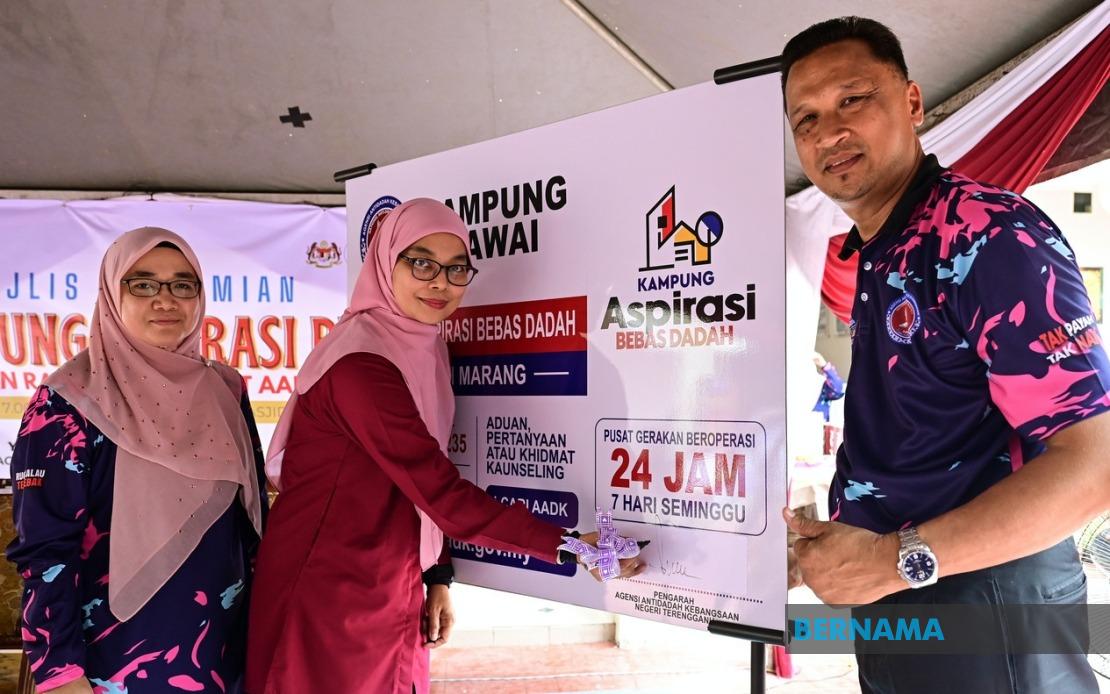
More recently, the agency has expanded its community engagement through the Kampung Aspirasi Bebas Dadah (Drug-Free Village Aspirations) programme, or KABD. Kampung Rawai, a settlement of approximately 3,600 residents in Marang district, has been selected as the second village in Terengganu to participate in this 2026 initiative. The selection criteria emphasise community commitment and local leadership capacity, recognising that sustainable drug prevention requires grass-roots ownership and collective responsibility rather than top-down institutional mandates alone.
The KABD framework represents a strategic shift towards preventive community action and structural resilience-building. By partnering with non-governmental organisations, volunteer networks, and local leaders, the programme distributes anti-drug responsibility across multiple societal actors rather than concentrating it within government agencies. This democratisation of drug prevention work engages citizens as stakeholders in their community's health, transforming them from passive beneficiaries of state intervention into active agents addressing social problems. For villages like Kampung Rawai, such designation confers both opportunity and expectation—the opportunity to pioneer effective local models, and the expectation that community members will maintain vigilance against substance abuse.
Terengganu's rehabilitation achievements possess particular significance for Southeast Asia's broader narcotics landscape. The region faces persistent challenges with synthetic drug production and trafficking, particularly methamphetamine and fentanyl, and several nations struggle with limited treatment capacity and competing resource demands. Terengganu's 94 per cent success rate—if accurately measured and sustained—suggests that integrated community-based models can achieve outcomes rivalling or exceeding those in more affluent jurisdictions with greater per-capita healthcare spending. This model potentially offers valuable lessons for other Malaysian states and regional neighbours grappling with similar addiction epidemiology.
Implementing Terengganu's approach across Malaysia's thirteen states would require substantial investment in training treatment personnel, establishing community partnerships, and shifting public perceptions of drug dependency from criminality towards health-based frameworks. Current momentum within Terengganu suggests political will exists at the state level, yet national consolidation and replication demands federal coordination, adequate budgeting, and sustained commitment transcending electoral cycles. The journey from provincial success to nationwide systemic change remains incomplete.

