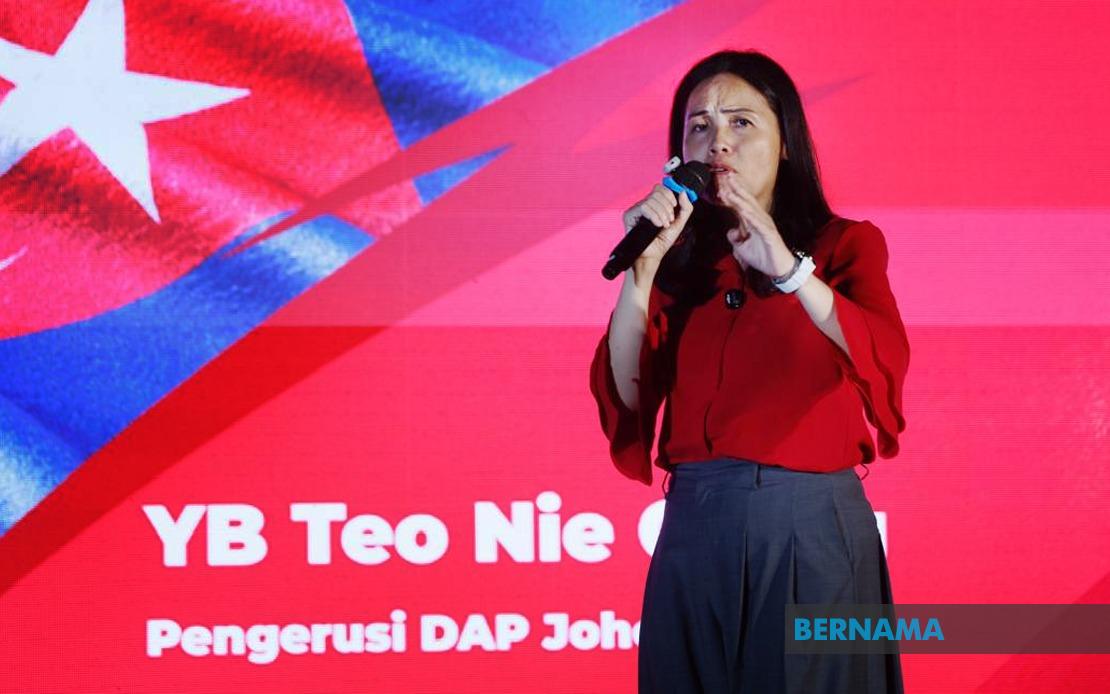
Johor DAP chairman Teo Nie Ching has raised pointed questions about the Johor state government's decision to establish appointed state assemblymen positions, questioning both the rationale and underlying intentions behind the controversial mechanism. Speaking at a Pakatan Harapan rally in Paloh on July 9, Teo, who serves as both National DAP Wanita chairman and Deputy Communications Minister, expressed substantive concerns that the appointment system could fundamentally compromise the transparency and integrity that democratic governance demands.
The core of Teo's criticism centres on the absence of voter accountability in the appointment process. Without candidates facing electoral scrutiny at the ballot box, she argued, the mechanism creates a troubling gap in the democratic chain of responsibility. This concern resonates within broader Southeast Asian discourse about safeguarding democratic institutions at a time when various nations grapple with balancing institutional efficiency against popular representation. For Malaysian voters contemplating their choices in Saturday's election, the appointment system represents a departure from the principle that all legislators should derive legitimacy directly from the electorate.
Teo's remarks also carried an implicit question about political motivations and potential quid pro quo arrangements. By pointedly noting that the Johor state government had received substantial support from PAS in the recent electoral campaign, she raised the possibility that appointments might reward coalition partners rather than serve the stated goal of strengthening the assembly's function. This line of questioning strikes at concerns about patronage politics and whether institutional reforms genuinely serve public interest or merely consolidate political power among ruling partners.
On May 7, the Johor State Legislative Assembly passed legislation amending the state enactment to permit the appointment of up to five state assemblymen. The state government framed this measure as a mechanism to enhance the assembly's composition and operational capacity. However, the amendment has generated debate within the opposition and among reform advocates about whether such appointments strengthen or dilute representative democracy. The tension reflects ongoing discussions across Malaysia about how to balance effective governance with genuine electoral representation.
Despite her criticism of the appointment system, Teo pivoted to defending the broader track record of the Unity Government, positioning systemic reforms as evidence of constructive change under the MADANI administration. She acknowledged the government's considerable shortcomings, notably stating that the Unity Government "scores" far below perfection, yet insisted that meaningful progress has been achieved in stages across critical policy areas. This balanced assessment attempts to distinguish between her opposition to specific institutional mechanisms and her broader support for the government's reform trajectory.
Educational policy featured prominently in Teo's enumeration of MADANI Government achievements. The guaranteed matriculation placement for all SPM students achieving 10A, irrespective of socioeconomic background, represents a significant equalising measure in Malaysia's education system. Previously, access to matriculation programmes remained constrained by limited places and competitive merit criteria that often disadvantaged rural and lower-income students. This reform directly addresses equity concerns that have long characterised Malaysian education debates.
Further educational gains include expanded access to programmes for Unified Examination Certificate holders, addressing longstanding grievances among Chinese independent school constituents who argued their students faced systemic disadvantages in higher education pathways. The allocation increase for Chinese independent schools to RM20.16 million annually, a rise from RM12 million in 2019, reflects tangible resource commitments to this sector. For Malaysian educationalists and parents weighing electoral choices, these measures demonstrate policy responsiveness to specific community concerns.
Teo framed these educational reforms as part of a broader vision of systemic transformation intended to benefit future generations. By characterising democracy as a "long-distance race," she implicitly argued that meaningful institutional change requires sustained commitment beyond single electoral cycles. This rhetorical framing invites voters to evaluate the government not on isolated policy moments but on trajectory and accumulated reform initiatives. For Southeast Asian observers, Malaysia's experience illustrates both the possibilities and challenges of implementing systemic education reforms within complex multiethnic democracies.
The Johor state election, scheduled for Saturday, will determine representation across 56 state constituencies among approximately 2.7 million eligible voters. This substantial electoral exercise occurs within the broader context of Malaysia's transition toward the Unity Government model, which has fundamentally reshaped coalition configurations and governance relationships. The Paloh constituency rally where Teo spoke featured prominent party figures including DAP National chairman Gobind Singh Deo and the PH candidate Dr Ruban Arumugam, underlining the election's significance for national political trajectories.
Teo's intervention illuminates a central tension in contemporary Malaysian politics between institutional innovation and democratic accountability. While state governments may argue that appointed positions strengthen administrative capacity or ensure minority representation, critics contend that such mechanisms erode the fundamental principle that legislators derive authority from voters. This debate extends beyond Johor, potentially influencing how other states balance institutional efficiency with representative democracy as they contemplate similar measures.
The appointment controversy also intersects with coalition dynamics within the Unity Government. The visible prominence of PAS support in Johor electoral calculations, combined with Teo's questioning about whom the appointed positions might benefit, underscores how institutional mechanisms can become entangled with intra-coalition power distribution. For Malaysian observers, this dynamic illustrates how structural reforms, while ostensibly technical, frequently carry profound political consequences for power distribution and coalition relationships.
Looking forward, the Johor election results may influence broader Malaysian discourse about appointed versus elected representation. Should Pakatan Harapan gain electoral momentum, pressure may intensify for reconsideration of the appointment mechanism. Conversely, if the measure proceeds without significant electoral backlash, other state governments may pursue similar institutional innovations. This election thus functions as a referendum not merely on local governance but on the acceptable balance between democratic legitimacy and institutional pragmatism within Malaysia's federal system.

