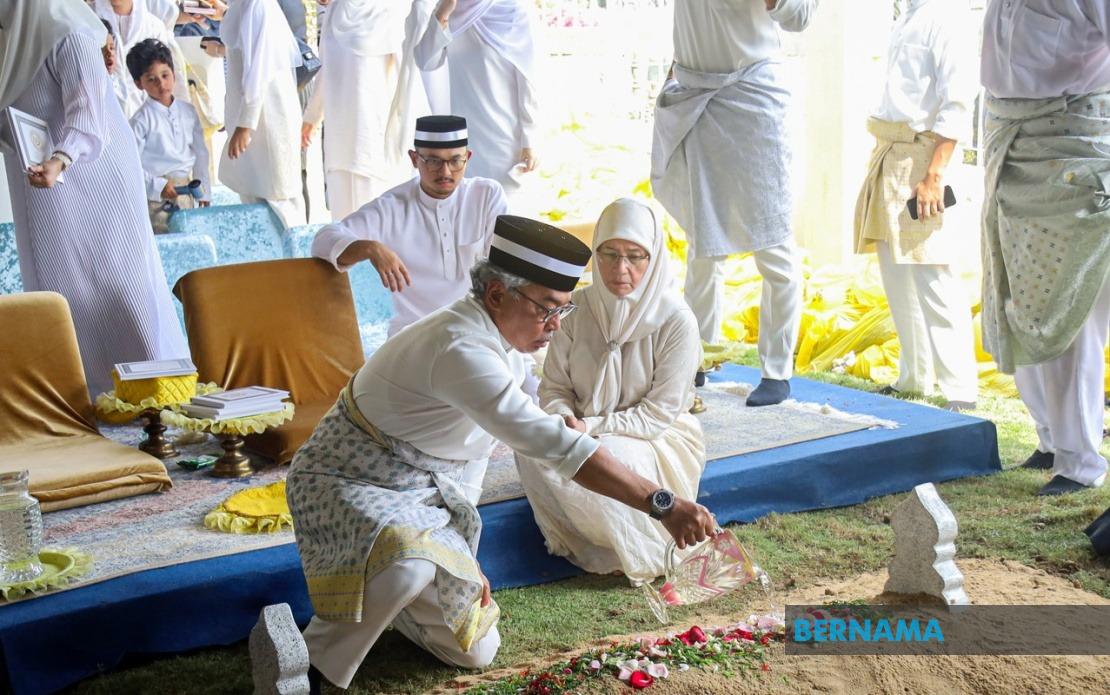
The burial of Tengku Puteri Seri Kemala Tengku Datuk Seri Aishah, the elder sister of Pahang's reigning monarch Al-Sultan Abdullah Ri'ayatuddin Al-Mustafa Billah Shah, took place on Wednesday at the Royal Mausoleum in Pekan. The 69-year-old royal passed away the previous evening at a hospital in Kuala Lumpur, marking the end of a significant chapter in Pahang's royal household. Her interment reflected the solemnity and ceremonial protocols befitting a member of the state's ruling family, drawing government officials and members of the royal house to witness the final rites.
The funeral proceedings commenced in the capital with Tengku Datuk Seri Aishah's remains transported to the Khalid bin Al-Walid Mosque on Jalan Padang Tembak in Kuala Lumpur, where funeral prayers were conducted for mourners to pay their final respects. From there, the deceased was transferred to Subang Air Base for the journey back to Pahang, reflecting the logistical arrangements typically made for high-ranking members of the royal family. The return to her home state signified the completion of a final voyage from the federal capital to her resting place in the sultanate she was born into.
Upon arrival in Pekan, the procession proceeded to the Sultan Ahmad 1 Mosque adjacent to the burial grounds, arriving at 1.25 pm local time. Following the performance of zuhur prayers, additional funeral prayers were conducted for assembled mourners and officials. This two-stage prayer ritual—first in Kuala Lumpur and subsequently in Pekan—reflected the significant nature of the deceased's status within both the federal and state establishments. The ceremonies afforded multiple opportunities for those who knew Tengku Datuk Seri Aishah or held positions of responsibility across Malaysia to extend their condolences and participate in the Islamic traditions surrounding her passing.
Sultan Al-Sultan Abdullah Ri'ayatuddin Al-Mustafa Billah Shah participated directly in the burial ceremony, accompanied by Tengku Ampuan of Pahang Tunku Azizah Aminah Maimunah Iskandariah. Their presence underscored the personal and familial dimensions of the loss, as the reigning Sultan mourned the departure of a sibling from their generation of the royal family. Tengku Mahkota of Pahang Tengku Hassanal Ibrahim Alam Shah, representing the younger generation of the state's succession line, was also present, ensuring continuity of royal participation across the family hierarchy.
Notable dignitaries from both state and federal governments attended the burial rites, reflecting Tengku Datuk Seri Aishah's standing within Malaysia's broader political establishment. Melaka's Yang Dipertua Negeri Tun Mohd Ali Rustam and Pahang's Menteri Besar Datuk Seri Wan Rosdy Wan Ismail were among those present, their attendance signifying respect across the various sultanates and administrative divisions of Malaysia. Such cross-state representation at royal funeral ceremonies demonstrates the interconnected nature of Malaysia's monarchical system and the web of familial and official relationships that bind the federation's elite.
The burial ceremony itself adhered to Islamic protocol, conducted with full honours befitting the deceased's royal rank. Pahang Mufti Datuk Dr Asmadi Mohamed Naim presided over the recitation of Yasin, one of the Quran's chapters commonly read during Islamic funeral rites, followed by the tahlil—Islamic invocations and prayers for the deceased. These spiritual observances formed the theological and ritualistic cornerstone of the funeral proceedings, anchoring the formal state ceremony within the Islamic religious framework that underpins Malaysia's constitutional monarchy.
Following the completion of these religious recitations, Sultan Al-Sultan Abdullah and Tunku Azizah paid their final respects to the deceased by sprinkling rose water and scattering flowers upon the grave. This act of personal remembrance, performed by the closest surviving family members, provided a poignant conclusion to the day's ceremonies. The gesture combined elements of Islamic tradition with expressions of familial affection, allowing the Sultan and his consort to mark the loss privately within the public ceremony.
Tengku Datuk Seri Aishah's death and subsequent burial represent a significant moment for Pahang's royal household, which like other state sultanates has weathered various transitions and challenges in recent years. As the elder sister of the current Sultan, she occupied a distinctive position within the state's hierarchy—honored as a member of the founding generation but without the administrative responsibilities that fall upon the ruling monarch. Her passing removes a link to an earlier era of Pahang's royal history and represents the natural succession of generations within the sultanate's ruling family.
The location of her burial at the Royal Mausoleum beside the Sultan Ahmad 1 Mosque in Pekan places Tengku Datuk Seri Aishah among other members of Pahang's royal lineage who have been laid to rest there. This cemetery serves as the final resting place for successive generations of the sultanate's ruling family, and her interment there establishes her place within this continuum of Pahang's monarchical history. The mausoleum itself functions as a physical manifestation of the state's royal heritage, a space where genealogy and geography intertwine to create a sacred repository of the sultanate's past.
For observers of Malaysia's constitutional monarchy and federalism, Tengku Datuk Seri Aishah's funeral proceedings illustrated the enduring ceremonial importance of royal death within the Malaysian political system. While the sultanates have gradually ceded many executive and legislative powers to the federal government and elected bodies, their role in maintaining ritual, tradition, and historical continuity remains substantive. The presence of federal and state officials at her burial underscored this reality, demonstrating how the Malaysian monarchy continues to command institutional respect and public recognition despite the shifting distribution of political power.
The death of a prominent royal family member inevitably prompts reflection among observers of Southeast Asian governance regarding the sustainability and contemporary relevance of constitutional monarchy systems. Tengku Datuk Seri Aishah's passing and the dignified manner in which it was observed suggest that despite modernization pressures and evolving political dynamics, the Malaysian royal establishments maintain symbolic authority and social standing. Her funeral brought together representatives from multiple tiers of government and multiple sultanates, illustrating how thoroughly the monarchy remains woven into Malaysia's institutional fabric and national identity.

