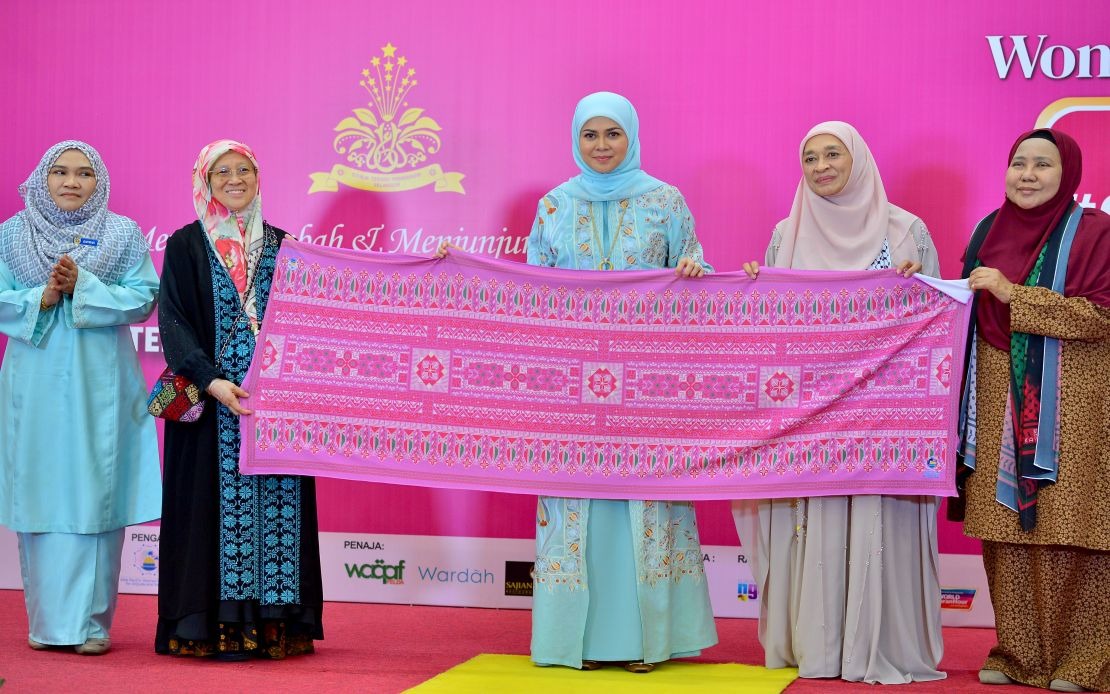
Selangor's Tengku Permaisuri, Tengku Permaisuri Norashikin, officially opened the Women Summit & Women #QuranHour 2026 programme on June 24 at the Dahlia Auditorium in Sultan Salahuddin Abdul Aziz Shah Mosque, marking a significant initiative aimed at empowering women through spiritual and psychological resilience. The event, jointly orchestrated by Yayasan Warisan Ummah Ikhlas (WUIF) and the Asia Pacific Women's Coalition for Al-Quds and Palestine (ApWCQP), drew approximately 400 female participants from across Selangor as well as international delegates from Singapore and Indonesia, underscoring the regional significance of the gathering.
The programme's central theme, "Women of Grit", emerged from a deliberate focus on the endurance demonstrated by Palestinian women navigating the ongoing conflict in Gaza. Organisers deliberately chose this framework to highlight how women maintain educational commitments for their children, preserve family structures, and sustain religious conviction despite experiencing warfare, bereavement, and displacement. By anchoring the initiative in this real-world context, the organisers sought to create a meaningful dialogue between women facing diverse challenges across the region and those drawing inspiration from contemporary global struggles.
Gharizah Hashim, director of the Women Summit & Women #QuranHour 2026 programme, articulated the deeper philosophy underlying the initiative when addressing media representatives at the venue. She emphasised that grit extends far beyond mere survival or physical toughness, instead encompassing the cultivation of inner peace, sound decision-making capacity, and forward momentum grounded in Quranic guidance. The programme's vision centres on nurturing women who can transcend trials, simultaneously becoming stabilising forces within their families while continuing to contribute meaningfully to their communities and the broader Muslim world.
The event featured a notable roster of speakers and experts positioned to provide diverse perspectives on women's empowerment through religious and psychological frameworks. Among the participants was Tirmizi Ali, the 2014 International Quran Recitation Champion, whose presence underscored the emphasis placed on Quranic literacy and recitation excellence. Associate Professor Dr Nora Mat Zin from the International Islamic University Malaysia's Department of Psychiatry brought contemporary mental health expertise to the discourse, suggesting an integrated approach combining spiritual nourishment with psychological wellbeing—a holistic methodology increasingly recognised as essential for comprehensive personal development.
Marhaini Yusoff, chief executive officer of WUIF, outlined an ambitious expansion strategy for the Women Summit & Women #QuranHour 2026 initiative that transcends the immediate success of the Shah Alam gathering. The organisation intends to disseminate the programme across Malaysian states through its Rumah Ngaji network, a grassroots infrastructure of free Quranic learning centres sustained by voluntary community sponsorship. This decentralisation approach democratises access to the programme's teachings, ensuring that women in less urbanised areas and those with financial constraints can benefit from the initiative without incurring direct costs.
The presence of Rumah Ngaji representatives from multiple states at the June 24 summit symbolises the commencement of a more systematically coordinated movement dedicated to women's empowerment through Quranic engagement. Rather than operating as isolated workshops or one-off seminars, the expanded framework envisions a sustained, structured programme embedded within existing community networks. This strategic positioning within established local institutions increases the likelihood of long-term participation and genuine lifestyle transformation rather than superficial awareness campaigns.
Fauziah Mohd Hasan, president of ApWCQP, and other organisers emphasised that developing women's psychological framework and moral character through Quranic teaching requires institutional commitment and consistent reinforcement. They contend that producing a generation of women characterised by purposeful living, compassion, and psychological resilience demands more than individual motivation; it necessitates systemic support structures, qualified mentorship, and community reinforcement mechanisms. The programme thus represents a philosophical shift toward understanding women's empowerment not as an isolated personal achievement but as a collective societal responsibility.
The international dimensions of the programme merit particular attention for Malaysian stakeholders. The participation of delegations from Singapore and Indonesia indicates growing regional interest in collaborative initiatives addressing women's psychological and spiritual wellbeing through Islamic frameworks. This cross-border engagement creates opportunities for knowledge exchange, methodological refinement, and the potential development of standardised approaches to women's empowerment that could be adapted across Southeast Asia.
For Malaysian society specifically, the Women Summit & Women #QuranHour 2026 programme addresses a recognised gap in mainstream discourse around women's roles and development. While economic and political participation receives considerable attention, initiatives focusing on psychological resilience, spiritual anchoring, and character formation through religious scholarship remain comparatively limited. By positioning Quranic principles as foundational to mental health and life purpose, the programme offers an alternative development paradigm that many Muslim-majority societies have historically underutilised in their empowerment strategies.
The scaling of this initiative through state-level Rumah Ngaji networks carries implications for social cohesion and community resilience beyond its immediate participants. Women serving as spiritual anchors and psychological stabilisers within families and neighbourhoods can amplify the programme's impact exponentially. The organisers' explicit recognition that strengthened women contribute to stronger ummah—the global Muslim community—frames individual transformation as interconnected with collective wellbeing, a perspective that may resonate across diverse demographic and socioeconomic groups in Malaysia.
Looking forward, the success of the Women Summit & Women #QuranHour 2026 programme will likely depend on effective execution at the grassroots level and the ability of facilitators to translate universal principles into locally relevant applications. Different states within Malaysia possess distinct cultural contexts, challenges, and existing community support structures. The programme's architects will need to maintain its core spiritual and psychological principles while demonstrating flexibility in implementation to ensure genuine resonance with women's lived experiences across the country's varied demographic landscape.

