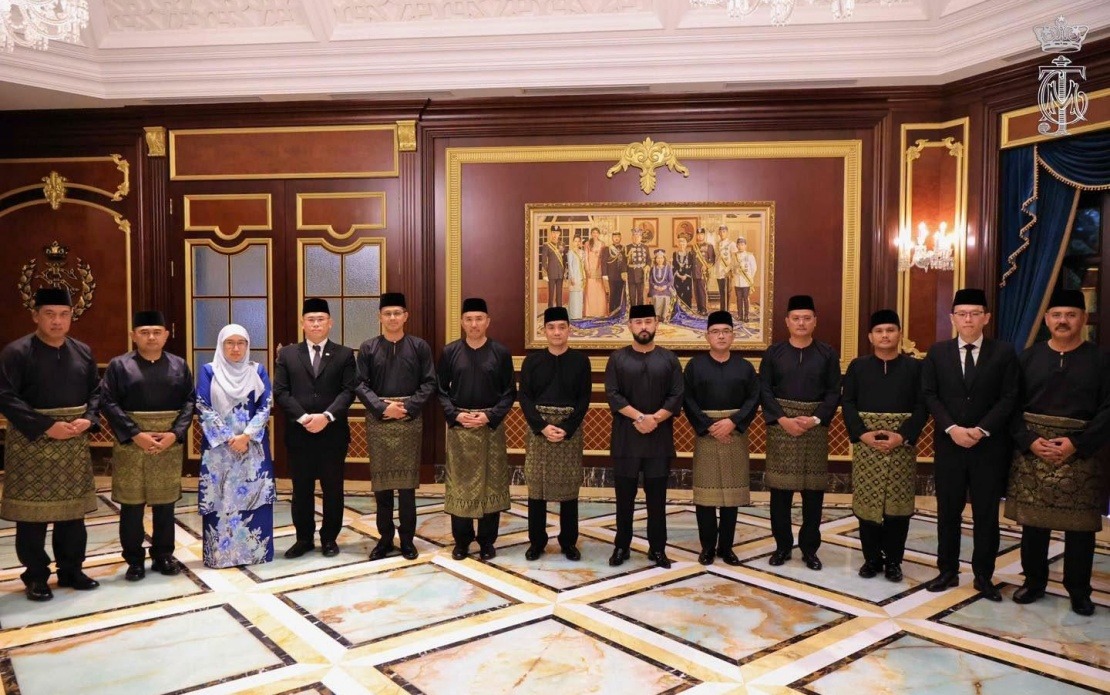
Ten Johor state assemblymen formally took their oaths as members of the State Executive Council in a ceremony held at Istana Bukit Serene on July 18, with the Regent of Johor, Tunku Mahkota Ismail, presiding over the proceedings. The swearing-in marks an important milestone in the formation of the new state government following Barisan Nasional's commanding performance in the recent polls, translating electoral success into a functioning administrative structure.
The expanded Exco includes six individuals with prior cabinet experience. Among them are Mohd Hairi Mad Shah from Larkin, Datuk Mohd Jafni Md Shukor representing Bukit Permai, and Mohd Fared Mohd Khalid from Semerah, alongside Ling Tian Soon of Yong Peng, Lee Ting Han from Paloh, and Mohamad Fazli Mohamad Salleh representing Bukit Pasir. Their inclusion reflects an attempt to balance continuity with fresh perspectives in state governance.
Four debutants bring new voices to the cabinet's deliberations. Md Israk Abdullah, who won the Kukup seat, joins alongside P. Pannir Selvam from Perling, Hasrunizah Hassan representing Pulai Sebatang, and Muhammad Naqib Md Ghazali from Panti. The inclusion of first-time Exco members suggests a deliberate strategy to inject new energy into state administration while leveraging the experience of senior figures.
The ceremony underscored the institutional formality surrounding Johor's governance structures, with several high-ranking officials in attendance. Menteri Besar Datuk Onn Hafiz Ghazi, who also represents Machap, presided over the proceedings alongside Yang Dipertua Datuk Dr Abdul Rahim Ramli of the Royal Court Council and State Secretary Datuk Mohammed Ridha Abd Kadir. This gathering of senior figures highlighted the significance attached to the formal establishment of the new administration.
Menteri Besar Onn Hafiz's own elevation to his second consecutive term occurred just days earlier in a separate ceremony, signalling continuity at the helm of Johor's government. His previous tenure and reelection demonstrated sufficient confidence within BN's structures to retain him in the top state position, a notable endorsement given the competitive dynamics within the coalition. The timing of his swearing-in and the subsequent constitution of the full Exco reflected a coordinated transition process designed to minimise any governance gaps.
The electoral context provides crucial backdrop to these administrative appointments. Barisan Nasional's triumph in the 16th Johor state election was decisive by any measure, capturing 48 of the 56 available seats and securing a substantial parliamentary majority. This comfortable buffer insulates the new administration from immediate political vulnerability, allowing it to focus on policy implementation rather than managing precarious coalitional arithmetic. The scale of the mandate offers considerable latitude for decision-making and long-term planning.
Onn Hafiz's personal victory in Machap was equally impressive, with a majority exceeding 15,000 votes. Such a substantial personal mandate strengthens his negotiating position within both the BN coalition and Johor's internal power structures. His strong individual showing at the grassroots level, combined with the coalition's overall performance, creates a foundation for decisive leadership on state-level issues including economic development, infrastructure, and social programmes that matter to ordinary Johoreans.
For Malaysian observers, Johor's political trajectory carries broader significance beyond the state's borders. As the nation's second-largest state and a crucial economic engine driving regional growth, Johor's governance quality directly affects the livelihoods of millions. The quality of decision-making within this newly constituted Exco will shape policies on industrial investment, urban development, and public services that influence not only Johoreans but also workers and businesses from neighbouring states and even Singapore who maintain close economic ties.
The composition of this cabinet also reflects evolving dynamics within Barisan Nasional's internal politics. The balance struck between experience and fresh perspectives, and the representation afforded to different political components within the coalition, suggests deliberate calibration aimed at maintaining coalition cohesion. In Malaysian politics, where coalition stability frequently determines governance outcomes, the careful construction of cabinets serves purposes far beyond administrative efficiency—it signals power-sharing arrangements and factional accommodation that underpin political continuity.
Moving forward, this Exco team faces substantial challenges typical of contemporary Malaysian state governance. Economic diversification beyond traditional industries, managing urban expansion, addressing infrastructure demands, and maintaining service delivery standards while navigating fiscal constraints will test the administration's competence. The next five years will reveal whether this carefully balanced cabinet can translate electoral momentum into tangible improvements in citizens' lives and economic competitiveness.
The swearing-in ceremony itself represents a constitutional formality, yet it carries symbolic weight in affirming the peaceful transfer and consolidation of democratic mandates. By conducting proceedings at Istana Bukit Serene under the Regent's auspices, Johor underscored the role of institutional monarchy in stabilising democratic transitions, a distinctly Malaysian contribution to political stability in the region.

