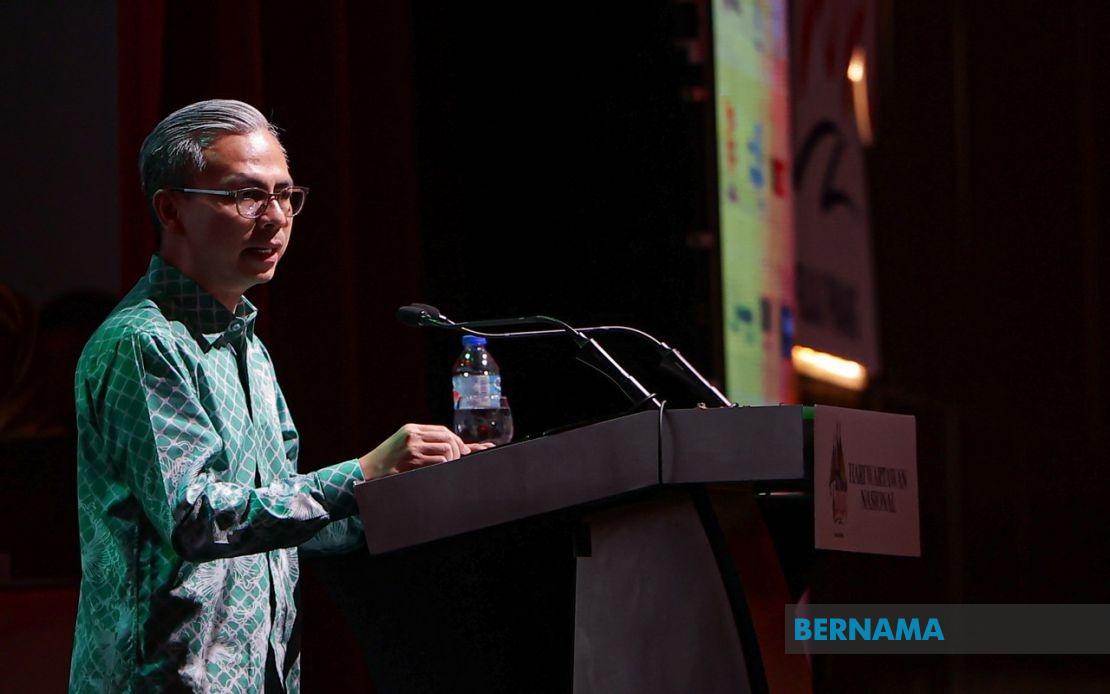
Telekom Malaysia has stepped forward as the latest strategic partner of Tabung Kasih@HAWANA, pledging RM500,000 to bolster welfare assistance for media professionals across the country. The commitment, unveiled at the National Journalists' Day 2026 Grand Finale in Butterworth on June 20, represents a significant corporate contribution to an industry facing mounting economic pressures. Communications Minister Datuk Fahmi Fadzil praised the telecommunications giant's investment, describing it as a meaningful demonstration of corporate commitment to supporting those who work in journalism and media.
The welfare fund, established in April 2023, has already distributed RM2.26 million in financial aid to 773 media practitioners, marking a growing reliance on corporate partnerships to sustain support structures within the sector. Through this corporate social responsibility initiative, Telekom Malaysia's contribution will enable the fund to extend its reach to more journalists and former media workers experiencing financial hardship. The move reflects broader recognition that Malaysia's media industry requires concerted support from multiple stakeholders, including both government and private entities.
Fahmi's remarks at the event highlighted the deteriorating financial landscape facing traditional media organisations. Advertising expenditure, the lifeblood of news organisations, has contracted dramatically over recent years, plummeting from RM4.5 billion annually to approximately RM2 billion. This contraction mirrors challenges faced by regional and global media outlets grappling with digital disruption and shifting consumer habits. The minister specifically appealed to government-linked companies and private enterprises to reverse this trend by directing advertising investments toward local media platforms, framing such decisions as essential to preserving the sector's financial viability.
Beyond immediate financial relief, the minister outlined a broader vision for industry resilience through technology adoption and skill development. He endorsed Project Sigma 2.0, a collaborative initiative spearheaded by Google Malaysia alongside the Malaysian Media Council and Malaysian Press Institute. This programme aims to equip journalists with contemporary knowledge in technology and artificial intelligence, recognising that media professionals must evolve technologically to remain relevant in an increasingly digital information ecosystem. Such capability-building efforts complement direct financial assistance, addressing both immediate needs and longer-term sustainability.
The event also witnessed a significant regional development with the signing of a Memorandum of Understanding between Bernama, Malaysia's national news agency, and TATOLI, Timor-Leste's equivalent institution. This agreement underscores Malaysia's commitment to deepening media cooperation across Southeast Asia, particularly following Timor-Leste's accession as ASEAN's eleventh member state during the 47th ASEAN Summit held in Kuala Lumpur the previous year. Such collaboration mechanisms are increasingly vital as the region navigates complex information environments requiring coordinated responses to misinformation and shared journalistic standards.
The timing of these announcements carries particular significance for Malaysia's media landscape. As digital platforms continue fragmenting audiences and advertising revenue, traditional news organisations face existential questions about sustainability and independence. Partnerships like Telekom Malaysia's investment in Tabung Kasih@HAWANA represent a potential model for maintaining a viable journalism sector, though some observers question whether corporate-led support mechanisms risk creating implicit expectations of favourable coverage. The fund's transparent governance structure, chaired by Bernama's chief executive officer Datin Paduka Nur-ul Afida Kamaludin, aims to mitigate such concerns by establishing clear allocation criteria and oversight.
For Malaysian readers and media professionals, these developments signal incremental progress toward stabilising an industry under stress. The RM500,000 commitment, while substantial, represents a drop against the broader revenue deficit facing media companies. Minister Fahmi's appeal for increased advertising expenditure acknowledges a fundamental truth: corporate welfare funds, however generous, cannot substitute for healthy market demand for quality journalism. Yet they serve an important bridging function, preventing immediate hardship among individual practitioners while longer-term restructuring occurs.
The regional dimension deserves particular attention for Malaysian stakeholders. Timor-Leste's integration into ASEAN, formalised just months before this event, creates new opportunities and challenges for cross-border media cooperation. Enhanced information exchange through mechanisms like the Bernama-TATOLI agreement can strengthen credibility and combat disinformation across member states. However, it also requires careful navigation of different national regulatory frameworks and press freedom standards, given variations in how ASEAN nations approach media governance.
Looking forward, the success of initiatives like Tabung Kasih@HAWANA will likely depend on sustained corporate participation and adequate fund capitalisation. Minister Fahmi's explicit call for more companies to emulate Telekom Malaysia suggests recognition that government resources alone cannot address the sector's challenges. Whether Malaysian businesses, particularly those with significant advertising budgets, will respond remains uncertain. The implicit social contract underlying such appeals—that supporting media serves broader democratic and economic interests—may resonate differently across different industry sectors and corporate cultures.

