The Paris Vivatech festival is displaying a diverse portfolio of technological breakthroughs that could reshape healthcare, aerospace, security and sports performance monitoring across the globe. Among the innovations competing for investor attention and market adoption are ventures that address fundamental challenges in medicine, aviation, fraud prevention and athletic training—each representing years of development and substantial capital investment.
Berlin-based Blueprint Biomed is tackling a longstanding problem in orthopedic surgery: the limitations of bone grafts harvested from patients themselves. For decades, surgeons have relied on autologous bone grafts to support healing in millions of procedures annually, yet these transplants frequently fail or trigger complications requiring additional operations. Blueprint's approach eliminates this dependency by creating artificial bone structures through a novel manufacturing process. The company's chief executive Aaron Herrera explained that the team constructs these replacements on a three-dimensional scaffold made from polycaprolactone, a biodegradable polyester, which is then colonized by collagen to create functional tissue support. The collagen naturally dissolves within three months, while the supporting scaffold breaks down over approximately two years, leaving behind integrated new bone. The structures can be fabricated in virtually any shape required for specific surgical applications, offering surgeons unprecedented customization. Blueprint is currently seeking US$2.5 million (RM10.29 million) in funding to advance toward human clinical trials, with the company projecting first patient implantations by 2028. The potential market is enormous: successful artificial grafts would spare countless patients from reoperation and the complications associated with harvesting bone from their own bodies.
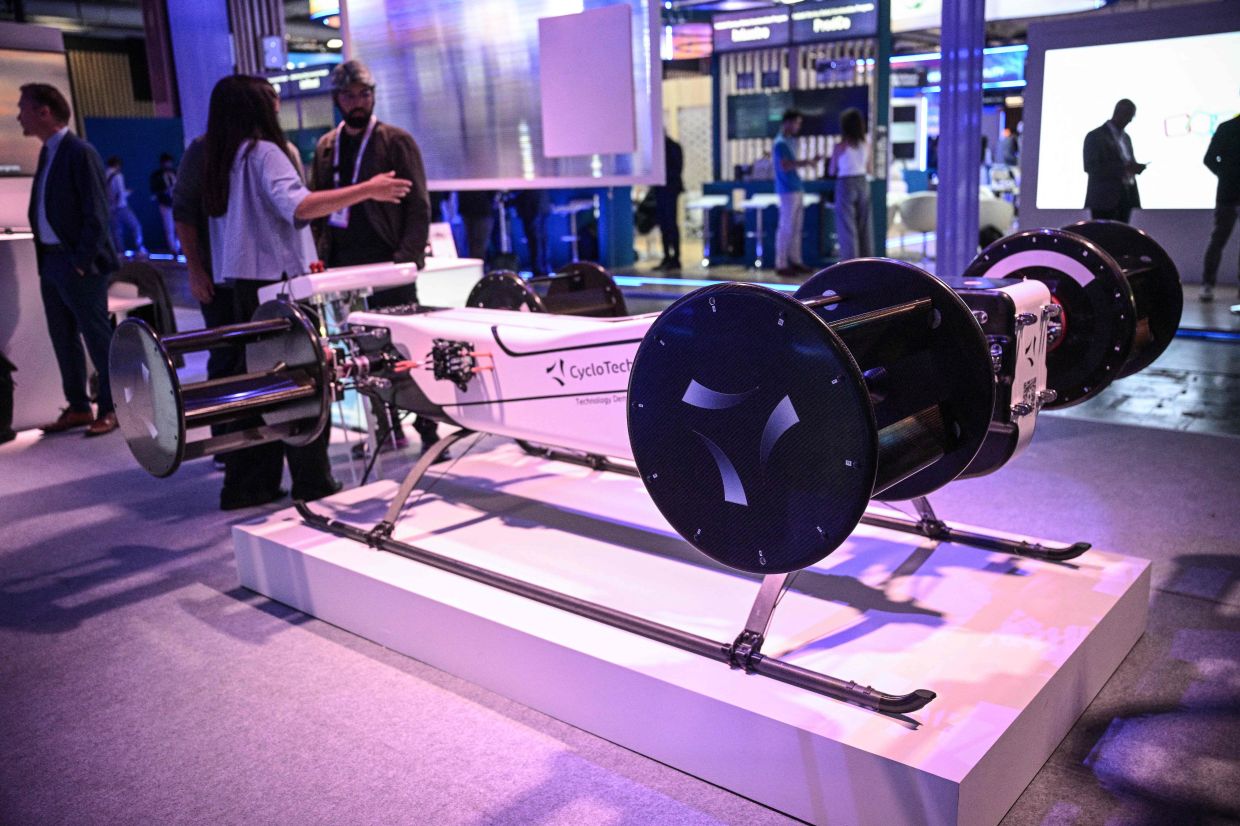
In the aerospace sector, Austrian startup CycloTech is reimagining how aircraft maneuver through the air. The company's innovation centers on a radically different motor design—a cylindrical structure with wing-shaped blade elements positioned around the perimeter—that promises to transform rotorcraft capabilities. Marketing chief Andrea Marchsteiner outlined the distinctive advantages: the new motors enable aircraft to hover like conventional helicopters, transition to forward flight like conventional planes, execute rapid mid-air braking, and reverse direction—all with exceptional precision. These combined capabilities open possibilities spanning urban delivery services, air taxi operations for passenger transport, and specialized military applications. The company, now numbering 65 employees after raising €40 million (approximately US$46 million or RM189.3 million), is actively recruiting additional investment and seeking partnerships with established aircraft manufacturers willing to integrate the proprietary motors into their designs. The technology addresses a genuine gap in current aviation: existing quadcopter drones excel in certain applications but lack the agility and directional flexibility that advanced missions increasingly demand.
The emerging threat of voice synthesis and deepfake audio has created urgent demand for detection technology, and French company Whispeak is positioning itself as a market leader in this arena. Originally developed to authenticate customer identities through voice recognition at banks and other sensitive institutions, Whispeak pivoted when generative artificial intelligence made it possible for anyone to create convincing voice impersonations of real individuals within seconds, often without cost. Chief executive Florent Van Calster emphasized the scale of the danger: with less than ten seconds of target audio, modern AI tools can generate highly convincing imitations suitable for social engineering fraud. Whispeak has spent three years developing what the company claims is the world's most accurate audio deepfake detector, a claim bolstered by first-place finishes in multiple independent detection competitions. The technology has progressed to a point where Van Calster reports error rates below one percent on available training datasets. The company is collaborating with French telecommunications operator Bouygues to screen incoming calls for deepfake manipulation and alert users when suspected fraudulent audio is detected. However, Van Calster cautiously acknowledged that the competitive landscape will remain dynamic—as detection technology improves, bad actors will continue refining their synthesis capabilities in an ongoing technological arms race.
Hong Kong-based startup PointFit is transforming how athletes monitor their physiological performance through non-invasive wearable technology. Rather than relying on traditional blood tests or heart rate monitors that provide incomplete information, PointFit has developed an adhesive patch equipped with a miniature sensor capable of measuring biomarker levels in sweat, including glucose and cortisol. Chief executive Kenny Oktavius began developing the underlying technology while still a university student in 2019 and has since built a sophisticated machine learning system that calculates a personalized "sweat index" for each user. The AI algorithm adjusts expected biomarker readings based on individual demographic characteristics and environmental conditions like ambient temperature, generating contextually appropriate performance insights. Oktavius observed that elite marathon runners, despite wearing expensive specialized monitoring equipment, still experience unexpected medical crises during competition—suggesting that conventional heart rate data captures only a fragment of bodily status. Medical professionals, he noted, rely on comprehensive biomarker analysis when patients require hospitalization, validating the importance of monitoring chemical indicators beyond heart activity. PointFit has already partnered with Red Bull's Athlete Performance Centre and Puma's Nitro Labs innovation division for testing and validation. However, Oktavius indicated that consumer retail expansion represents the true commercial prize, with potential distribution arrangements through major sporting goods retailers like Decathlon and consumer eyewear manufacturers such as EssilorLuxottica providing pathways to mass adoption. The technology could fundamentally change how recreational and professional athletes understand their physical state during training and competition.

