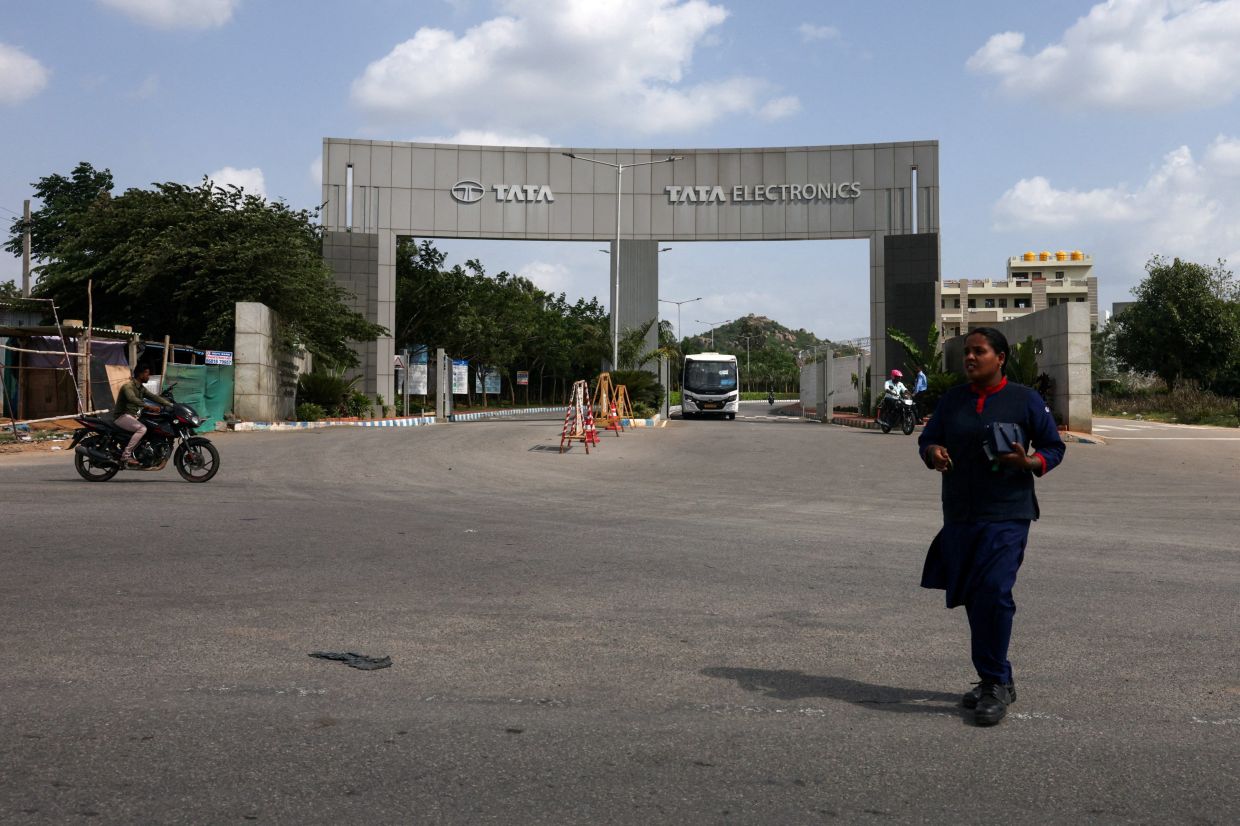
Tata Electronics confirmed on Monday that it discovered a recent cybersecurity breach, prompting an investigation after researchers identified what appears to be proprietary component designs and technical specifications from two of its most significant clients—Apple and Tesla—published on the dark web by a ransomware group called World Leaks. The incident represents a serious challenge to India's ambitions of establishing itself as a critical electronics manufacturing centre beyond the shadow of China, just as Tata has begun emerging as a cornerstone partner in this strategic shift.
According to security researchers who examined the compromised material, the World Leaks group has distributed more than 200,000 files totalling over 630 gigabytes across dark web channels that remain inaccessible to conventional search engines. The sheer volume of stolen data suggests the attackers gained extensive access to Tata's systems, potentially compromising years of accumulated research, manufacturing protocols, and confidential communications. Tata Electronics acknowledged the incident in a carefully worded statement, claiming that detection and immediate response protocols prevented operational disruptions across its business divisions, though this assertion does little to address the scale of data exposure.
Apple has initiated a comprehensive investigation into the breach, with sources indicating the company is conducting a thorough analysis of the exposed materials while also confirming that Tata received a ransom demand connected to the incident. The technology giant has declined to comment publicly on the matter, maintaining its standard posture regarding security incidents. Tata similarly refrained from addressing the ransom demand directly, neither confirming nor denying its existence or value. This silence underscores the sensitivity surrounding negotiations that may already be underway with the cybercriminals behind World Leaks.
The exposed files bearing Apple's proprietary markings include a 52-page quality inspection standards document for iPhone circuit board components, demonstrating that the attackers accessed deeply technical manufacturing specifications essential to Apple's supply chain operations. Additionally, searches conducted by cybersecurity researchers within the stolen database returned 181 files and folders referencing Apple, while searches for Tesla yielded documents including manufacturing specifications and assembly instructions. One folder reportedly referenced the "NV36 Chargeport Controller—North America," apparently relating to components in Tesla's upgraded Model Y sport-utility vehicle, while another purported Tesla document from 2023 described as a "TRADE SECRET" contained engineering drawings for Project Highland, the company's internal codename for its updated Model 3 sedan.
The compromised materials also include sensitive employee information, with researchers identifying passport copies of both Indian and foreign national workers employed at Tata facilities. Email communications spanning multiple years and system event logs appear in the stolen cache, providing the attackers with detailed operational timelines and internal decision-making processes. Files specifically tagged with location references to Hosur, the site of Tata's primary iPhone assembly plant in Tamil Nadu state, suggest the breach may have been particularly focused on Apple production operations, the division generating the most value for the conglomerate.
This cybersecurity incident arrives at an especially problematic moment for Tata's manufacturing expansion in India. The company already faces regulatory scrutiny regarding alleged contamination of agricultural land adjacent to its iPhone manufacturing facility in Tamil Nadu, creating a challenging public relations environment. Furthermore, Tata's track record with cybersecurity has been called into question following a substantial 2024 cyberattack on its British automotive subsidiary, Jaguar Land Rover, which forced a six-week production halt and revealed vulnerabilities in the group's digital defence infrastructure across multiple business units.
Tata Electronics has progressively become integral to Prime Minister Narendra Modi's "Make in India" initiative, which seeks to position the nation as a viable alternative manufacturing hub capable of reducing global reliance on Chinese production capacity. The company currently handles approximately one-third of all Apple iPhone manufacturing in India, with the remainder split between Foxconn and other contractors. This strategic importance makes Tata's security vulnerabilities particularly consequential for India's broader economic and geopolitical objectives, as repeated breaches could discourage multinational technology firms from expanding operations within the country.
The World Leaks ransomware group has previously claimed responsibility for other high-profile intrusions, including a breach affecting multinational sportswear manufacturer Nike, establishing a pattern of targeting companies with substantial intellectual property and global supply chain significance. The group's decision to publish stolen Tata data across the dark web, beyond the reach of conventional law enforcement monitoring, indicates a deliberate strategy to maximise pressure on targeted organizations and demonstrate the group's technical capabilities to potential future victims. The accessible portions of the dark web database display numerous folders and files clearly marked with proprietary notices from both Apple and Tesla, suggesting the attackers possess genuine access rather than merely republished publicly available materials.
Indian cybersecurity researcher Rajshekhar Rajaharia, who has previously consulted with Indian law enforcement on cyber incidents, reviewed the purported Tata files and confirmed their apparent authenticity through detailed technical analysis shared with Reuters. A second security researcher, Rakesh Krishnan, verified that the data had been accessible on the dark web since at least June 10, suggesting the breach remained undetected or unreported for a considerable period before Tata's formal acknowledgement. The extended lag between the attackers' publication and the company's public disclosure raises questions about detection capabilities and incident response protocols within Tata's cybersecurity infrastructure.
The breach illuminates the expanding vulnerability landscape facing multinational corporations as adversaries deploy increasingly sophisticated techniques for infiltrating complex enterprise networks, exfiltrating massive quantities of sensitive data, and leveraging stolen intellectual property to generate ransom leverage. For businesses operating across Southeast Asia and South Asia, the Tata incident serves as a sobering reminder that supply chain partners—no matter how strategically important—require robust security frameworks resistant to well-resourced threat actors. Indian authorities, including the national Computer Emergency Response Team operating under the IT ministry, have not publicly detailed their response to the incident, leaving questions about coordination between private sector security operations and government cybersecurity agencies.
Tata informed certain employees at its iPhone assembly operations of the data breach during the previous week, according to an industry source, indicating that internal communication regarding the incident preceded the public disclosure. This notification pattern suggests the company sought to manage information flow and control the narrative surrounding the breach before external actors forced transparency. The incident now forces Apple, Tesla, Tata, and Indian policymakers to confront uncomfortable truths about the maturity of India's manufacturing ecosystem and the adequacy of existing cybersecurity protections for protecting cutting-edge technological secrets within supply chain operations.
Looking forward, the breach will likely prompt multinational technology firms to undertake comprehensive audits of their Indian supply chain security practices and potentially impose additional contractual obligations on manufacturing partners to demonstrate enhanced protective measures. For Tata, the reputational and operational consequences extend beyond the immediate ransom negotiation to encompass broader questions about the company's fitness to serve as a trusted custodian of the world's most sensitive manufacturing secrets during India's critical phase of supply chain diversification and manufacturing expansion.

