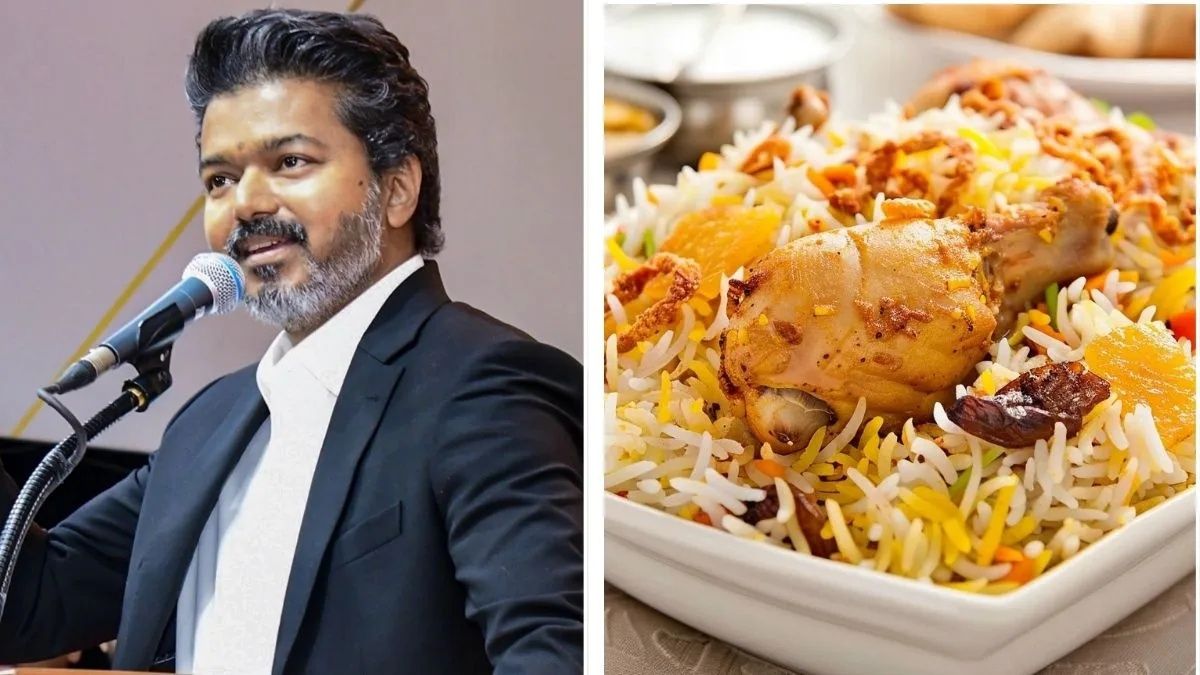
The Tamil Nadu government is seriously considering a significant expansion of its school meals programme, with plans to introduce chicken biryani as a weekly menu item across government schools. School Education Minister A. Rajmohan has confirmed that the proposal, which emerged from consultations with over 80 teacher associations, has already reached the Chief Minister's office for formal consideration and is currently under examination.
The proposal was formally presented during a consultation meeting held on July 28, strategically timed ahead of Tamil Nadu's state budget presentation scheduled for August 5. This timing suggests the government views the initiative as a potentially significant welfare programme that could feature in the fiscal announcements. The chicken biryani initiative represents an effort to enhance the nutritional value and appeal of midday meals, addressing long-standing complaints from teachers and educators about the monotony of existing school menu offerings.
Beyond the biryani proposal, teacher associations lodged several interconnected demands that reflect broader concerns about school meal quality and student nutrition. Prominent among these requests was a call to upgrade the quality of rice supplied under the scheme, indicating dissatisfaction with current procurement standards. The associations view improved meal quality as essential not only for student health but also for encouraging greater participation in the midday meal programme, which remains central to nutritional support for economically disadvantaged students across Tamil Nadu.
The midday meal scheme operates under the Social Welfare and Women Empowerment Department, creating an administrative coordination challenge. Officials have signalled that any final decision regarding chicken biryani will require cross-departmental discussions and approvals, as the Education Ministry alone cannot unilaterally alter meal compositions. However, preliminary indications suggest the government is disposed to viewing the proposal favourably, suggesting bureaucratic pathways may clear relatively smoothly for implementation.
Teacher representatives pressed the government to dramatically expand the reach of both breakfast and midday meal schemes to encompass secondary students. Currently, the Chief Minister's Breakfast Scheme covers Classes 1 through 8 and reaches approximately 32 lakh children following a recent expansion. The midday meal scheme extends only to Class 10, serving nearly 40 lakh students. Teacher associations argued forcefully that extending both programmes to Classes 11 and 12 would benefit an additional 8 lakh students, characterising this expansion as a long-pending demand that warrants immediate governmental action. Such an expansion would represent one of the largest school meal programme extensions in the state's history.
A separate issue generating significant discussion centred on the special Teacher Eligibility Test, which became mandatory following a Supreme Court ruling. Teacher associations sought several modifications to the examination framework, including recognition of prior teaching experience in candidate evaluation, reduction of qualifying marks thresholds, and introduction of uniform passing standards across all communities. A. Mayavan, founder-president of the Tamil Nadu High and Higher Secondary School Graduate Teachers' Association, argued that since the special TET serves to continue existing teachers rather than recruit new staff, providing weightage for teaching experience represents a logical and legally permissible adjustment that would more accurately assess candidate suitability.
The broader context for these demands involves persistent economic challenges facing government schools across Tamil Nadu. Teacher associations reiterated long-standing demands regarding equal pay for equal work, particularly affecting secondary grade teachers who face pay disparities relative to peers in comparable roles. Additionally, associations highlighted the need for increased maintenance grants to government schools, arguing that current allocations fail to adequately support infrastructure repairs, cleanliness standards, and facility upkeep necessary for conducive learning environments.
Minister Rajmohan responded to the delegation with commitments to systematise the consultation process. He pledged that every representation submitted by teacher associations would be digitised and organised by category, ostensibly to accelerate government review and decision-making. The minister indicated that departmental leadership would prioritise demands based on feasibility and fiscal availability, with officials making every reasonable effort to accommodate the maximum number of requests. This bureaucratic restructuring may signal genuine governmental intent to address teacher concerns more efficiently than in previous consultation cycles.
For Malaysian readers, Tamil Nadu's midday meal scheme offers instructive parallels and contrasts with domestic school feeding programmes. Malaysia's school meal programmes operate within a different institutional framework, yet both systems grapple with similar challenges regarding nutrition standards, programme expansion, and institutional coordination between education and welfare departments. The Tamil Nadu experience demonstrates how educational stakeholders leverage budget consultation periods to advance systemic improvements, a strategy potentially relevant for Malaysian education advocacy groups monitoring upcoming budget announcements.
The chicken biryani proposal, while appearing modest, reflects growing recognition across South Asia that school meal programmes must balance nutritional adequacy with student preference and cultural appropriateness. The inclusion of meat-based proteins in traditionally rice-centric menus represents a significant dietary shift that would affect purchasing patterns, infrastructure requirements, and supplier relationships across the state's school meal supply chain. Implementation would require substantial logistical coordination, including training of kitchen staff, establishment of proper food storage facilities, and development of culturally sensitive purchasing guidelines respecting dietary preferences and restrictions.
The teacher associations' collective advocacy reveals underlying frustrations within Tamil Nadu's educational establishment regarding resource allocation and workforce treatment. By coordinating across 80 associations and presenting unified demands, educators demonstrate increasing capacity to influence governmental policy through organised pressure during strategic moments such as budget consultations. This coordinated approach has precedent in Tamil Nadu's history of strong teacher unions, suggesting that sustained collective action may yield results particularly if demands align with government revenue availability and political priorities.

