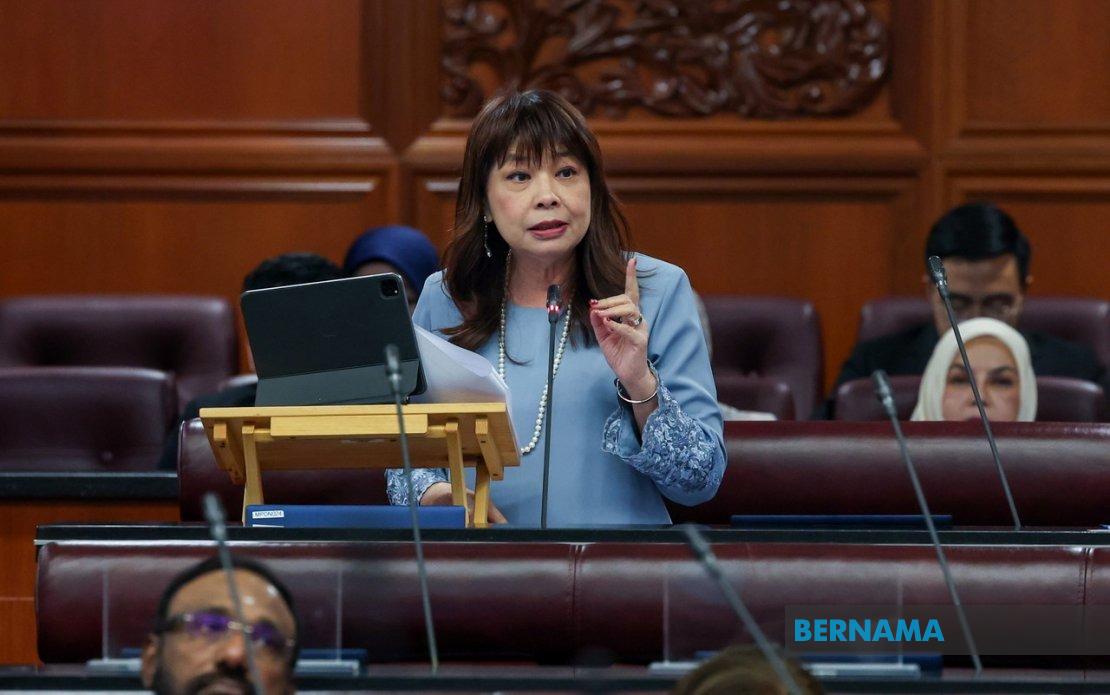
Malaysia's dedicated welfare hotline Talian Kasih 15999 has become an increasingly critical lifeline for families in crisis, fielding nearly 9,327 calls concerning domestic violence between 2022 and May 2025, according to Deputy Minister of Women, Family and Community Development Lim Hui Ying. Speaking during parliamentary question time, the minister disclosed that these figures represent a significant portion of the 127,000 total social and welfare calls the service has received during the same period, underscoring the scale of the nation's domestic distress and the demand for government intervention.
The response rate and resolution capacity of Talian Kasih demonstrates the government's commitment to follow-through on domestic violence complaints. All domestic violence cases reported to the hotline from 2022 through 2025 have been comprehensively addressed, Lim stated. In the most recent five-month window from January through May 2025, the service received 470 such calls, with 406 cases marked as fully resolved and 64 remaining under active investigation or intervention. This 86 per cent resolution rate within just five months signals operational efficiency, though the ongoing caseload suggests the underlying problem remains persistent across Malaysian households.
Following up on complaints represents only the beginning of the intervention process. The ministry has established a multi-layered support system designed to protect victims and address the root causes of violence. When cases are flagged through Talian Kasih, trained personnel work to secure Emergency Protection Orders or Interim Protection Orders—legal mechanisms that provide immediate restraint against aggressors and grant victims enforceable safety measures. For those in immediate danger, the government coordinates placement in secure shelters operated by partner organizations, providing temporary refuge while longer-term solutions are pursued. These structured responses indicate that Malaysia's approach has moved beyond merely recording complaints toward active harm reduction.
Parliamentary scrutiny from Datuk Muslimin Yahaya of Perikatan Nasional prompted the disclosure, with the lawmaker specifically questioning both the effectiveness of Talian Kasih and whether reported cases received meaningful follow-up intervention. His inquiry reflected broader legislative concern about whether government hotlines translated into concrete protective action rather than serving merely as complaint repositories. Lim's detailed response—citing specific resolution numbers and describing the intervention mechanisms—suggests the government views accountability on this issue as politically significant, particularly ahead of potential electoral cycles.
An increasingly visible trend within the domestic violence data pertains to the shifting demographic composition of victims. While domestic violence has traditionally been framed as a predominantly women's issue, Lim highlighted that cases involving male victims have registered noticeable growth over the period reviewed. Although men still represent a substantially smaller proportion of the total, the upward trajectory signals either genuine increases in violence directed at men or, alternatively, improving male willingness to report such incidents as social stigma diminishes. This evolution carries important implications for how Malaysia's welfare ministry structures its messaging, support services, and public awareness campaigns.
The ministry's stated position—that protection extends across all races and genders without prejudice—represents a significant policy reframing. Historically, Malaysian domestic violence interventions were primarily designed around protecting women and children, grounded in both cultural context and international human rights frameworks emphasizing violence against women as a systemic problem. The explicit acknowledgement that the ministry safeguards welfare beneficiaries regardless of gender suggests either institutional evolution toward more inclusive definitions of vulnerability or recognition that excluding male victims from support services creates a blind spot in the nation's social safety net. This broadening of scope may also reflect demographic and social changes within Malaysian households and evolving family structures.
The volume of domestic violence calls—9,327 cases over roughly three years—translates to an average of approximately 3,100 cases annually or more than eight per day across the entire nation. This frequency underscores why the Ministry of Women, Family and Community Development maintains Talian Kasih as a priority service rather than a peripheral hotline. For a country of Malaysia's population and size, the density of reported domestic violence cases suggests either widespread prevalence or, more optimistically, growing public awareness that such violence is reportable and remediable through government channels. Regional context matters here: neighbouring countries and comparable emerging economies often report significantly higher rates when standardized for population, suggesting Malaysia's figures may reflect either a genuine lower incidence or a reporting culture still developing.
The operational capacity of Talian Kasih extends beyond crisis response into data collection that informs policy development. Each case tracked through the hotline generates information about patterns, hotspots, seasonal variation, and outcome trajectories that the ministry can leverage for targeted interventions. By monitoring that male victim cases are increasing, for instance, the government gains evidence to justify gender-inclusive resource allocation. By resolving 86 per cent of recent cases within the same month they are reported, Talian Kasih demonstrates that bureaucratic machinery, once properly funded and staffed, can deliver responsive social services—a finding particularly relevant for developing economies where public sector efficiency is frequently questioned.
Nevertheless, several interpretive caveats surround these figures. A "resolved" case may mean different things in different contexts: it could indicate a perpetrator arrested, a victim safely sheltered, a victim successfully obtaining a protection order, or simply administrative closure after referral to another agency. The 64 cases still under action in May 2025 remain opaque—without knowing their average resolution time, one cannot assess whether the system accommodates urgent situations adequately. Additionally, these call volumes represent only the domestic violence matters reported to a single hotline; many victims never reach even this threshold, whether through fear, shame, isolation, or lack of awareness that the service exists.
For Malaysian readers concerned with domestic safety, the existence and functionality of Talian Kasih represents tangible institutional infrastructure designed to intervene when family violence occurs. The hotline's accessibility—reachable instantly via telephone regardless of location—removes geographical barriers that historically isolated domestic violence victims in rural or remote areas. For policymakers and women's rights advocates monitoring government performance, the resolution metrics and demographic data provide measurable evidence against which future performance can be benchmarked. The ministry's explicit framing of protection as inclusive across gender, ethnicity, and religion signals alignment with Malaysia's constitutional commitments to equality, though translating this stated principle into consistently equitable service delivery remains an ongoing operational challenge.

