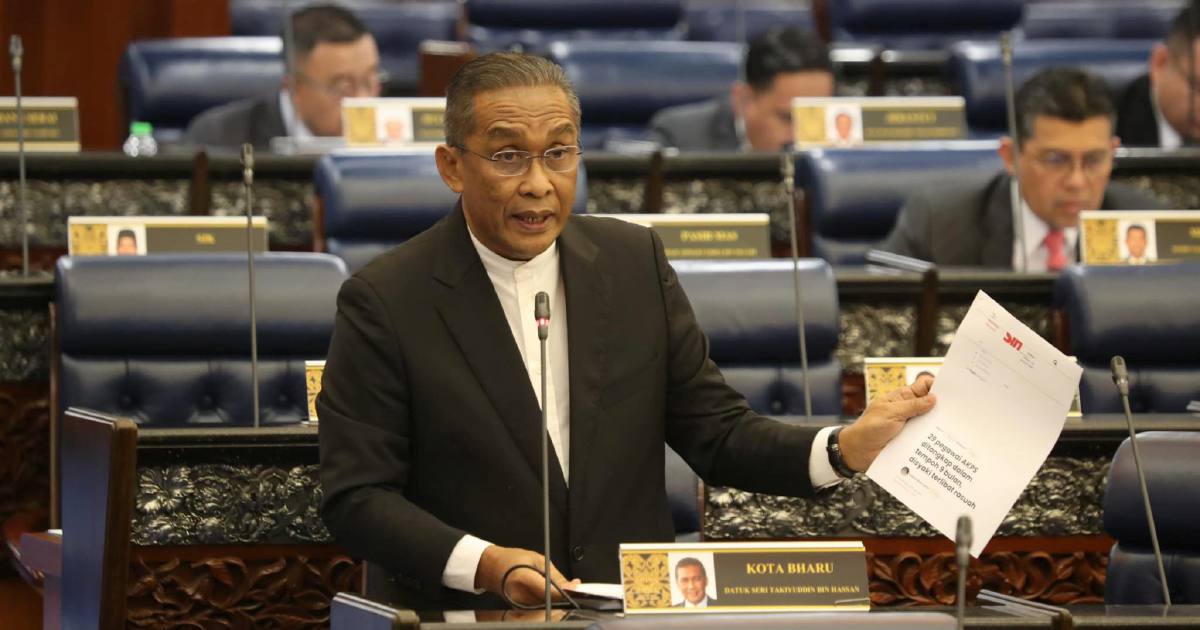
Opposition chief whip Datuk Seri Takiyuddin Hassan has urged Parliament to delay the special sitting scheduled to address the Royal Commission of Inquiry findings on Tabung Haji until Prime Minister Datuk Seri Anwar Ibrahim can rejoin the proceedings. The request reflects broader parliamentary protocol expectations regarding the attendance and participation of the nation's chief executive in matters of significant public concern.
The Royal Commission of Inquiry into Tabung Haji represents a critical examination of governance issues affecting Malaysia's pilgrimage savings fund, an institution with substantial reach among Muslim Malaysians and considerable financial implications. The fund operates as a dedicated savings scheme enabling Malaysian Muslims to set aside resources for their Hajj obligations whilst earning returns on their contributions. Any parliamentary deliberation on findings concerning the management and operations of this body carries weight for millions of contributors across the country.
Takiyuddin's intervention underscores the legislative opposition's perspective that substantive discussion of the RCI report warrants the presence and input of the executive branch's highest representative. Parliamentary protocol in Westminster-derived systems typically anticipates prime ministerial participation in debates touching on institutional integrity and public trust matters, particularly when the government faces potential scrutiny or must respond to recommendations emanating from formal inquiries.
The timing of Anwar's unavailability remains a procedural consideration within Parliament's scheduling apparatus. Postponement requests from opposition figures occasionally signal broader parliamentary dynamics or suggest concerns about the adequacy of governmental representation during critical debates. In this instance, Takiyuddin's call reflects conventional legislative practice wherein major policy discussions benefit from the direct participation and accountability of senior government figures.
Tabung Haji itself has weathered various challenges in recent years, including investment losses and operational questions that prompted the government to establish the RCI. The commission's mandate encompassed investigating governance frameworks, financial management practices, and administrative structures within the institution. The resulting report constitutes an official assessment that parliamentary discussion will inevitably touch upon questions of institutional reform, accountability mechanisms, and potential legislative action.
The opposition's request also carries implications for how Parliament balances administrative efficiency against substantive representation. Postponing parliamentary proceedings for executive attendance reflects a constitutional principle that majoritarian decision-making requires robust inputs from multiple institutional stakeholders. When discussion touches upon matters of public institutional performance, opposition voices frequently emphasise that comprehensive parliamentary deliberation demands the presence of government leadership capable of responding to concerns and articulating executive perspectives.
For Malaysian citizens contributing to Tabung Haji, parliamentary scrutiny of the RCI report represents an opportunity for elected representatives to examine governance issues affecting their savings directly. Public contributions to pilgrimage funds reflect deep personal commitment to religious obligations, making institutional integrity a matter of significant concern beyond technical financial considerations. Parliamentary discussion allows representatives to articulate contributor interests and press for accountability regarding past management decisions.
The special sitting itself was convened to ensure dedicated parliamentary time for comprehensive examination of the RCI's conclusions and recommendations. Parliamentary sittings specifically devoted to single agenda items allow for extended debate, detailed questioning, and thorough examination of complex matters. Tabung Haji's governance history certainly qualifies as sufficiently significant to warrant such dedicated parliamentary attention, given the institution's scale and its importance to Muslim Malaysians planning pilgrimage journeys.
Takiyuddin's intervention also reflects broader considerations about parliamentary efficacy and institutional dialogue. Special sittings represent parliamentary acknowledgment that certain matters merit extended consideration beyond regular question time and routine business. The opposition chief whip's request suggests that meaningful parliamentary examination of RCI findings benefits from direct engagement between legislative scrutineers and executive representatives bearing responsibility for institutional oversight.
The postponement question also touches on parliamentary scheduling complexities and the coordination required between government and opposition in managing the legislative calendar. Prime ministerial travel or other commitments occasionally necessitate rescheduling parliamentary business, particularly for matters requiring his direct participation and substantive response. Opposition cooperation in rescheduling signals that legislators from all sides recognise the importance of ensuring comprehensive and accountable discussion of the RCI findings.
Looking forward, the eventual parliamentary debate will inevitably address recommendations contained within the RCI report and potential legislative responses to identified governance shortcomings. Whether Parliament ultimately implements reforms, adjusts oversight mechanisms, or pursues other measures following the RCI discussion will significantly affect Tabung Haji's operational framework and contributor protections. The quality of parliamentary deliberation, enhanced through comprehensive executive participation, directly influences the calibre of subsequent policy decisions affecting the institution's future trajectory.
Takiyuddin's request ultimately reflects parliamentary convention that substantive institutional accountability works most effectively when all stakeholders, including government leadership, participate meaningfully in legislative discussion. The opposition chief whip's intervention demonstrates how parliamentary procedure itself embodies institutional checks and balances, with opposition figures able to shape the conditions under which legislative business proceeds and ensuring that executive accountability remains central to parliamentary deliberation.

