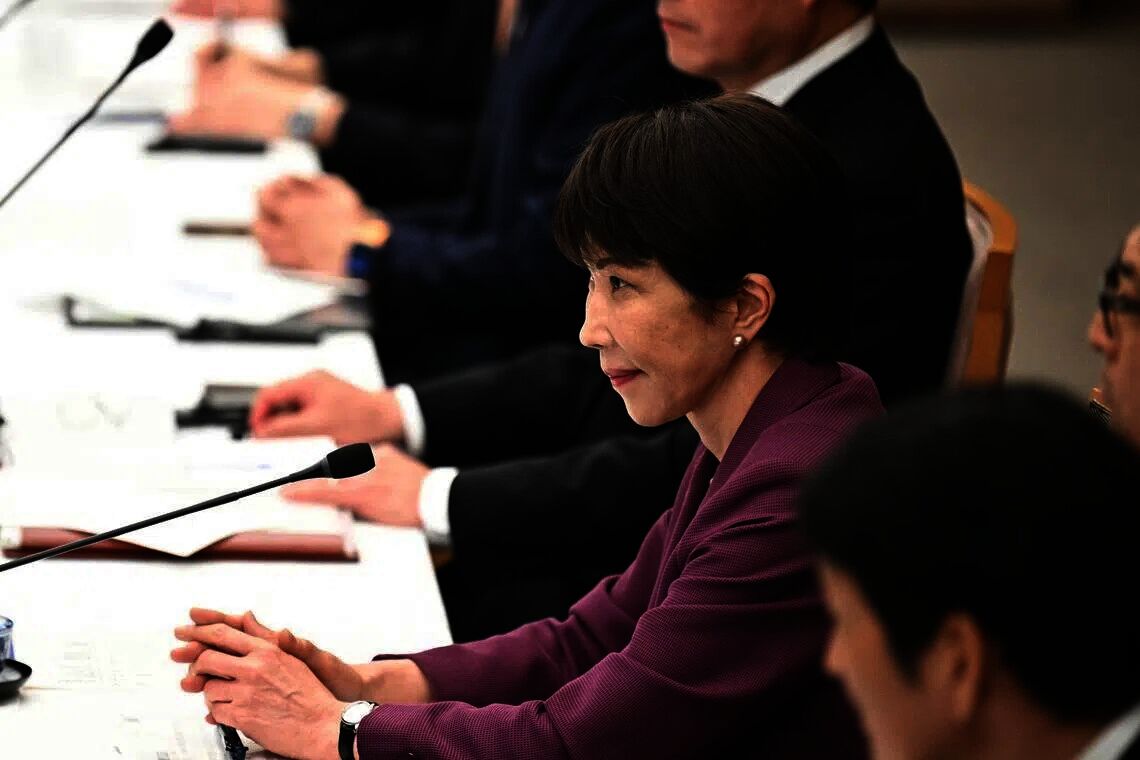
A video clip from a 2002 political debate has reignited domestic tensions in Japan, with current Prime Minister Sanae Takaichi facing substantial criticism for revisionist characterisations of her nation's wartime conduct. The footage, which recently circulated on social media platforms, shows Takaichi presenting controversial interpretations of Japan's military history during an appearance on the TV Asahi programme. Her remarks have prompted sharp rebuttals from academics, fellow politicians and the broader Japanese public, all questioning her grasp of historical fact and her suitability to lead the nation.
During the 2002 live debate, Takaichi, then serving as a lawmaker, characterised Japan's military campaign in China as an act of self-defence rather than aggression. She further contended that imperial expansion across China during the 1930s represented accepted international practice of that era. These claims departed significantly from the historical consensus and mainstream understanding of the period, which documents systematic Japanese military aggression throughout Asia and the Pacific. The remarks underscore a pattern of interpretation that has troubled historians, policymakers and civil society observers both within Japan and across the region.
Soichiro Tahara, the journalist moderating the debate, directly confronted Takaichi's claims during the programme itself, declaring her historical understanding "completely incorrect" and "ignorant." Tahara questioned how someone holding such views could function as a member of parliament, implying that fundamental misunderstandings of one's nation's history disqualify individuals from serious legislative responsibility. His contemporaneous challenge demonstrates that concerns about Takaichi's historical interpretations are not recent phenomena but have shadowed her career for over two decades.
The resurfaced video has sparked considerable online discussion, with social media users expressing alarm at both the content of Takaichi's remarks and the implications of her current position. Comments on YouTube have described her understanding of history as fundamentally flawed and warned against the dangers of someone who appears to glorify wartime conduct occupying the highest office. The public response reflects broader anxieties about how Japan's leadership interprets and teaches its own history, a matter with significant implications for regional stability and diplomatic relations across Asia.
Yusuke Yamashita, an associate professor of Corporate Social Responsibility at Sakushin Gakuin University, analysed Takaichi's position with particular severity, arguing that her invocation of self-defence lacks any coherent intellectual foundation. According to Yamashita, Takaichi cannot adequately explain or justify her claims because they rest on emotion rather than evidence or rigorous historical analysis. This assessment suggests that the problem extends beyond simple disagreement with established narratives—it reflects an absence of substantive reasoning underlying her positions.
Ichiro Ozawa, a veteran politician with representation spanning from 1969 to 2026, issued an especially forceful call for Takaichi's resignation. Ozawa framed her historical revisionism as presenting genuine danger to Japan itself, warning that her leadership could trigger unforeseen catastrophe and impose immense suffering on the Japanese people. His intervention carries weight given his extensive parliamentary experience and his standing within Japanese political circles, suggesting that concerns about Takaichi transcend partisan boundaries.
Takaichi's controversial views reflect a decades-long trajectory within Japan's conservative political establishment. Since entering parliament in 1993, she has consistently affiliated with the nationalist wing of the Liberal Democratic Party, advocating for constitutional changes that would expand Japan's military role and capabilities. She has openly promoted renaming the Self-Defence Forces, a symbolic shift reflecting her broader agenda to normalise Japan's military posture. This extended pattern of advocacy indicates that her revisionist historical claims form part of a coherent ideological programme rather than isolated missteps.
Her positions align with a broader current of right-wing historical revisionism in Japan that continues to downplay or deny wartime atrocities committed against China and other Asian nations. Such narratives represent a systematic whitewashing of military aggression and reflect a concerning revival of militarist interpretations of history. These interpretations carry consequences that extend well beyond academic disputes, as they inform policy decisions affecting regional security, diplomatic relations, and memorial practices that shape how nations remember their shared past.
The criticism Takaichi faces originates from multiple quarters—academic experts, fellow politicians across the political spectrum, and ordinary citizens expressing dismay at her elevation to prime minister. This broad coalition of dissent signals that concerns about her historical understanding and worldview resonate across Japanese society. The international dimension cannot be ignored either, as revisionist interpretations of WWII history have repeatedly prompted diplomatic friction with neighbouring countries that experienced Japanese military occupation and violence.
Beyond the historical dimension, observers have connected Takaichi's popularity decline to her government's failure to address immediate economic and social concerns affecting ordinary Japanese. Public opinion polls conducted in July already showed her administration losing public support, with disapproval exceeding approval in certain measurements for the first time. This erosion of confidence appears multifaceted, combining public unease about her historical revisionism with frustration regarding domestic policy priorities and living standards.
The controversy surrounding Takaichi's WWII comments thus illuminates broader questions about Japan's political direction, its relationship with its own history, and its role in an increasingly complex regional environment. For Malaysian and Southeast Asian observers, these developments carry particular significance, given the region's own experiences with Japanese wartime occupation and the ongoing importance of historical memory in shaping international relations. The vigour of domestic Japanese criticism against revisionist narratives suggests that significant portions of Japanese society remain committed to truthful historical accounting, even as certain political forces push alternative interpretations.

