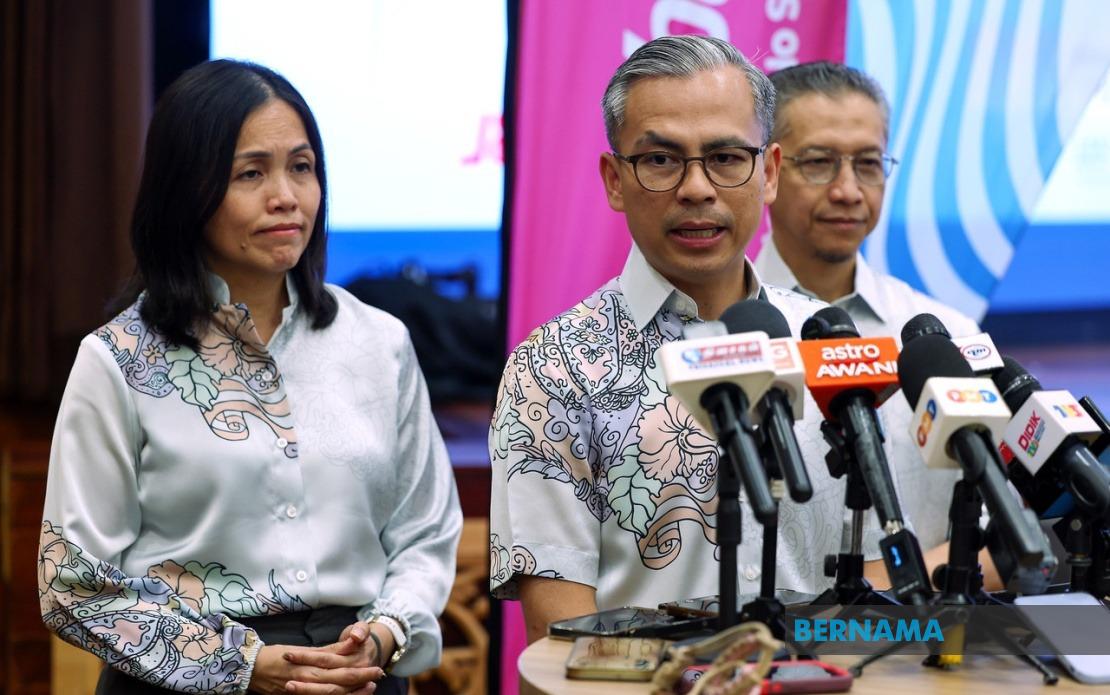
The comprehensive Royal Commission of Inquiry report examining governance failures at Lembaga Tabung Haji has been formally transmitted to multiple government agencies for criminal and regulatory investigation, according to Communications Minister Datuk Seri Fahmi Fadzil. The move represents the next phase in addressing systemic issues identified within Malaysia's pilgrim fund board, triggering simultaneous probes across law enforcement, anti-corruption, financial regulation and tax authorities.
Fahmi outlined the broad investigative scope during a public event in Putrajaya, confirming that the Royal Malaysia Police, Malaysian Anti-Corruption Commission, Bank Negara Malaysia and the Inland Revenue Board will each examine aspects of the RCI's findings. Additional investigative capacity comes from agencies administering the Anti-Money Laundering, Anti-Terrorism Financing and Proceeds of Unlawful Activities Act, creating a coordinated multi-agency response to potential wrongdoing. The distribution of the report across diverse regulatory bodies suggests authorities intend to pursue both criminal culpability and financial irregularities identified during the RCI's examination.
The Royal Commission completed its work earlier this summer, with the report becoming public on July 29 following deliberations spanning several years. The inquiry concentrated on operational and management deficiencies at Tabung Haji throughout 2014 to 2020, a seven-year window that encompassed significant shifts in Malaysia's political leadership and governance frameworks. The commission produced 25 specific recommendations intended to strengthen oversight, transparency and compliance within the institution. By July 30, Tabung Haji had already moved to implement three-quarters of these recommendations, demonstrating preliminary institutional responsiveness to the RCI's prescriptions.
The announcement came after Prime Minister Datuk Seri Anwar Ibrahim publicly committed to forwarding investigative findings to relevant authorities, setting the immediate trajectory for enforcement action. During a special parliamentary sitting devoted entirely to discussing the RCI report, Finance Minister II Datuk Seri Amir Hamzah Azizan and Minister in the Prime Minister's Department (Religious Affairs) Dr Zulkifli Hasan presented supplementary briefings containing additional documentary evidence and investigative details beyond those explicitly detailed in the published RCI findings. Lawmakers from both government and opposition benches participated in deliberating the implications, though the proceedings were marked by procedural tensions that underscored broader political divisions.
Parliament's debate revealed significant political fractures regarding accountability mechanisms. While Parti Pribumi Bersatu Malaysia members attended the special sitting, opposition lawmakers from Perikatan Nasional—including those from PAS—conspicuously boycotted proceedings. Fahmi noted the irony that PAS members and current Opposition Leader Datuk Seri Hamzah Zainudin had held ministerial positions when the RCI was originally established in 2021, yet refused engagement with the fruits of that inquiry. The communications minister's pointed criticism suggested frustration that opposition figures were avoiding parliamentary accountability discussions despite their historical involvement in establishing the investigative mechanism.
The absence of Perikatan Nasional lawmakers intensified after Speaker Tan Sri Johari Abdul maintained procedural continuity despite the Prime Minister's non-attendance, prompting some opposition members to stage a coordinated walkout. The dramatic rejection of parliamentary proceedings highlighted deepening mistrust between government and opposition benches regarding transparency and procedural fairness. For Malaysian observers, the walkout signalled that Perikatan Nasional continues prioritizing political theatre over substantive engagement with governance failures, particularly given PAS's prior custodianship of religious affairs during the RCI's establishment period.
The Tabung Haji situation carries particular resonance for Malaysian Muslims, as the institution holds billions in savings accumulated from millions of contributors preparing for the Hajj pilgrimage. Governance weaknesses and potential mismanagement directly threaten the financial security of ordinary Malaysians whose religious obligations intersect with institutional trust. The RCI's focus on 2014 to 2020 necessarily implicates decision-makers from multiple political administrations, making thorough investigation politically sensitive. However, the multi-agency forwarding of findings suggests authorities intend pursuing evidence-based accountability regardless of political affiliation of implicated individuals.
Regarding demands from Barisan Nasional and Pakatan Harapan MPs for an extended RCI examining 2021 onwards, Fahmi emphasized that establishing additional royal commissions requires not merely Cabinet approval but explicit consent from the Yang di-Pertuan Agong. This constitutional reminder underscores that RCI establishment involves formal state processes transcending routine ministerial discretion. The implication that a subsequent inquiry remains possible—yet subject to monarchical blessing—leaves open the possibility of expanded investigations, though such expansion would require both political consensus and royal approval. The careful hedging suggests government willingness to consider extension without committing to immediate action.
The implications for Malaysia's broader governance architecture merit consideration. The TH situation demonstrates that institutional failures can operate across political transitions without effective detection, suggesting that oversight mechanisms require structural reinforcement beyond mere personnel changes. The coordinated multi-agency investigative response signals increased commitment to integrated regulatory oversight, potentially establishing precedent for future complex institutional probes. For Southeast Asian observers monitoring Malaysia's anti-corruption trajectory, the comprehensive forwarding of findings to diverse authorities indicates evolving sophistication in pursuing financial accountability across large state institutions.
As law enforcement agencies commence formal investigations, attention will focus on whether discoveries lead to prosecutions and asset recovery. The 75 percent implementation rate of RCI recommendations suggests institutional leadership already recognizes reform urgency, yet investigation outcomes may necessitate further corrective measures. For Malaysian pilgrims and ordinary citizens maintaining savings within Tabung Haji, restoration of full institutional confidence depends on demonstrable accountability for identified failures and tangible preventative reforms ensuring future integrity.

