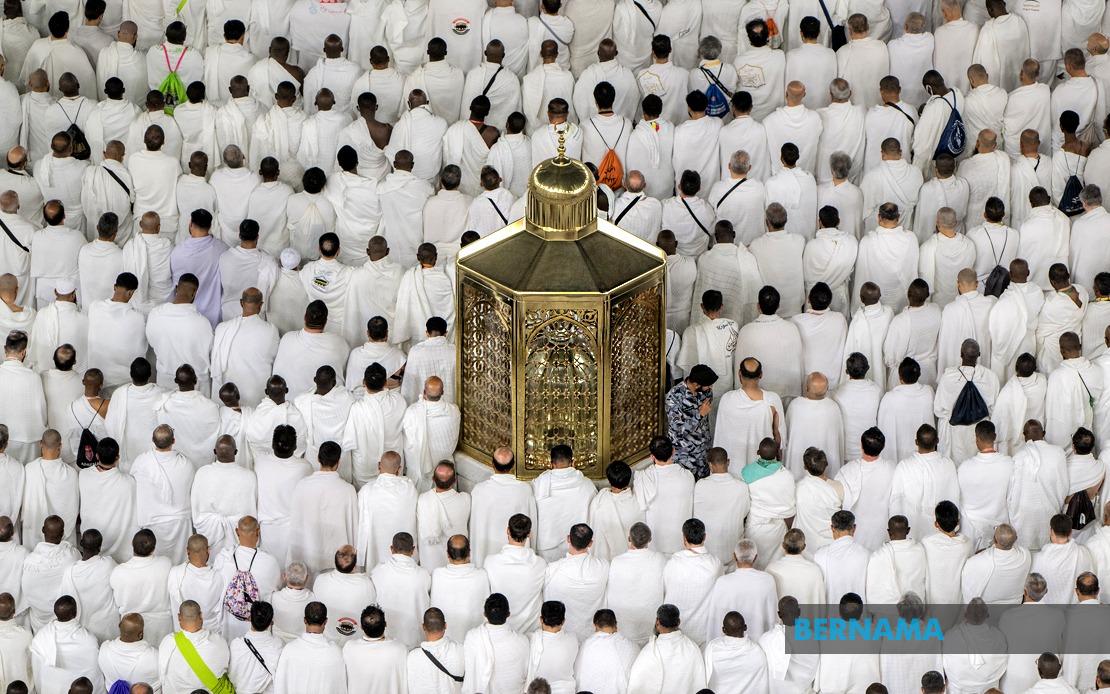
Tabung Haji (TH) has reaffirmed its commitment to the first-registered-first-served principle in allocating Haj slots, rejecting proposals to create special categories that would prioritize certain groups of depositors. The decision underscores the organisation's determination to treat all pilgrims equitably as they navigate what remains one of the most sought-after religious experiences for Malaysian Muslims, with waiting periods that can stretch across decades for some applicants.
Marhamah Rosli, Deputy Minister in the Prime Minister's Department (Religious Affairs), explained that introducing preferential Haj offer systems would fundamentally undermine the orderly queue that TH has painstakingly maintained since the organisation was established. She articulated this position during parliamentary questioning in the Dewan Rakyat, responding directly to concerns raised by Opposition MP Abdul Latiff Abdul Rahman from Kuala Krai, who had suggested that retirees receiving gratuity payments deserved expedited access given their improved financial circumstances and limited years remaining to fulfil this pillar of Islam.
The proposal to create special categories had particular appeal to some legislators because the pool of Haj applicants vastly exceeds available quotas. Malaysia's allocation for this year stands at 31,600 pilgrims—a figure determined unilaterally by the Saudi Arabian government—while demand from Malaysian Muslims awaiting their turn runs into hundreds of thousands. This structural mismatch has created a system where individuals can wait 15, 20 or even 30 years before receiving their Haj offer letter, raising genuine questions about fairness, particularly for elderly applicants who face mortality before their allocated year arrives.
Marhamah acknowledged these pressures without yielding on the fundamental principle. She emphasised that the existing system embodies what she termed consistency with fairness, transparency and equity—values that TH claims to have upheld throughout its management of the Haj waiting list. This rhetorical positioning reflects TH's view that any deviation from strict chronological ordering, however compassionate the intent, would ultimately create new injustices by displacing other depositors who have already waited their turn.
The deputy minister outlined several mechanisms through which TH seeks to manage the waiting period and prepare pilgrims for their eventual journey. Every depositor receives notification of their estimated Haj year, allowing them to begin financial and spiritual preparations well in advance. This forward notice is intended to mitigate the shock of sudden Haj expenses and give individuals time to arrange leave, pursue health screenings, and deepen their knowledge of pilgrimage rituals.
Effective immediately, TH has implemented a new financial threshold requiring prospective pilgrims to maintain a minimum savings balance of RM15,000 before receiving a Haj offer letter. This measure sits substantially below the actual cost of performing Haj, which TH pegs at RM33,300, but establishes a baseline liquidity requirement. The introduction of this threshold suggests TH's concern that some depositors, despite their years on the waiting list, may lack sufficient funds when their year finally arrives, potentially leading to deferrals that further disrupt the allocation schedule.
TH does retain a safety valve for depositors not yet due for their Haj offer. Those facing compelling circumstances can submit appeals that are evaluated individually on their merits according to established criteria and priority frameworks. This appeals mechanism provides a venue for cases involving serious illness, age-related urgency, or other extraordinary factors, though Marhamah did not elaborate on how frequently such appeals succeed or what success rates look like across different categories of claims.
Marhamah reiterated that TH will continue petitioning the Saudi Arabian government for additional quotas annually to address mounting backlogs. However, she made clear that any expansion remains entirely within Saudi Arabia's discretion. The Kingdom has gradually increased its global Haj allocations in recent years but maintains strict controls that many Muslim-majority nations argue fall short of the true demand for pilgrimage. This dependency on Saudi goodwill creates diplomatic complexity for Malaysia, as the government cannot unilaterally resolve a problem that ultimately has international dimensions.
On enforcement and fraud prevention, Marhamah reported zero documented cases of Haj package fraud processed through the Haj Fraud Task Force during the 1447 Hijrah Haj season. The task force comprises representatives from TH, the Royal Malaysia Police, and the Ministry of Tourism, Arts and Culture, combining regulatory, law enforcement, and tourism expertise. Marhamah attributed this clean record to strengthened enforcement action and an awareness campaign promoting the "No Visa, No Haj" principle, which aligns with Saudi Arabia's official "No Haj Without Permit" policy.
The fraud prevention framework reflects broader international collaboration on Haj security and integrity. Unscrupulous agents have historically exploited pilgrims' desperation to perform Haj, offering false promises, overcharging, or facilitating illegal entries to Saudi Arabia. By aligning Malaysian messaging with Saudi Arabia's permit requirements and empowering TH alongside law enforcement, authorities have created layers of protection that appear to have borne fruit in recent seasons.
For Malaysian Muslims confronting the reality of potentially decade-long waits for Haj, the government's reaffirmation of its allocation system offers neither reprieve nor special fast-track options. What it does provide is assurance that the queue system, while slow, operates according to consistent rules that cannot be bent by political favour or financial privilege beyond the basic need to save RM15,000. Whether this approach ultimately satisfies public expectations as waiting lists continue to lengthen remains an open question for policymakers to monitor in coming years.

