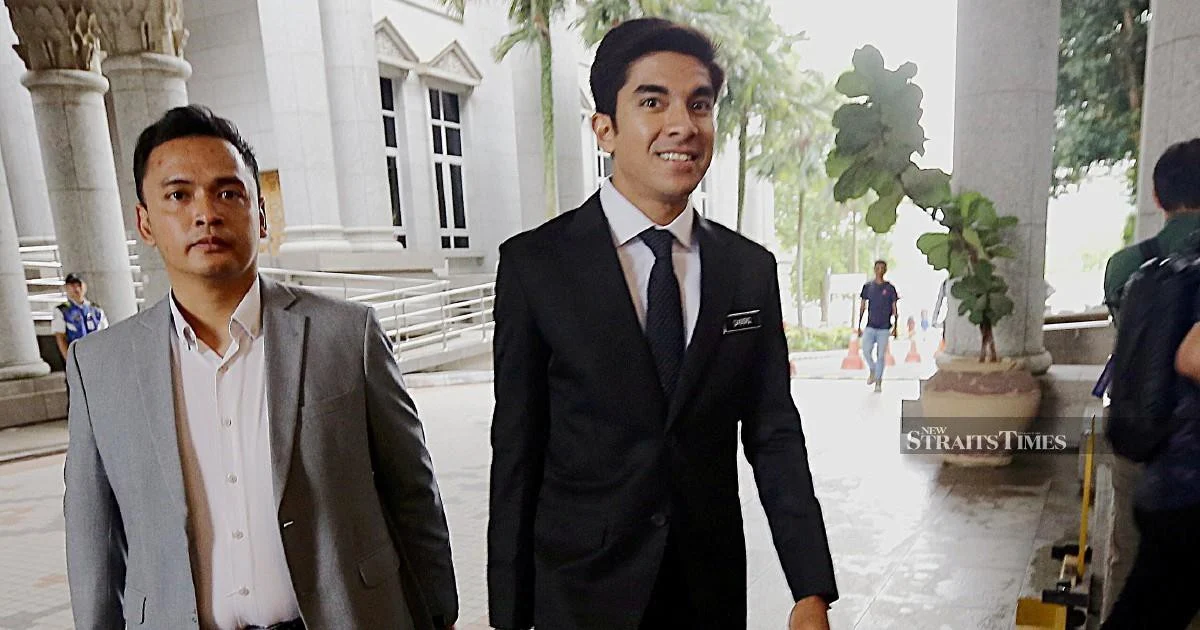
Amir Fiqri, commonly known as Amir Jack, will represent Muda in the Maharani constituency during the forthcoming Johor state election. The appointment marks a significant move for the younger generation within Muda as it expands its footprint in the southern state. Amir Jack currently serves as a special officer to Syed Saddiq Syed Abdul Rahman, the sitting member of parliament for Muar, a neighbouring constituency that straddles the Johor-Melaka border.
Muda's decision to field four candidates in the Johor election reflects the party's ambitions to establish a stronger presence in a state where it has historically faced competition from established political machinery. The party, founded in 2020, has been gradually building its organisational capabilities and candidate pipeline across major Malaysian states. By nominating individuals with established political networks and parliamentary connections, such as Amir Jack, Muda appears to be leveraging proximity to sitting elected representatives to boost credibility among voters.
The Maharani constituency represents a critical battleground in the broader political landscape of Johor. Located in the Johor Bahru district, this seat encompasses diverse demographic groups and urban-rural divides that often determine electoral outcomes. Understanding the composition of Maharani voters is essential for assessing Amir Jack's electoral prospects, as the seat has historically swung between major coalitions depending on broader state and national political currents.
Syed Saddiq's political trajectory has attracted considerable attention in Malaysian politics, particularly given his younger age and alignment with reformist movements. As Muar MP, he commands a substantial personal following and has maintained an active presence on social media and ground engagement. By positioning Amir Jack as a candidate in nearby Maharani, the Muda leadership may be attempting to translate Syed Saddiq's political capital into electoral gains beyond his own parliamentary seat. This strategy reflects a broader trend among opposition parties to develop integrated campaign ecosystems spanning multiple constituencies.
Muda's candidate selection process has often emphasised merit, youth representation, and engagement with digital-native voters. Amir Jack's background as a special officer suggests exposure to parliamentary operations and policy formulation, providing him with technical knowledge that candidates from purely business or community backgrounds might lack. However, being a special officer differs markedly from holding elected office, and voters typically evaluate candidates based on their independent track record and local community rootedness.
The Johor state election carries implications beyond the Maharani seat itself. As Malaysia's most populous state by electoral numbers, Johor remains a crucial battleground for all major political coalitions. The outcome will influence the balance of power in the state assembly and potentially signal broader electoral trends affecting the federal government. For Muda, strong performance in Johor could demonstrate that its two-year-old political project has transcended novelty status and can compete effectively against entrenched party structures.
Competition in Maharani will likely intensify as the election date approaches. Other coalitions will field established candidates with longer track records of service in the constituency. Muda candidates face the perennial challenge facing newer parties: establishing sufficient voter familiarity and trust within compressed campaign timeframes. However, the party's emphasis on clean governance narratives and generational renewal resonates with certain voter segments, particularly in urban areas where younger voters seek alternatives to existing political offerings.
The appointment of four Muda candidates across Johor constituencies suggests a coordinated strategy to contest multiple seats simultaneously, thereby creating a unified party identity and enabling resource-sharing across campaigns. This approach differs from contesting isolated seats, which can leave candidates without campaign infrastructure support. By running a slate of candidates, Muda can mobilise party machinery more effectively and generate compound media coverage that reaches beyond individual constituency boundaries.
For Syed Saddiq personally, the appointment of his aide to contest a neighbouring seat could be interpreted as confidence-building in Muda's direction and a signal that the party has moved beyond token candidacies toward serious electoral ambitions. It also demonstrates that Syed Saddiq's influence extends into shaping party strategy and candidate nominations, reflecting his position within the party hierarchy. The close geographical proximity between Muar and Maharani means campaign activities in one seat can generate spillover effects in the other, allowing coordinated messaging strategies.
Looking ahead, the performance of Amir Jack and other Muda candidates will provide important data about the party's capacity to translate policy platforms and organisational energy into electoral victories. Johor's political culture emphasises grassroots engagement and community service, qualities that special officers working in parliamentary constituencies often develop through their daily administrative roles. Whether Amir Jack can leverage these experiences into persuasive campaign messaging remains to be seen as the Maharani contest unfolds.

