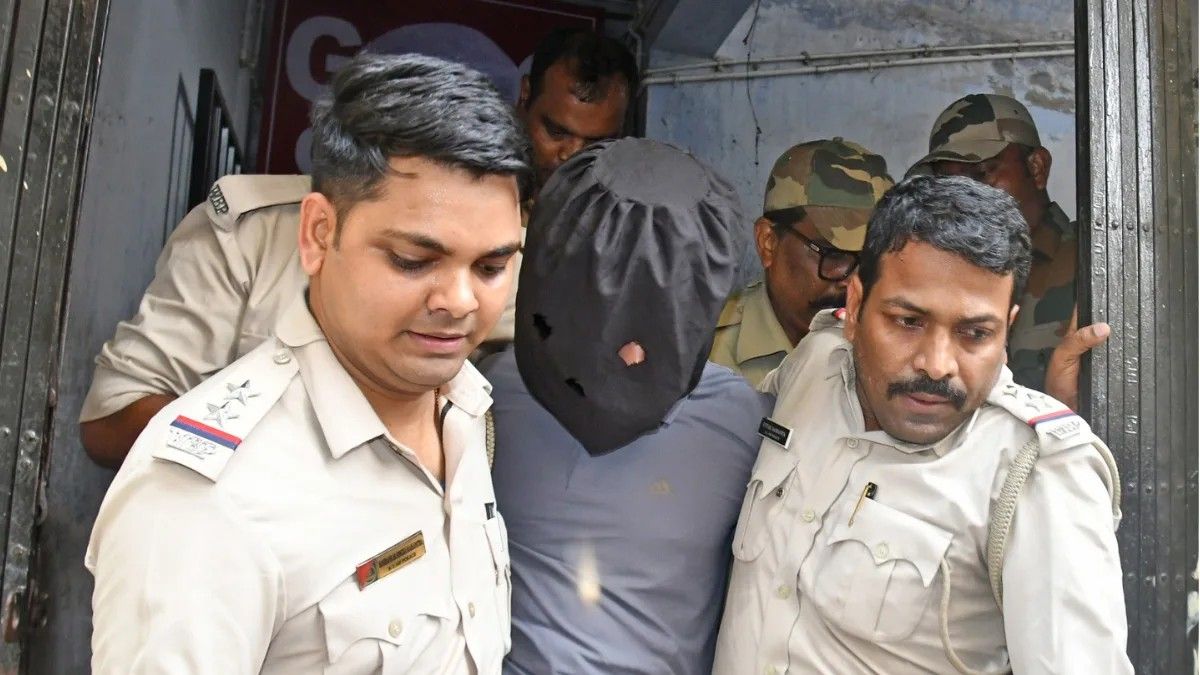
The arrest of Hamim Mondal in Bardhaman district on Friday has revived concerns about militant infiltration networks in West Bengal, a region that has repeatedly featured in India's counterterrorism operations over the past decade and a half. The 24-year-old, detained during a gymnasium session in the Renaissance Township area of Burdwan town, is suspected of maintaining contact with the Pakistan-based militant outfit Jaish-e-Mohammed and coordinating with handlers allegedly tied to Pakistan's Inter-Services Intelligence agency.
The timing of the arrest carries particular significance given West Bengal's history with organised militant activity. Precisely twelve years ago, a residential explosion in the Khagragarh locality of Bardhaman exposed a sleeper cell affiliated with Jamaat-ul-Mujahidin, underscoring how terrorist networks have continued to establish footholds in the region despite intensive security operations. The latest development suggests that counter-terrorism mechanisms remain under considerable strain as they track evolving recruitment strategies and operational patterns.
According to investigators from the Special Task Force, Mondal had cultivated connections across the border and became part of what authorities describe as Sajjad Bhat's Jaish-e-Mohammed operational module. The nature of his alleged activities drew particular alarm: police claim he had ordered uniforms resembling those worn by India's Central Reserve Police Force through online channels. This procurement pattern, officials suggest, was consistent with preparations to impersonate security personnel—a tactic that could facilitate access to high-value targets or facilitate assassination attempts.
The investigation pivoted significantly when detectives traced a threatening telephone call made to Umesh Rai, the state's Minister of State, to a young woman based in Birbhum district. Following this lead ultimately exposed Mondal's purported clandestine operations conducted under the pretext of ordinary civilian activity. Electronic devices seized from his rented accommodation—a laptop and mobile phone—contained encrypted communications with individuals believed to represent ISI interests, according to law enforcement accounts.
Mondal's background presents the profile of what counterterrorism analysts describe as a radicalized member of the urban middle class. His father, Moniruddin Mondal, maintains legitimate employment with a private Kolkata-based company, while the suspect himself had established a label-printing enterprise in Pilkhana, Howrah following his education. This biographical pattern—wherein educated, apparently gainfully-employed individuals gravitate toward extremist networks—reflects broader recruitment trends that have complicated security assessments across South Asia in recent years.
The residential arrangements through which Mondal maintained his presence in Bardhaman itself revealed operational compartmentalization typical of terror networks. Three months preceding his arrest, he had leased a three-room apartment at Rohini Tower in Renaissance Township under misleading circumstances, claiming the space was intended for younger siblings. A local grocer named Mohammad Ali facilitated the rental agreement using forged documentation—the vendor's father's identity papers—suggesting either deliberate complicity or exploitation by the accused. Neighbours, including local schoolteacher Ashis Mondal, described him as inconspicuous and mild-mannered, characteristics that enhance an operative's capacity to evade detection within residential communities.
The geographical dispersal of Mondal's movements across Howrah and Bardhaman districts reflects patterns documented in previous investigations of cross-border terror networks. His routine transit from Bankra in Howrah to his Bardhaman flat, combined with his efforts to maintain multiple fictitious cover narratives, indicates sophistication in operational security. The gym arrest itself—during early morning hours at approximately 6:50am—suggests intensive surveillance coordinated by the STF and Bardhaman Police Station personnel, likely tracking his daily patterns over an extended observation period.
Family members have uniformly rejected the allegations against Mondal. His grandfather, Nasiruddin Mondal, a farmer from Dignagar village in the Manteswar block of East Burdwan district, characterised the accusations as implausible and potentially grounded in mistaken intelligence. His uncle Suman Mondal similarly dismissed suggestions of terror involvement, emphasizing the suspect's youth as incompatible with participation in elaborate cross-border espionage networks. Such familial denials, while understandable from a social perspective, have become routine features in terror-related investigations across the subcontinent, wherein accused individuals' relatives frequently maintain innocence claims throughout judicial proceedings.
The formal charges against Mondal encompass Sections 61 and 152 of the Bharatiya Nyaya Sanhita, 2023, alongside relevant provisions of the Information Technology Act and Immigration Act. These legislative frameworks equip Indian authorities with expansive powers to prosecute individuals suspected of sedition, conspiracy, and cross-border coordination with hostile foreign actors. The Chief Judicial Magistrate's Court in Bardhaman remanded him in police custody for fourteen days, following which the STF transported him to Kolkata for intensive interrogation—a procedural approach suggesting investigators believe he possesses actionable intelligence regarding broader network structures.
Police allegations portray Mondal's involvement in what constitutes an organized, transnational criminal conspiracy. The registered complaint describes activities encompassing active collaboration with foreign hostile elements operating under ISI direction, participation in recruitment of domestic operatives, procurement of weaponry, collection of intelligence regarding prominent political figures, and planning of potential kidnappings and assassinations. These characterizations—if substantiated through investigation—would position him as more than a radicalized sympathizer but rather as an embedded operative within a functioning terror cell.
For Malaysian observers and regional security analysts, the Bardhaman arrest carries implications extending beyond West Bengal's immediate security landscape. The incident illustrates how militant organizations, particularly those with Pakistan-based training infrastructure and ISI support, continue systematically recruiting from Indian civilian populations for operations targeting state institutions. The sophistication of operational tradecraft—encrypted communications, false identity documents, layered cover narratives, and targeted surveillance of political figures—demonstrates organizational capacity that rivals previous incarnations of South Asian terror networks.
The Jaish-e-Mohammed group itself remains designated as a terrorist organization across multiple jurisdictions, including those relevant to Southeast Asia's security frameworks. Its demonstrated ability to establish functional cells within Indian metropolitan areas, coupled with alleged intelligence agency sponsorship, underscores persistent regional security challenges that transcend national boundaries. For Southeast Asian states engaged in counterterrorism operations, the Bardhaman case reinforces patterns previously documented regarding radicalization pipelines, recruitment methodologies, and the organizational resilience of transnational militant networks despite sustained law enforcement pressure.

