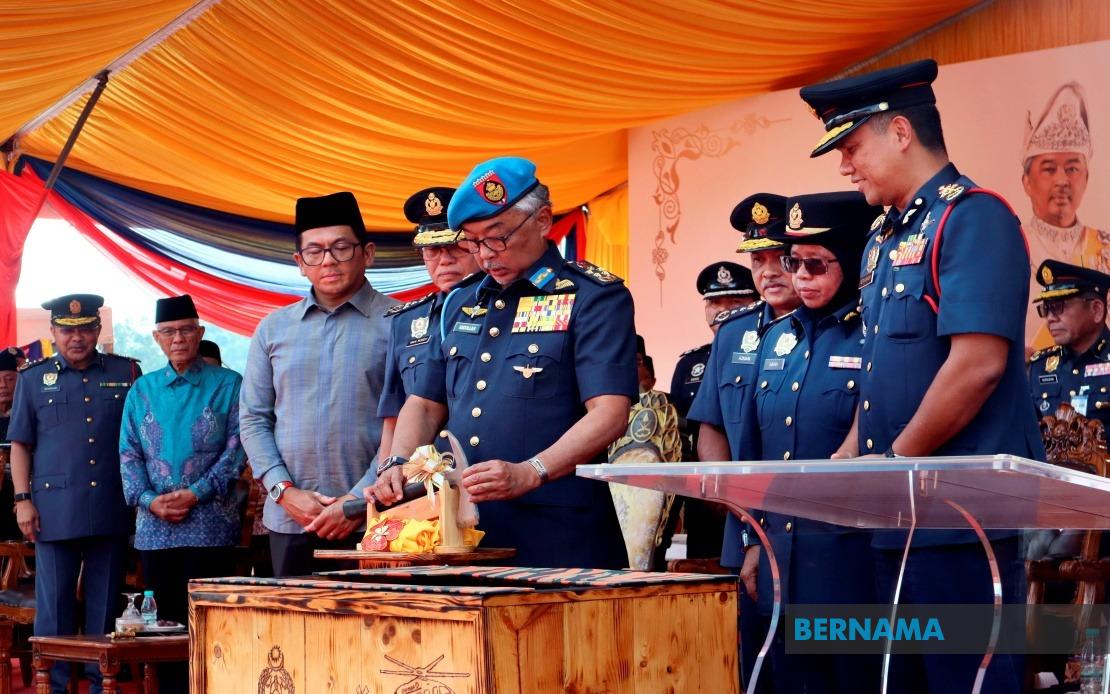
During the opening of the Sungai Lembing Fire and Rescue Station in Kuantan on July 2, Al-Sultan Abdullah Ri'ayatuddin Al-Mustafa Billah Shah acknowledged the substantial financial commitments made by both tiers of government towards infrastructure that directly protects Pahang's communities from natural disasters. His remarks underscored the strategic importance of continued investment in disaster prevention, a concern that resonates deeply across Malaysia as climate change intensifies rainfall patterns and flooding events.
The Sultan's comments carry particular weight in the Malaysian constitutional framework, where the hereditary rulers function as custodians of their states' welfare and development priorities. By publicly endorsing government spending on flood mitigation, Al-Sultan Abdullah lent royal legitimacy to infrastructure initiatives that compete for limited budgets against other pressing needs. This endorsement matters politically and administratively, as it signals palace support for policies that some fiscal conservatives might question.
Sungai Lembing's prominence in the Sultan's remarks reflects its strategic position within Kuantan's geography and drainage system. Located in the Lipis district, Sungai Lembing historically experiences inundation earlier than surrounding areas during monsoon seasons, making it an early warning indicator for broader flooding across the Kuantan plain. This hydrological reality explains why targeted intervention in this locality produces ripple effects throughout the region's flood preparedness architecture. Engineers and water managers view Sungai Lembing as a critical pressure point where mitigation spending yields disproportionate protective benefits.
Beyond praising completed work, Al-Sultan Abdullah issued a directive that merits closer examination: the deepening of rivers adjacent to populated areas. This instruction reflects a traditional hydraulic engineering approach—increasing channel capacity to contain larger volumes of water during peak flow events. However, such projects require careful environmental assessment and sustained maintenance to remain effective. The Sultan's order, while strategically sound, implicitly signals expectation that authorities will prioritise this intervention in their planning cycles, effectively shifting resource allocation toward river deepening across multiple drainage basins.
The gathering included Pahang Menteri Besar Datuk Seri Wan Rosdy Wan Ismail, Deputy Housing and Local Government Minister Datuk Aiman Athirah Sabu, and Deputy Economy Minister Datuk Mohd Shahar Abdullah, whose simultaneous roles in state government and federal parliament underscore the integrated nature of disaster management across Malaysia's federal system. These officials represent multiple bureaucratic layers that must coordinate on flood defence—a coordination challenge that often determines implementation success or failure.
Al-Sultan Abdullah's recognition of the Fire and Rescue Department extended beyond ceremony into substantive acknowledgment of operational demands. His observation that disaster response news appears daily in his briefings reflects how contemporary monarchs engage with real-time governance information, moving beyond symbolic roles into active monitoring of administrative performance. This engagement pattern influences how the palace perceives institutional effectiveness and, potentially, where it directs influence on personnel appointments and strategic direction within emergency services.
The Sultan's commitment to visiting disaster sites alongside fire and rescue teams during operations and recovery phases establishes a personal leadership model that contrasts with more distant administrative oversight. Such ground-level engagement carries psychological and practical consequences: affected communities receive direct reassurance from the sovereign, while frontline responders gain visible recognition that their hazardous work attracts palace attention. This visibility affects morale and institutional pride within the Fire and Rescue Department, influencing recruitment and retention in a profession that requires sustained dedication under dangerous circumstances.
Looking beyond Kuantan's urban core, Al-Sultan Abdullah identified a critical service gap in Kampung Bantal, Ulu Tembeling in Jerantut—a remote settlement where response delays during emergencies threaten lives. The Sultan's proposal for a volunteer fire brigade in this locality addresses a recurring challenge across Southeast Asia's rural zones: adequate emergency coverage across dispersed populations with limited infrastructure. Volunteer brigades offer cost-effective solutions but depend on sustained training, equipment provision, and community commitment to prevent them becoming symbolic rather than functional institutions.
This proposal carries implications extending beyond Jerantut. Rural fire service gaps exist across peninsular Malaysia, particularly in Terengganu, Kelantan, and parts of Pahang's interior. A palace-initiated push for volunteer brigades could catalyse broader policy shifts toward decentralised emergency response capacity. However, such initiatives require coordination with federal Fire and Rescue Department planning, local government resources, and community mobilisation—a multi-level challenge that succeeds only when all actors align around shared priorities.
The Sultan's remarks also implicitly critique response times in Malaysia's emergency services, an issue affecting rural areas disproportionately. By publicly highlighting Kampung Bantal's vulnerability, Al-Sultan Abdullah elevated an otherwise overlooked locality into policy discourse, potentially compelling officials to address systematic inequities in service distribution. This mechanism—using royal platform to highlight operational gaps—functions as a semi-formal accountability mechanism within Malaysia's governance structure, where hereditary rulers can influence executive priorities without formal legislative powers.
For Malaysian and regional observers, the Sultan's statements reflect broader debates about climate adaptation and disaster resilience. As monsoon seasons intensify and rainfall becomes less predictable, Southeast Asian governments face mounting pressure to invest in protection infrastructure. Yet such investments compete against healthcare, education, and economic development spending. Royal endorsement of flood mitigation funding legitimises these expenditures as essential governance rather than optional spending, potentially supporting higher budget allocations in state and federal planning.
The Sungai Lembing Fire and Rescue Station opening itself represents infrastructure multiplication—expanding emergency response capacity in a district that experienced significant flooding during the December 2014 monsoon event and subsequent weather events. New stations require staffing, equipment procurement, and maintenance—ongoing costs that exceed initial capital investment. The Sultan's presence at this opening underscores that fire and rescue infrastructure expands regional protective capacity incrementally, through multiple facilities distributed across vulnerable zones rather than through single comprehensive projects.

