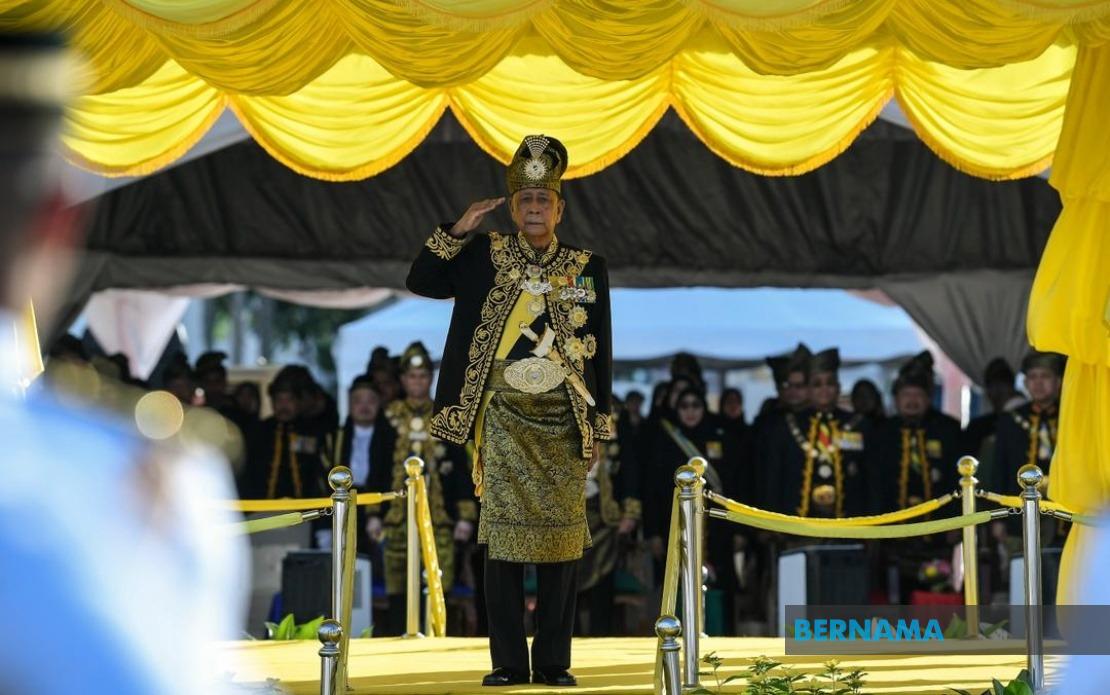
The Sultan of Kedah, Al Aminul Karim Sultan Sallehuddin Sultan Badlishah, marked his 84th birthday with a solemn military ceremony held at Dataran Medan Bandar in Alor Setar. The guard of honour parade, a traditional tribute to the state's constitutional monarch, drew senior members of the royal family and government to pay their respects to the ageing sovereign, underscoring the continued importance of institutional recognition and ceremonial observance in Malaysia's federal system.
Joining His Royal Highness for the occasion was the Raja Muda of Kedah, Tengku Sarafudin Badlishah Sultan Sallehuddin, whose presence alongside the Sultan reinforced the line of succession and the continuity of the state's monarchy. The attendance of both the reigning Sultan and his designated heir reflected Kedah's commitment to demonstrating stable institutional governance during a period of demographic transition at the apex of the state administration.
The state's political leadership was well represented, with Kedah Menteri Besar Datuk Seri Muhammad Sanusi Md Nor and State Secretary Datuk Seri Norizan Khazali presiding over proceedings alongside members of the State Executive Council. This convergence of royal and administrative authority served to symbolically reinforce the collaborative relationship between the monarchy and the elected government, a cornerstone of Malaysia's constitutional framework that has shaped statecraft across all thirteen states.
The military contingent provided the ceremonial backbone of the celebration, with 103 personnel and three officers drawn from the 6th Battalion of the Royal Malay Regiment deploying for the formal parade. Under the direction of Major Muhammad Nasrullah Abdullah, the regiment demonstrated the precision and discipline characteristic of Malaysia's armed forces, with Lieutenant Mohamad Aiman Hanif Samsudin bearing the regimental colours and Warrant Officer 1 Mohd Fairuz Ramli carrying the regiment standard throughout the proceedings.
The pageantry was enhanced by the RAMD Central Band, conducted by Captain Muhamad Fauzee Japar with Sergeant Mohd Shahrilaizad Bakhtiar in support, whose musical accompaniment provided the ceremonial atmosphere traditionally expected at state-level occasions. Such formal displays, whilst commonplace in the Malaysian constitutional calendar, carry symbolic weight in emphasising the state's institutional heritage and the respect accorded to the symbols of state authority.
A dramatic element was introduced through a ceremonial flypast that saw two EC120B helicopter trainers from the Flying Training Institute (INSPEN) 2 conduct overhead passes, complemented by three PC-7 MK II turboprop trainers from INSPEN 1. These aircraft, primarily used for elementary pilot training within the Malaysian military aviation system, were repurposed for this ceremonial display, showcasing how operational training assets can be mobilised for state occasions whilst maintaining operational readiness.
The celebration reached its crescendo with a 21-gun salute discharged by the 41st Battery of the Royal Artillery Regiment (Ceremonial), stationed at Sungai Buloh Camp in Selangor. Led by Major Hafizan Md Ghani, the artillery battery executed the traditional salute with precision, a ceremonial practice inherited from British colonial administration that remains embedded in Malaysia's formal state protocols across all emirates and sultanates.
Birthday celebrations for Malaysia's sultans and senior royals represent more than mere festive occasions—they function as institutionalised expressions of national respect for constitutional monarchy and the traditional rulers who occupy revered positions within the federation's framework. In the context of Kedah, a state with a rich Islamic heritage and centuries of monarchical continuity, the ceremony reaffirmed the enduring relevance of sultanate institutions in contemporary Malaysian governance.
For observers of Malaysian political dynamics, such ceremonial events offer insights into how the states maintain their unique identities within the federal system whilst demonstrating unwavering commitment to constitutional principles. The participation of elected officials alongside military representatives and the royal household illustrates how Malaysia's plural institutions—monarchy, military, and elected government—converge on occasion to express collective reverence for established hierarchies and constitutional order.
The orchestration of the parade itself, involving coordination between multiple military units, aviation assets, and state administration, demonstrated the logistical sophistication required to stage such occasions. These ceremonies, whilst appearing ceremonial and formal, necessitate substantial planning and resource allocation, reflecting the institutional capacity within Kedah to organise high-level state functions that meet traditional expectations and contemporary standards.
The Sultan's continued presence at official ceremonies at this advanced age underscores the Malaysian system's reliance on the physical availability and public visibility of constitutional monarchs. Unlike purely symbolic figurehead positions in some Westminster-derived democracies, Malaysia's sultans maintain active roles in state affairs, making their public presence particularly significant for reassuring populations of institutional stability and continuity.
Looking forward, the ceremonial traditions surrounding such birthday celebrations will likely persist, reflecting Malaysia's deliberate preservation of monarchical symbolism and constitutional ceremonies that distinguish the federation from republican alternatives in the region. The convergence of military pageantry, aviation displays, and civil administration observed in Alor Setar represents an enduring commitment to institutional formality that shapes how Malaysians understand their political system's fundamental character.

