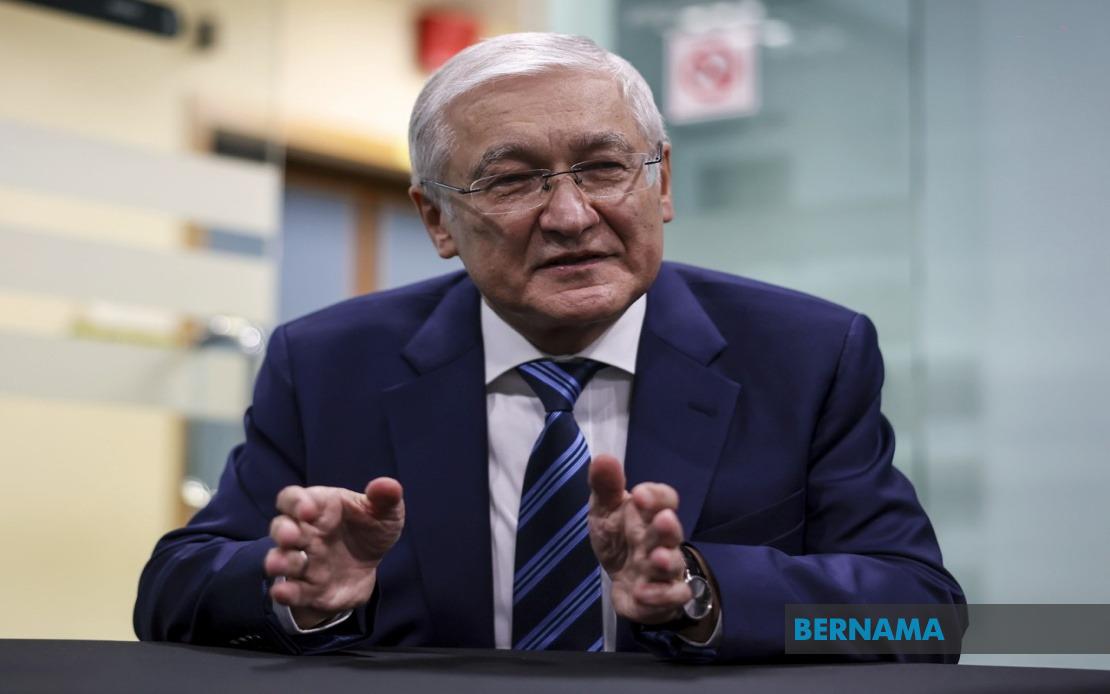
Sultan Ibrahim has become the architect of a significant geopolitical realignment between Malaysia and Russia, using the monarchy's unique diplomatic standing to forge connections that transcend conventional state-to-state engagement. Russian Ambassador to Malaysia Naiyl Latypov has publicly acknowledged this shift, describing how the King's personal commitment to strengthening bilateral ties has introduced an unprecedented warmth into a relationship that, until recently, remained largely formal and transactional. This transformation arrives at a strategically significant moment, as the two nations prepare to commemorate six decades of diplomatic relations next year, with discussions already underway for President Vladimir Putin to undertake a reciprocal state visit to Malaysia in 2027.
The historical significance of Sultan Ibrahim's engagement with Russia cannot be overstated. In August last year, the King became the first Malaysian monarch to conduct a state visit to Russia since formal diplomatic relations were established in 1967, breaking a nearly six-decade pattern of limited high-level royal interaction. This initial journey was followed by a return visit in January, during which Sultan Ibrahim toured the Hermitage Museum in St Petersburg alongside President Putin, a carefully choreographed diplomatic moment that symbolized the deepening of personal rapport between the two leaders. When the King attended Russia's Victory Day celebrations in May, he once again demonstrated Malaysia's willingness to engage meaningfully with Russian state occasions, participating in ceremonies that hold profound cultural and historical meaning for the Russian people.
Ambassador Latypov's assessment reveals the magnitude of this shift from Moscow's perspective. He stressed that Russia deeply values the King's diplomatic approach, viewing it as fundamentally different from how other nations engage with the Kremlin. The ambassador emphasized that Sultan Ibrahim's personal commitment has enabled Russia-Malaysia relations to transcend the limitations of traditional diplomatic channels, entering what he termed a new sphere of engagement. This characterization is particularly significant given the current global geopolitical climate, where Russia faces substantial international isolation following its invasion of Ukraine. Malaysia's willingness to maintain high-level royal engagement with Moscow, despite Western pressure, reflects a carefully calibrated policy of strategic autonomy.
The concrete outcomes of this royal diplomacy extend well beyond symbolic gestures. During Sultan Ibrahim's May visit, the King and President Putin reached undisclosed agreements that Ambassador Latypov suggested would provide fresh momentum to bilateral development. More significantly, Russia has committed to guaranteeing long-term supplies of petroleum, oil and gas to Malaysia, a commitment made during Prime Minister Datuk Seri Anwar Ibrahim's attendance at the ASEAN-Russia Commemorative Summit in Kazan in June. This energy security arrangement addresses one of Malaysia's most pressing strategic concerns, as the nation seeks to diversify its energy sources and reduce vulnerability to supply chain disruptions. President Putin specifically highlighted that bilateral trade had grown by 12.9 per cent in the previous year, describing the figure as very encouraging.
Malaysia's economic relationship with Russia, while less prominent than ties with Western nations, has grown into a substantial partnership. In 2025, Russia ranked as Malaysia's ninth-largest trading partner among European nations, with total bilateral trade valued at RM8.72 billion, equivalent to approximately US$2.04 billion. Malaysian exports to Russia are predominantly composed of electrical and electronic products, machinery, equipment and spare parts, alongside processed food items. In return, Malaysia imports primarily petroleum products, mineral resources, and chemical-based products from Russia. These trade patterns underscore the complementary nature of the two economies, with Malaysia providing manufactured goods and consumer products while Russia supplies crucial energy resources and raw materials.
The energy security dimension of this partnership carries particular weight for Malaysia's long-term development strategy. As a tropical nation with growing energy demands to fuel industrialization and urban expansion, Malaysia has historically depended on regional suppliers and international markets for petroleum and natural gas. Russia's offer of long-term energy supply guarantees represents a strategic hedge against price volatility and geopolitical disruptions in traditional supply corridors. This arrangement also signals Russia's commitment to deepening economic ties beyond the typical pattern of arms sales and military cooperation that characterizes Moscow's relationships with many developing nations.
Prof Dr Azmi Hassan of the Nusantara Academy for Strategic Research provides crucial analytical perspective on how royal diplomacy functions as a tool of statecraft. He argues that the monarchy possesses a form of diplomatic capital unavailable to conventional government ministers and ambassadors, capable of opening doors and creating opportunities that might otherwise remain closed. According to this analysis, Sultan Ibrahim's visits have expanded cooperation not merely at ceremonial or diplomatic levels but, more fundamentally, in the realm of energy security where practical benefits accrue to Malaysia's economy and development prospects. The geostrategist emphasizes that royal diplomacy plays a uniquely important role in elevating prime ministerial discussions with foreign leaders, lending greater weight and solemnity to negotiations.
Looking toward the planned 2027 state visit by President Putin to Malaysia, strategic analysts suggest that the nation should position itself to extract maximum benefit from the engagement. Prof Azmi specifically recommends that Malaysia shift its negotiating priorities beyond conventional trade expansion toward the acquisition of advanced scientific and technological capabilities from Russia. He notes that Russian technological advancement in numerous sectors compares favorably with Western alternatives, yet remains available at significantly more competitive pricing. This strategic reorientation would represent a meaningful shift from Malaysia's traditional reliance on Western technology partnerships, offering opportunities for cost-effective modernization across critical sectors including manufacturing, energy production, and telecommunications.
The historical foundation for this contemporary partnership traces back to 1967, when Malaysia and the Soviet Union established formal diplomatic relations on April 3 of that year, simultaneously concluding a trade agreement. The subsequent years witnessed the establishment of institutional infrastructure, with Russia opening a Trade Office in Kuala Lumpur in November 1967 and elevating diplomatic presence through an embassy in April 1968. Malaysia reciprocated by establishing its embassy in Moscow in November 1968, creating the bilateral institutional framework that has persisted for nearly six decades. However, those early institutions operated within Cold War constraints and, subsequently, within the context of Malaysia's strong Western alignment during the post-Cold War era.
The emergence of Russia as a significant strategic partner for Malaysia reflects broader shifts in global geopolitics and regional alignment patterns. ASEAN nations, including Malaysia, have increasingly adopted strategies of strategic autonomy, maintaining relationships with multiple powers while refusing to align exclusively with any single bloc. This approach serves Malaysian interests by preserving flexibility in foreign policy and maximizing leverage in international negotiations. The royal diplomacy spearheaded by Sultan Ibrahim represents a sophisticated execution of this strategy, leveraging the unique prestige and authority of the monarchy to reshape Malaysia's relationship with Russia while maintaining relationships with traditional Western partners.
Additionally, recent Russian policy developments suggest Moscow's interest in expanding its engagement with Southeast Asia. In June, the Russian news agency TASS reported that Russia aims to abolish visa requirements for citizens of select countries, with Malaysia included in this initiative. Such measures, while seemingly administrative, carry significant symbolic weight in demonstrating mutual commitment to facilitating people-to-people exchanges and deeper integration. Lower visa barriers facilitate business travel, tourism, academic exchanges, and cultural interactions that collectively strengthen the social foundations upon which enduring state-to-state relationships are built.
The 60th anniversary of Malaysia-Russia diplomatic relations in 2026, and the anticipated presidential state visit to Malaysia in 2027, provide a critical juncture for consolidating and advancing this partnership. For Malaysia, the challenge lies in translating the diplomatic momentum generated by royal engagement into tangible economic and strategic benefits. This requires sophisticated negotiation that protects Malaysia's interests while acknowledging Russia's own strategic objectives in Southeast Asia. The kingdom must balance its traditional partnerships with Western nations against emerging opportunities for cooperation with Russia, navigating complex geopolitical terrain with the careful diplomacy that Sultan Ibrahim has already begun to exemplify.

