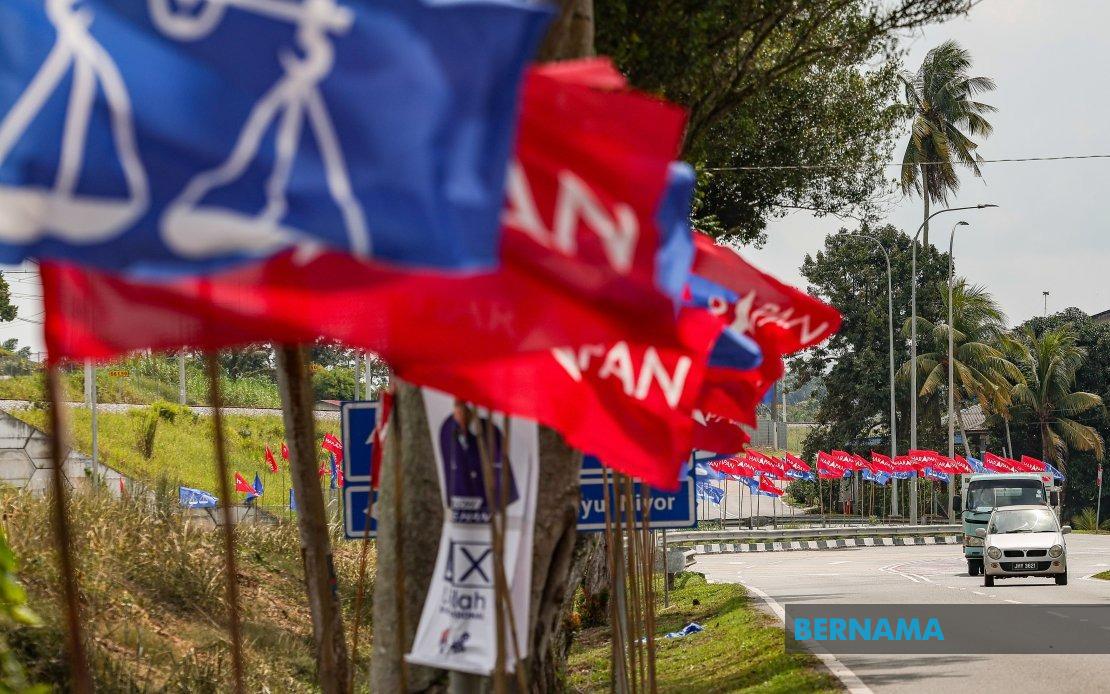
Pakatan Harapan candidate Suhaizan Kaiat has expressed confidence that his coalition can recapture the Larkin seat from Barisan Nasional in the upcoming 16th Johor state election, but he emphasises that success depends critically on mobilising voters to the polls. Speaking after engaging with constituents in Larkin, the Pulai Member of Parliament grounded his optimism in electoral history rather than recent performance, pointing to data that suggests the seat remains competitive under the right circumstances.
The foundation for Suhaizan's confidence rests on voting behaviour during the 14th General Election, when Larkin demonstrated it was winnable for the opposition. That election produced markedly different results from the 2022 Johor state poll, when BN's Mohd Hairi Mad Shah claimed the seat with a majority of 6,178 votes. Suhaizan argues that the 2022 result should not be regarded as an accurate reflection of voter preferences, attributing the outcome to depressed turnout rather than a fundamental shift in constituency sentiment.
Turnout figures provide crucial context for understanding Suhaizan's assessment. In 2022, only 51 per cent of registered voters in Johor cast their ballots, a suppression that Suhaizan directly attributes to restrictions imposed during the COVID-19 pandemic. Such pandemic-era constraints on campaigning and voting created an artificial ceiling on participation, preventing the full voter base from expressing preferences. By contrast, general elections typically draw significantly higher engagement, and Suhaizan believes a return to normal turnout levels would fundamentally alter the electoral landscape in Larkin.
The 2022 Johor election specifically illustrates this dynamic. Datuk Mohd Izhar Ahmad had represented Larkin under the PH-Bersatu banner during GE14, demonstrating that the seat had previously supported an opposition-aligned candidate. His loss in 2022 occurred against the backdrop of weakened turnout and the broader political realignment that saw Bersatu move away from PH. Suhaizan's strategy therefore hinges on reconstructing the coalition that previously prevailed, while capitalising on the fact that depressed participation rates masked underlying voter willingness to support the opposition.
An additional factor strengthening Suhaizan's position involves recent political fractures between Bersatu and PAS, developments that he believes create openings for voter migration. Suhaizan notes that Bersatu is not fielding a candidate in Larkin this election cycle, effectively clearing the field by removing the party that split the opposition vote in 2022. He argues that the historical cooperation between PH and Bersatu could translate into persuasive messaging directed at Bersatu supporters, encouraging them to consolidate behind his candidacy rather than scatter votes across competing opposition or alternative candidates.
The three-way contest Suhaizan faces features incumbent Mohd Hairi representing BN-UMNO, alongside Bersama candidate Norsinah Abu. This configuration differs from 2022 dynamics and creates opportunities for strategic coalition-building. The presence of a Bersama candidate, rather than a Bersatu contender, alters voter calculations and potentially reduces fragmentation of the anti-BN vote that plagued opposition efforts in the previous state election.
Johor's broader electoral context adds weight to Suhaizan's analysis. The state election encompasses 172 candidates competing across 56 state seats, with polling scheduled for July 11 and early voting set for July 7. As Malaysia's most developed state outside the federal territories, Johor carries significant political weight. Control of the state assembly shapes policy on critical issues including economic development, land management, and infrastructure—matters that directly affect millions of Malaysians and ripple across Southeast Asia through supply chains and economic networks.
Turnout improvements would indeed reshape Johor's electoral equation. In GE14, participation across Malaysia exceeded 80 per cent in most constituencies, demonstrating that voter mobilisation significantly outpaces state election engagement. Should Johor replicate general election participation levels, constituencies like Larkin could experience dramatically different outcomes. Suhaizan's message emphasises personal responsibility: voters must overcome inertia and participate actively rather than relying on others to determine the state's political direction.
The opposition coalition's prospects in Johor hinge partly on whether lessons from 2022 have been absorbed. That election saw PH lose control of the state government it had governed since 2018, a result that some analysts attributed to fractured messaging and voter complacency. Suhaizan's explicit focus on turnout reflects recognition that winning requires not merely superior policy platforms but effective voter mobilisation and turnout operation on election day.
For Malaysian voters and observers, Larkin exemplifies broader dynamics affecting Malaysian politics. Suburban constituencies with mixed demographics often determine election outcomes, and Larkin's status as a competitive seat makes it a bellwether for regional sentiment. If Suhaizan successfully activates voters and recaptures the seat, it would signal revitalised opposition momentum. Conversely, if BN maintains control despite improved turnout, it would suggest structural realignment favouring the ruling coalition—an outcome with implications extending beyond Johor to federal politics.
Suhaizan's confidence ultimately rests on a testable proposition: that Larkin voters prefer PH to BN, and that previous BN victories reflected participation constraints rather than genuine preference shifts. The July 11 election will provide definitive answers about whether his analysis proves sound. For Johor's future governance and Malaysia's political trajectory, the stakes attached to seemingly local contests like Larkin should not be underestimated.

