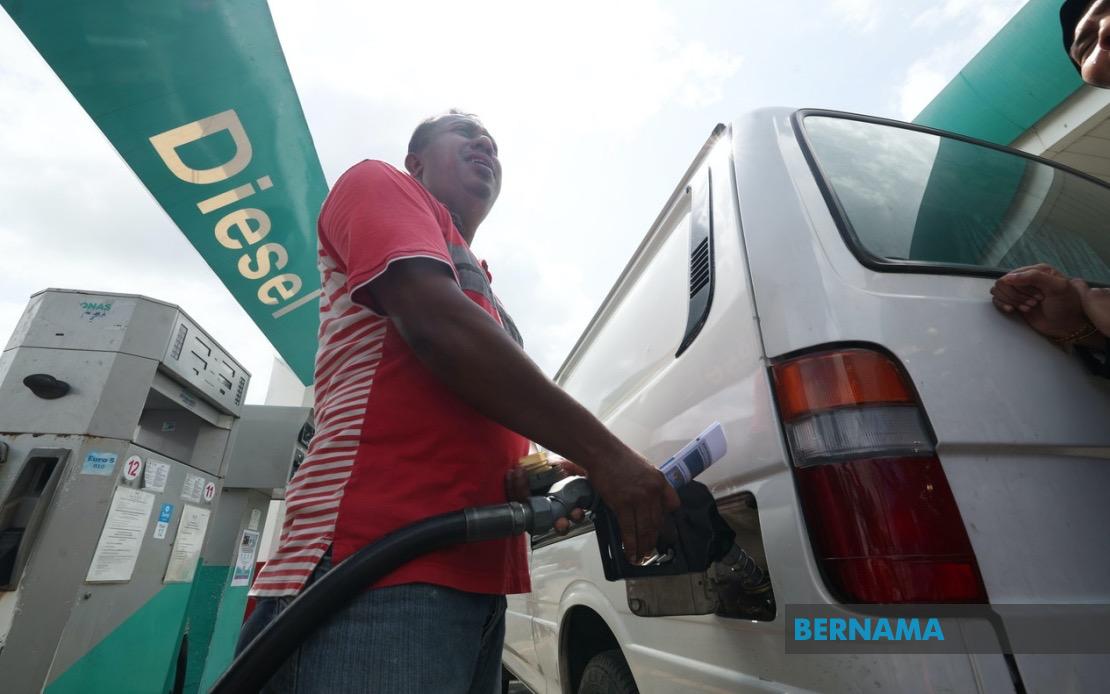
The Malaysian government will lower the price of subsidised diesel to RM2.10 per litre beginning in July 2026, according to an announcement by Prime Minister Datuk Seri Anwar Ibrahim during an official ceremony in Bintulu on June 21. The reduction marks another phase in the government's broader strategy to make fuel assistance more precise and fiscally sustainable, building upon mechanisms already tested through other programmes.
This pricing adjustment represents a continuation of the MADANI administration's approach to restructuring energy subsidies across the nation. Rather than offering blanket fuel discounts to all consumers, the government is implementing what officials term a "targeted" subsidy model that aims to direct assistance specifically to Malaysian citizens who genuinely require state support. The new diesel rate falls under this selective framework, distinguishing it from previous universal subsidy arrangements that applied regardless of consumer income or circumstances.
The verification mechanism for this programme draws directly from the established BUDI MADANI RON95 initiative, which successfully introduced biometric identification through MyKad to control access to subsidised petrol. By adopting this proven technological infrastructure, the government seeks to eliminate fraudulent claims and prevent subsidy leakage to non-citizens or unintended beneficiaries. This layered approach to subsidy administration has become central to how Putrajaya manages its energy assistance budget while attempting to reduce overall government expenditure on fuel support.
Finance Minister II Datuk Seri Amir Hamzah Azizan was designated to provide comprehensive details regarding the operational rollout of the new diesel pricing structure during a media briefing scheduled for the day following the Prime Minister's announcement. The detailed explanation was expected to cover implementation timelines, registration procedures, and technical specifications for how the MyKad verification system would function at petrol stations nationwide. Such clarifications are essential given the complexity of transitioning an entire retail fuel network to a biometrically-controlled subsidy system.
For Malaysian motorists and businesses, the RM2.10 per litre rate carries significant implications across multiple economic sectors. Transportation companies, which rely heavily on diesel fuel, will need to reassess their operational cost projections and pricing models for the second half of 2026. Small and medium enterprises in logistics and delivery sectors will particularly scrutinise how this adjustment affects their profit margins and competitive positioning within supply chain operations throughout Southeast Asia.
The timing of this announcement also connects to broader fiscal considerations facing the Malaysian government. Energy subsidies have historically consumed substantial portions of the national budget, with diesel and petrol support representing long-term structural costs that constrain resources available for infrastructure, education, and healthcare spending. By implementing targeted rather than universal subsidy models, policymakers aim to contain fiscal pressure while protecting vulnerable populations from abrupt price increases that could trigger inflationary pressures.
The MyKad verification approach reflects how Malaysian policymakers are increasingly leveraging digital identity systems to improve the efficiency and equity of government programmes. The technology enables real-time validation of eligibility at point-of-sale, reducing administrative overhead and providing immediate feedback on subsidy utilisation patterns. This technological solution aligns with the government's broader digital transformation agenda and represents a shift towards data-driven governance in the energy sector.
From a regional perspective, Malaysia's subsidy restructuring contributes to broader Asian discussions about the sustainability of energy assistance programmes. Several neighbouring countries face similar budgetary pressures from fuel subsidies and are watching how Malaysia manages the political and economic dimensions of transition to more selective systems. The success or challenges of the BUDI MADANI approach could influence policy decisions across Southeast Asia regarding energy support mechanisms.
The announcement came during the Prime Minister's official participation in the Cheque Handover Ceremony Following the Conversion of Bintulu Port Status from Federal Port to State Port. This ceremonial context underscored Sarawak's economic significance and resource extraction industries that depend substantially on fuel-efficient logistics and transportation. The coincidental timing of the diesel subsidy announcement during a Sarawakian event suggests the government is considering regional economic impacts when structuring energy policy decisions.
Individual Malaysian consumers will experience the new pricing through modified procedures at retail petrol stations beginning July 2026. Unlike the current system where many fuel types carry implicit subsidies absorbed into quoted prices, the new arrangement makes subsidy targeting explicit through the MyKad verification requirement. This transparency, while administratively sound, requires public education campaigns to ensure seamless adoption and prevent confusion during the transition period.
The government's rationale for reducing diesel prices to this specific RM2.10 level likely reflects calculations balancing several competing objectives: maintaining affordability for essential economic activities, protecting vulnerable populations from severe cost increases, controlling overall government subsidy expenditure, and ensuring the financial viability of domestic fuel retailers. These competing pressures consistently challenge energy policy formulation across developing economies.
Looking forward, the success of this diesel subsidy reform will provide important lessons for potential adjustments to petrol pricing and other government assistance programmes. If the MyKad verification system functions effectively and achieves targeted distribution without substantial leakage, it could serve as a template for restructuring other universal subsidies across the Malaysian economy. Conversely, technical problems or public resistance could necessitate policy recalibrations before expansion to additional sectors.

