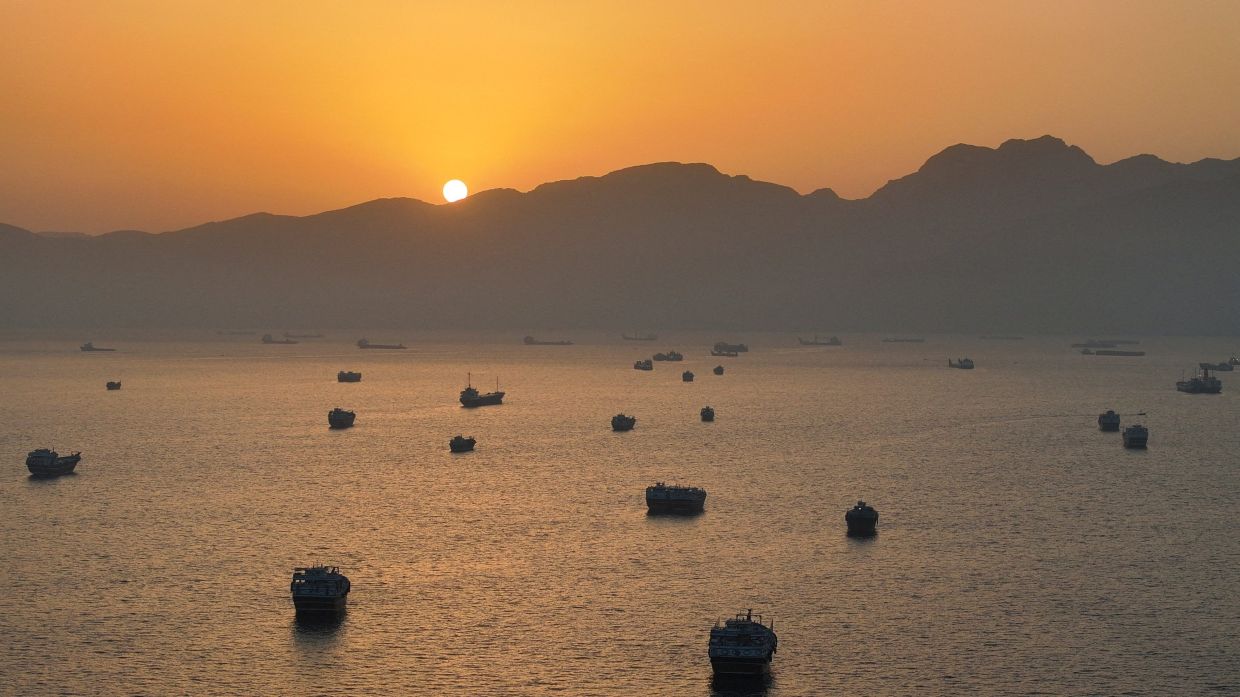
Shipping traffic through the Strait of Hormuz is gradually normalising as an interim arrangement between Iran and the United States begins to release crude supplies that had accumulated in the Persian Gulf over recent months. On Wednesday, three major tankers carrying approximately 5 million barrels of oil passed through the critical waterway, marking a significant shift in the logjam that has constrained global energy markets since Middle Eastern tensions escalated. Among the vessels departing, two are bound for Asian refineries—a reflection of the region's continued dependence on Gulf crude and the immediate benefit Asian energy consumers stand to gain from improved supply flows.
The South Korean-flagged VL Breeze, a Very Large Crude Carrier with a capacity of 2 million barrels, transited the strait carrying a mixture of Qatari condensate and Abu Dhabi crude bound for Daesan in South Korea. The vessel is operating under charter to Hyundai Oilbank, one of South Korea's major petroleum refiners, which has been among the companies most affected by the supply restrictions affecting the region. Simultaneously, the Plata Carrier, a second VLCC flying the Liberian flag and chartered by Indian Oil Corporation, departed the Gulf with 2 million barrels of Saudi Arabian crude. These movements underline how the temporary easing of tensions is directly facilitating Asian refinery operations at a time when crude procurement has become more challenging and expensive.
A third vessel, the Suezmax tanker Prudent Warrior, also sailed westward from the strait carrying 1 million barrels of Iraqi Basrah crude destined for Sohar in Oman. The emergence of multiple tankers simultaneously leaving the congested waterway suggests that shipping logistics and port operations have begun responding to the improved political environment. Collectively, these three vessels represent a tangible volume of crude entering global supply chains after weeks of constraints that had amplified price pressures across international energy markets.
The scale of the backlog that remains underscores how significant the recent jam had become. Analysis from shipping data providers Kpler and Vortexa estimated that close to 90 million barrels of crude oil were trapped within the Persian Gulf region before this recent movement. While Wednesday's departure of 5 million barrels provides relief, it represents only a fraction of the stranded inventory. South Korea's maritime ministry confirmed that four vessels operated by South Korean shipping companies had successfully exited the strait, with one returning to South Korean ports and the others proceeding to third-country destinations.
However, the broader picture remains constrained. Of the 26 vessels that have been stranded since the beginning of the Middle East conflict, eighteen remain trapped within the Gulf, according to South Korea's maritime ministry. This indicates that while the recent Iran-US agreement has created an opening for some traffic, the fundamental shipping crisis has not been fully resolved. The continued presence of such a large number of stranded vessels reflects ongoing uncertainty and the fragility of the current diplomatic arrangement.
The temporary maritime corridors established by Oman and the International Maritime Organization represent a crucial infrastructure adaptation to facilitate safe passage through the contested waters. Oman has committed to maintaining open access through the Strait of Hormuz without imposing transit tolls, having designated two alternative shipping routes—one to the north and one to the south of the conventional shipping lane—to reduce collision risks and provide vessels with safer options for departure. Yet uncertainty persists about whether all the recently departing tankers are utilising these designated corridors, though the availability of these routes has undoubtedly enhanced the confidence of shipping operators to attempt transit.
Beyond crude oil, liquefied natural gas markets are also showing signs of recovery. Two empty LNG tankers, the Shandong Redwood and Milaha Qatar, have been identified west of the strait positioning themselves to load cargoes from Qatar. This brings the total number of empty LNG vessels transiting through the strait to load Qatari gas to nine—the highest count since the conflict began. The resumption of LNG carrier activity is particularly significant for Asian importing nations, especially South Korea, Japan, and India, which depend heavily on liquefied gas imports for power generation and industrial purposes.
Qatar's recovery in LNG production capacity signals growing confidence in the sustainability of the current arrangement. Qatar's Prime Minister Sheikh Mohammed bin Abdulrahman al-Thani stated that the Gulf state expects to resume normal LNG production levels within several weeks, according to reports in the Financial Times. This timeline suggests that Doha anticipates the current de-escalation will hold long enough to justify returning to full operational capacity at its massive LNG export facilities.
For Malaysian and broader Southeast Asian energy security, these developments carry substantial implications. The region's refineries and power utilities remain vulnerable to Gulf supply disruptions, and any sustained relief in Persian Gulf logistics directly benefits regional energy costs and industrial competitiveness. However, the fragility of the current arrangement—evidenced by the persistence of most stranded vessels—warrants caution. Malaysian policymakers and energy sector participants should monitor the durability of the Iran-US interim deal and continue contingency planning for potential future disruptions. The movement of tankers through Hormuz and the gradual normalisation of LNG flows will likely contribute to easing global energy prices in the coming weeks, though achieving a full return to pre-crisis supply levels remains dependent on the political stability of an arrangement still in its earliest stages.

