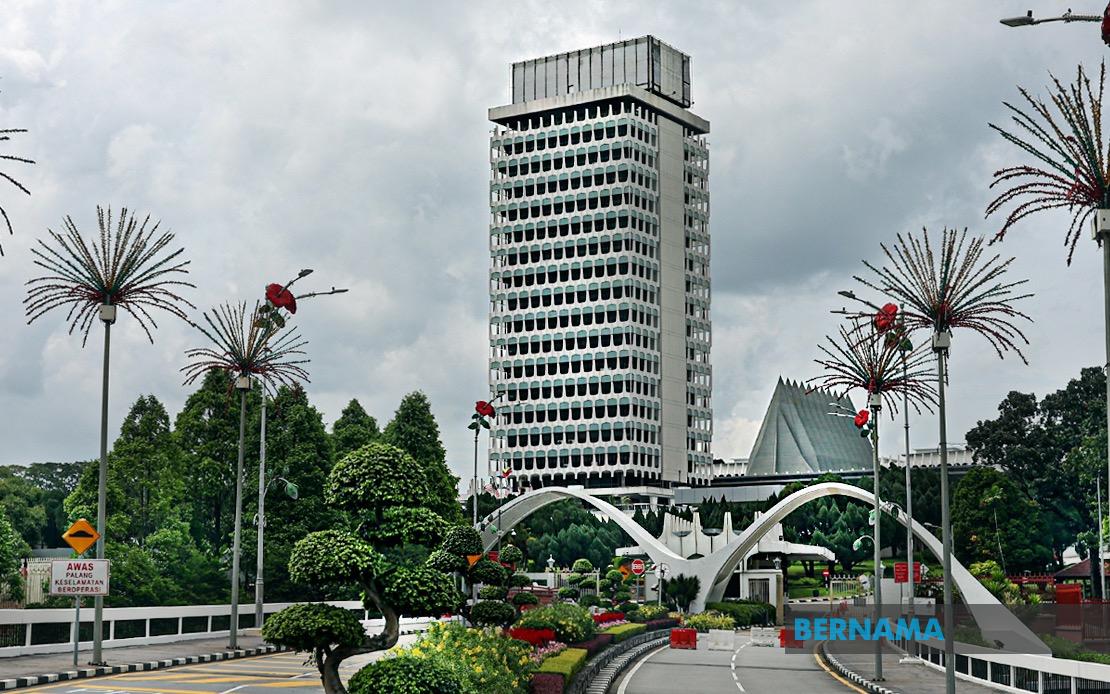
Parliament reconvenes today for a 16-day sitting that will extend until mid-July, with lawmakers primed to scrutinise the government's response to mounting economic pressures stemming from volatility in one of the world's most critical shipping corridors. The opening day's agenda signals deep concern about vulnerabilities in Malaysia's supply chains and the broader macroeconomic consequences of geopolitical tension, reflecting how external shocks in distant waters can reverberate through local factories, shops, and household budgets.
Datuk Dr Richard Rapu @ Aman anak Begri, representing Betong under the GPS banner, will press the Economy Minister for a comprehensive assessment of how disruptions in the Strait of Hormuz are affecting Malaysian businesses. His line of questioning targets two critical indicators: the extent to which operating costs have risen across local industries and whether the second quarter inflation figures for 2026 reflect these pressures. The Strait of Hormuz remains a chokepoint through which roughly one-third of global maritime trade in petroleum passes, making any interruption to flows a matter of serious economic consequence for an import-dependent nation like Malaysia.
Beyond the immediate cost pressures, Rapu will also interrogate the government's contingency planning under the 13th Malaysia Plan, seeking assurances that strategies exist to maintain GDP growth targets should the global economy slide into recession. This line of questioning hints at a broader anxiety: that Malaysia's development ambitions could be derailed by external economic shocks beyond the nation's direct control. The 13MP is the government's medium-term economic roadmap, and any admission that recession contingencies are inadequate could weaken investor confidence and cast doubt over official growth forecasts.
The parliamentary session will also address the deeply personal issue of haj pilgrimage, an obligation that touches millions of Malaysian Muslims. Onn Abu Bakar, the Batu Pahat legislator, will question the Prime Minister on reforms to the haj management system expected in 2027. His focus encompasses three areas that directly affect aspirant pilgrims: the total cost of undertaking the journey, the length of waiting periods before allocation, and safeguards for pilgrim welfare and health. Malaysia's haj system has long grappled with bottlenecks and cost pressures, with thousands on waiting lists and families saving for years to afford the pilgrimage. Improvements in system efficiency could ease financial strain on middle and lower-income households planning this religious obligation.
Artificial intelligence governance will emerge as another critical parliamentary concern, reflecting Southeast Asia's anxious dance with transformative technology. Wong Shu Qi of Kluang will quiz the Digital Minister on whether the pending Artificial Intelligence Governance Bill will contain explicit safeguards against malicious uses—specifically the creation of non-consensual synthetic sexual material depicting children, identity fraud through deepfakes, and distribution of explicit content without permission. These questions underscore growing awareness that rapid AI adoption, without robust guardrails, poses genuine risks to vulnerable populations and social cohesion.
Food security anxieties will also dominate proceedings, with Datuk Dr Radzi Jidin raising the spectre of Middle East conflict disrupting Malaysia's agricultural supply chains. The Putrajaya legislator will demand clarity from the Agriculture and Food Security Minister regarding short-, medium-, and long-term interventions designed to shield the nation from international food price shocks and supply volatility. For a country that imports significant quantities of staple foods and livestock, such vulnerabilities have direct implications for household food affordability and political stability.
The parliament's agenda extends beyond oral questions into substantive legislative business. Two bills are scheduled for tabling: the Cybercrime Bill 2026, which will likely expand legal tools to combat digital crime, and an amendment to the Road Transport Act, suggesting ongoing refinement of transport regulations. These parallel tracks—immediate economic accountability and forward-looking legislation—reflect parliament's dual role as both watchdog and architect of policy.
The 16-day sitting itself carries symbolic weight in the parliamentary calendar. Extended sessions allow for deeper engagement with complex policy matters than short one or two-day affairs, signalling that the government and opposition view the coming weeks as a crucial window for legislative action and executive accountability. For Malaysian observers and regional economic watchers, the tone and substance of debates during this sitting will offer clarity on how seriously policymakers are taking external economic risks and whether domestic institutions possess the nimbleness to adapt to rapid change.
What emerges from these parliamentary priorities is a portrait of Malaysia navigating multiple simultaneous pressures: international trade fragility, the need to modernise pilgrimage administration, rapid technological change requiring governance innovation, and food system vulnerabilities in an unstable world. How effectively parliament holds the executive to account on these fronts will partly determine whether Malaysia can sustain its development trajectory or whether external shocks will derail progress.

