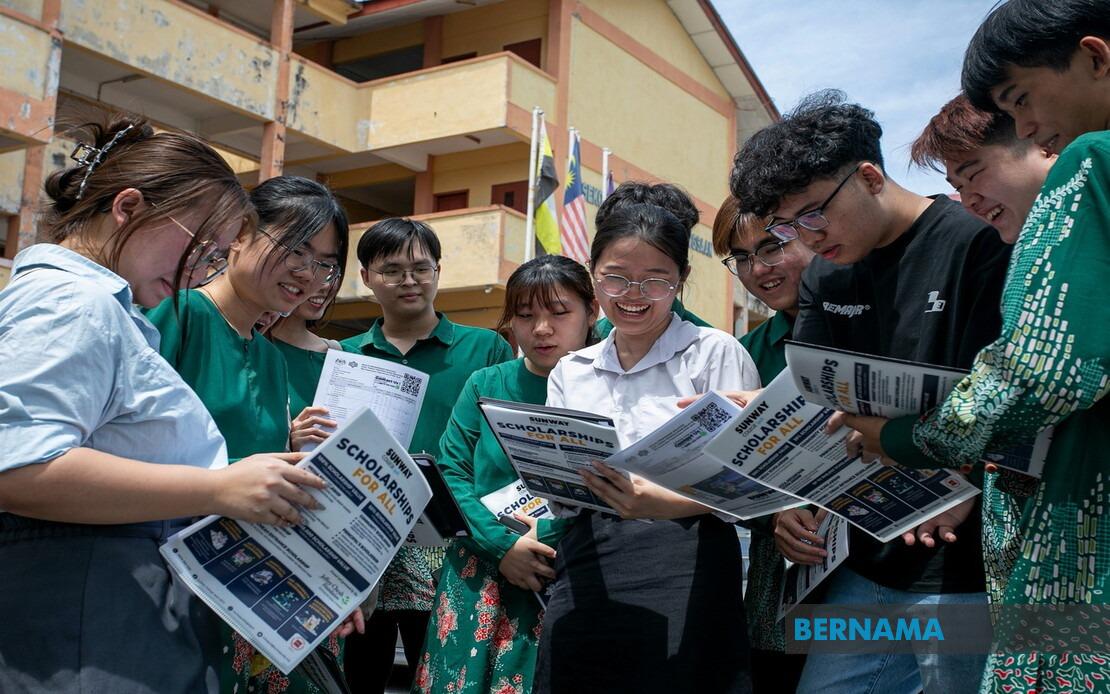
The Sijil Tinggi Persekolahan Malaysia (STPM) continues to demonstrate its strength as a rigorous and accessible route into higher education, with excellence award recipients from the Malaysian Examinations Council highlighting how students from different communities and circumstances are thriving through Form Six. Three standout achievers who earned perfect 4.00 Cumulative Grade Point Average scores during the 2025 examination cycle represent a broader narrative about the programme's resilience in an increasingly competitive educational landscape, despite occasional perception that it occupies a secondary position compared to alternative post-secondary options.
Hazaril Hakimi Hassan, an Orang Asli student from Kampung Paya Mendoi in Kuala Krau, Pahang, exemplifies how the STPM pathway reaches beyond urban centres and traditional student demographics. His achievement of a flawless CGPA came after he came to appreciate the genuine advantages of selecting Form Six, a decision that previously might not have received sufficient emphasis within his community. With backing from teachers and family members who recognised the value of the qualification, Hazaril gained the confidence to pursue this route with full commitment. Now enrolled at SMK Temerloh, he intends to study Malay Language Education at Universiti Putra Malaysia with aspirations toward an academic career as a university lecturer, representing a meaningful pathway from rural Malaysia toward professional achievement.
The financial accessibility of Form Six emerged as a significant theme when Ng Yu Yong, a student from SMK Tsung Wah in Kuala Kangsar, Perak, discussed his reasons for selecting STPM over competing educational pathways. Beyond cost considerations, which favour families with limited educational budgets compared to some private alternatives, Ng articulated a deeper conviction that Form Six cultivates superior academic rigour. He described the qualification as internationally respected and as a foundation for entry into premier universities both domestically and overseas, positioning it as an intellectually demanding option for those genuinely committed to excellence rather than merely seeking an easy passage into higher learning. With five A grades including distinctions in Physics and Biology, Ng is targeting the Bachelor of Medicine and Bachelor of Surgery programme at Universiti Malaya, viewing STPM as the optimal preparation for medical studies.
Yeoh Chwen Yih's achievement as a visually impaired student completing Form Six with a perfect 4.00 CGPA reveals an often overlooked dimension of the programme: its institutional capacity to accommodate learners with diverse accessibility requirements. Operating from St John's Institution, Yeoh benefited from screen-reading technology that substantially improved the speed and effectiveness of engaging with learning materials compared to traditional Braille resources. This technological integration allows visually impaired students to participate more fully in the standard curriculum without artificial barriers, creating what Yeoh characterised as a genuinely inclusive educational environment. For Yeoh, who harbours ambitions in law, STPM presented itself as the most suitable pathway given these structural advantages, demonstrating that inclusive excellence need not be a contradiction in Malaysian education.
The significance of these three student profiles lies partly in what they collectively suggest about STPM's positioning within Malaysia's educational ecosystem. While questions periodically arise about the relative prestige or utility of Form Six compared to other post-secondary qualifications, these award winners illustrate that the programme attracts ambitious, capable individuals from varied socioeconomic and demographic backgrounds. Rather than functioning as a default option for those unable to access premium alternatives, STPM in these cases represents a deliberate, strategically considered choice by high-achieving students.
For policymakers and educators monitoring the health of Malaysia's secondary-to-tertiary transition systems, the data suggested by these award recipients offers reassurance about STPM's continued competitiveness. The programme maintains international recognition, enabling graduates to pursue university degrees at established foreign institutions alongside domestic options. This global connectivity matters significantly for Malaysian students aspiring toward international careers or professional qualifications that demand recognition beyond national borders.
The cost advantage that Ng emphasised remains particularly relevant given Malaysia's socioeconomic diversity and the financial pressures many families navigate when supporting children through post-secondary education. Form Six's affordability compared to certain private sixth-form colleges or international baccalaureate programmes makes advanced academic qualification accessible to students across broader income spectrums, thereby supporting both individual social mobility and national goals around educational equity.
Hazaril's emergence from a rural Orang Asli background carries implications for educational outreach and representation. Indigenous communities have historically experienced lower participation rates in advanced academic pathways, partly reflecting limited awareness of opportunities and partly reflecting structural barriers to access. When accomplished students from these communities complete STPM successfully and progress toward university and professional careers, it establishes visible precedent and role models that can encourage subsequent cohorts to pursue similar trajectories.
The intersection of academic rigour and accessibility that these three students embody suggests that STPM need not choose between maintaining demanding standards and serving diverse learners. The perfect grades they achieved demonstrate that the examination sets sufficiently challenging parameters to identify genuinely exceptional candidates. Simultaneously, the presence of an Orang Asli student, a student pursuing medicine, and a student with visual impairment among top scorers indicates that excellence is distributed across different demographic and circumstantial categories rather than concentrated within privileged subgroups.
Moving forward, these individual success stories suggest that STPM's competitive position within Malaysian education depends substantially on continued emphasis on accessibility, technological support for students with diverse needs, and active promotion of the qualification's advantages to communities that historically may have underutilised it. When Form Six proves demonstrably capable of producing exceptional graduates prepared for demanding university programmes and future professional success, while simultaneously remaining financially viable for families across income spectrums and accommodating students with varying accessibility requirements, it fulfils its essential role in Malaysia's educational architecture with particular effectiveness.

