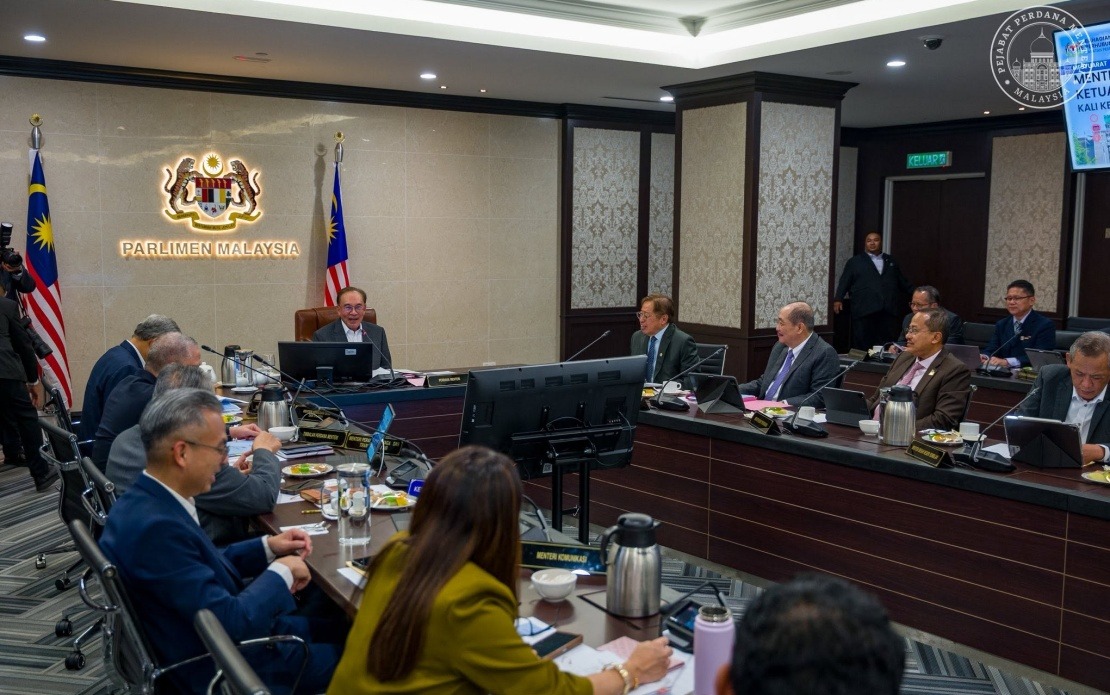
Prime Minister Datuk Seri Anwar Ibrahim brought together the country's state leaders at the Parliament Building for the 149th Meeting of Menteris Besar and Chief Ministers, signalling a coordinated push to reinvigorate Malaysia's economic performance in a period marked by international volatility. The gathering, which took place in Kuala Lumpur, underscored the federal government's commitment to fostering consensus with state administrations on critical policy matters that will shape the nation's developmental trajectory over the coming months.
The centrepiece of discussions centred on strategies to strengthen and revive the domestic economy, particularly as global uncertainty stemming from conflicts in West Asia threatens to ripple through regional and international trade networks. Malaysia, as an open economy heavily reliant on external trade and investment flows, faces mounting pressure to maintain growth momentum despite these external shocks. The collective deliberation among top state and federal officials reflects the recognition that economic resilience requires coordination across all levels of government, with states playing a crucial role in implementing policies that drive growth at the grassroots level.
Beyond immediate economic concerns, the meeting gave substantial attention to Malaysia's vulnerability to the El Niño phenomenon, a climatic pattern expected to exert considerable pressure on multiple sectors. The discussions identified several interconnected risks: potential disruptions to water supply infrastructure, threats to agricultural productivity, and broader implications for food security across the nation. Additionally, policymakers flagged the heightened danger of extreme heat waves and haze episodes, which carry public health consequences and could dampen economic activity in affected regions. This forward-looking environmental agenda reflects a maturing approach to governance that integrates climate adaptation into mainstream economic planning.
The meeting's outcome emphasised the necessity for policy implementation that transcends traditional silos and departmental boundaries. Rather than isolated sectoral initiatives, leaders agreed to pursue an integrated framework where various government programmes work in concert to achieve shared objectives. This integrated approach holds particular significance for Malaysia's diverse geography and varied economic structures—what works in the industrial corridors of Selangor may require adaptation in the agricultural heartlands of Kedah or the resource-dependent regions of Sarawak and Sabah. The emphasis on efficiency signals a commitment to reducing bureaucratic friction and ensuring that development benefits reach citizens more swiftly.
Central to the discussion was the imperative to position Malaysia as an attractive destination for high-quality foreign direct investment. The nation faces intensifying regional competition from Vietnam, Thailand, and Indonesia as countries seek to diversify supply chains away from China and capture opportunities in semiconductors, renewable energy, and advanced manufacturing. By strengthening economic competitiveness, Malaysia aims to secure its share of this investment wave. The state leaders' collective endorsement of this strategy underscores the understanding that sustained prosperity depends on moving up the value chain rather than competing on labour costs alone.
Anwar's characterisation of the meeting's tone—emphasising togetherness and consensus—carries significance beyond diplomatic niceties. In Malaysia's federal structure, tensions periodically emerge between state and federal authorities over fiscal matters, resource allocation, and policy autonomy. A demonstration of harmony and unified purpose, especially when articulated by the Prime Minister, helps build public confidence in government's capacity to navigate complex challenges. This consensual approach also creates political space for implementing potentially difficult economic reforms without allegations of partisan bias or regional discrimination.
The safeguarding of Malaysian well-being emerged as a guiding principle throughout the deliberations, reflecting a people-centric dimension to economic policy. This framing suggests that discussions extended beyond GDP figures to encompass quality of life metrics, livelihood security, and equitable distribution of prosperity. Given Malaysia's diverse demography and the persistent regional disparities in income and development infrastructure, a commitment to comprehensive benefit-sharing matters politically and socially. The state leaders' endorsement of this philosophy provides legitimacy for policies that may involve redistribution or targeted support for disadvantaged communities.
The West Asia conflict's economic ramifications figured prominently in the meeting's analysis. Disruptions to shipping routes, volatility in energy prices, and the diversion of supply chains carry immediate consequences for Malaysian exporters, manufacturers, and consumers. These geopolitical tremors underscore why economic revival cannot rely solely on domestic policy adjustments; Malaysian policymakers must remain attuned to international developments and position the nation advantageously within shifting global networks. The state leaders' engagement with these transnational dynamics suggests a sophisticated understanding of how external forces penetrate and shape local economic opportunities.
Moving forward, the consensus forged at this meeting will likely translate into coordinated action plans spanning multiple policy domains. States will be tasked with translating federal directives into localized strategies suited to their respective economic structures and challenges. The success of this coordinated approach hinges on sustained communication, resource allocation, and commitment from both state and federal authorities. For Malaysian citizens and businesses, the tangible benefits will become apparent through improved infrastructure, streamlined regulatory processes, enhanced labour productivity, and ultimately, employment opportunities and rising incomes.

