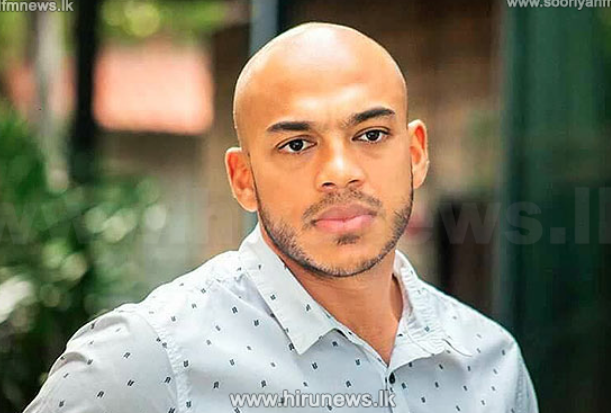
Colombo authorities have detained Yoshitha Rajapaksa, the 38-year-old son of former president Mahinda Rajapaksa, following allegations that he improperly accessed government resources while advancing his naval career without meeting established qualifications. The Bribery Commission announced the arrest on Wednesday, Jun 17, signalling an intensified crackdown against members of Sri Lanka's formerly dominant political clan that wielded extraordinary influence over the nation's governance for decades.
The charges against Yoshitha centre on his rapid promotion through military ranks despite lacking the requisite credentials to qualify for advancement, coupled with his subsequent utilisation of state treasury funds to attend prestigious international training programmes. Prosecutors allege he received assistance in these arrangements, making aiding and abetting a central component of the formal charges he now faces. His attendance at Dartmouth, Britain's renowned naval training college, occurred whilst his father occupied the presidency, a period critics argue he exploited family connections to secure opportunities unavailable through standard competitive selection processes.
The Rajapaksa case exemplifies a broader pattern of nepotism that characterised the family's two-decade stranglehold on Sri Lankan politics. Multiple family members rose to senior positions without conventional competitive scrutiny, and their business dealings frequently attracted questions about improper asset accumulation. The decision to sponsor Yoshitha's costly Dartmouth coursework from the public purse became emblematic of preferential treatment that extended to immediate relatives, displacing qualified military officers whose credentials genuinely merited selection based on merit-based frameworks.
Yoshitha's legal difficulties extend considerably beyond the immediate corruption allegations. He currently faces two separate money-laundering investigations and operates under a mandatory foreign travel restriction imposed by authorities. He had remained on bail until this week's arrest, a status that constrained his freedom but allowed continued residence in Sri Lanka. These parallel cases suggest that prosecutors possess substantial documentation regarding his financial activities across multiple domains, potentially implicating broader schemes of illicit wealth accumulation.
Particularly troubling for the accused is a separate prosecution examining his inability to satisfactorily document the financial sources underlying a residential property acquisition made during Mahinda's presidential tenure. When questioned about his funds, Yoshitha attributed the money to gemstones purportedly gifted by his paternal grandmother, an explanation prosecutors apparently regarded as implausible. The grandmother herself cannot account for how she obtained these precious stones, rendering the narrative entirely unsubstantiated in official eyes. A third proceeding involves questionable circumstances surrounding his acquisition of a television broadcasting network, suggesting possible misappropriation or undisclosed beneficial ownership arrangements.
The accelerated tempo of prosecutions targeting the Rajapaksa clan reflects transformative political dynamics that emerged following the 2024 presidential election. Anura Kumara Dissanayake's victory was fundamentally predicated upon public frustration with endemic corruption and economic mismanagement. Dissanayake explicitly campaigned on dismantling corrupt networks and pursuing accountability, campaign promises that carried particular resonance given Sri Lanka's catastrophic 2022 economic collapse. That crisis, triggered by decades of fiscal irresponsibility and institutional decay, forced the nation to surrender hard currency reserves and prompted Gotabaya Rajapaksa, who had assumed the presidency in 2019, to flee the country amid civil unrest.
Gotabaya Rajapaksa, Mahinda's younger sibling, presided over Sri Lanka during the turbulent 2019-2022 period characterised by mounting inflation, currency depreciation, and severe shortages of essential commodities. Street protests mushroomed into a popular uprising that rendered his continued governance untenable, culminating in his departure to Singapore and later relocation beyond Sri Lankan jurisdiction. Recently, authorities implemented a foreign travel prohibition restricting Gotabaya within national borders, an action he has contested through the courts. His legal exposure intensifies further given an outstanding petition to prevent his potential prosecution regarding the Easter Sunday bombings of 2019, a coordinated attack on hotels and churches that claimed 279 lives and remains Sri Lanka's deadliest terrorist atrocity.
Prosecutorial momentum against the broader Rajapaksa network has accumulated substantially over preceding months and years. Family members and close political associates face diverse accusations encompassing corruption, financial crime, and even murder allegations. Notably, these prosecutions remain unresolved within the judiciary, creating extended legal uncertainty and preventing final determinations of responsibility. The protracted nature of these cases reflects both evidentiary complexity and the institutional challenges confronting Sri Lanka's justice system, though the consistent filing of charges suggests investigative authorities have constructed substantial cases warranting public proceedings.
For Malaysian and regional observers, the Rajapaksa prosecutions offer instructive lessons regarding accountability mechanisms in democratic societies confronting entrenched elite corruption. Sri Lanka's institutional response demonstrates that electoral transitions can create political space permitting formerly suppressed accountability efforts to proceed. However, the extended timelines for legal resolution also illustrate the substantial institutional resources required for successful prosecution of high-profile political figures. The regional resonance of these cases extends beyond Sri Lanka, as multiple Southeast Asian democracies grapple with comparable questions about balancing transitional accountability with institutional stability and rule-of-law imperatives.
The concentration of wealth and political authority within the Rajapaksa family—spanning executive positions, military commands, business enterprises, and legislative representation—represented a governance model increasingly perceived as illegitimate by electoral majorities. Yoshitha's arrest symbolises the dismantling of that concentrated power structure, though prosecutorial success remains contingent upon judicial proceedings that may extend across multiple years. The case also underscores broader patterns whereby political dynasties throughout South and Southeast Asia have frequently employed state resources for familial advancement, normalising corruption as a systemic feature rather than aberration.