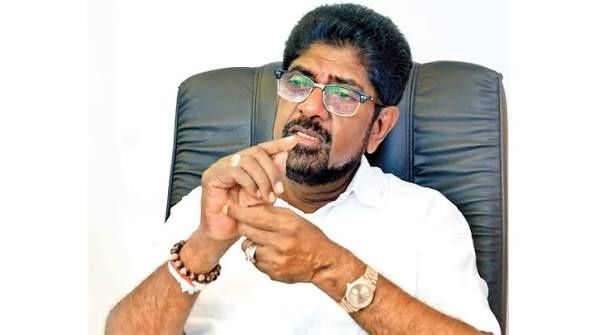
Sri Lanka's anti-corruption authorities have apprehended Keheliya Rambukwella, a former government minister, in connection with the theft of a historically significant ceremonial stone taken from the palace of the nation's last Sinhala king. The Commission to Investigate Allegations of Bribery or Corruption disclosed the arrest on Tuesday, August 18, linking Rambukwella to the December 2022 disappearance of a carved granite moonstone that once formed part of the symbolic entrance structure to the residence of Veera Parakrama Narendrasinghe, who ruled until 1739.
The moonstone represents far more than an ordinary decorative artifact in Sri Lankan cultural consciousness. Such stones occupy a revered position in traditional Sinhala architecture and hold deep symbolic significance in Buddhist heritage. The removal of such a piece from a royal palace where it had stood for centuries represents not merely theft of property but a violation of national historical patrimony. The stone's weight and the elaborate carving work involved suggest this was not an opportunistic grab but a calculated operation requiring knowledge and resources.
According to the anti-corruption commission's findings, Rambukwella played an active role in orchestrating the object's removal during his tenure as a government minister. The authorities allege he conspired with others, provided assistance, and subsequently worked to obstruct police investigators attempting to unravel the crime. This obstruction component adds a layer of seriousness to the charges, indicating that Rambukwella allegedly used his official position and connections to shield those involved and frustrate the investigative process.
The moonstone case represents only one facet of the mounting legal difficulties confronting the former official. Simultaneously, Rambukwella faces separate charges related to his time as health minister, accusations that touch upon governance failures during Sri Lanka's severe economic crisis. Authorities have charged him with misappropriating government funds by using state money to pay six individuals who worked for his private business interests, a common pattern of corruption allegations in countries where political office holders blur lines between public duty and personal enrichment.
Perhaps more troubling than the stone theft are the charges stemming from his health ministry tenure. Court documents reveal that during his watch as health minister, Rambukwella authorized the procurement of what officials believed to be a critical cancer treatment medication. The substance ultimately proved to be nothing more than water, a particularly egregious deception given that cancer patients represent among the most vulnerable population segments requiring genuine pharmaceutical intervention. This incident exemplifies how corruption in procurement systems directly translates into human suffering and potentially cost lives.
The contaminated medicine scandal extends well beyond Rambukwella's individual culpability. Multiple senior officials within the health ministry have faced indictment as part of the same investigation, suggesting systematic corruption within the institution rather than isolated misconduct by a single actor. The pattern indicates either a coordinated scheme or institutional failures that permitted such fraudulent transactions to proceed unchecked through normal approval mechanisms.
Contextualizing these charges requires understanding the economic circumstances prevailing during Rambukwella's health ministry service. Sri Lanka confronted an unprecedented economic collapse in April 2022, defaulting on approximately US$46 billion in foreign debt and triggering a national bankruptcy declaration. This financial catastrophe created acute shortages of essential medicines throughout the island's healthcare system, meaning patients faced genuine scarcity of legitimate treatments. In such an environment, the purchase of fraudulent cancer medication represents not merely financial theft but a compounding of genuine human tragedy, as patients expecting treatment received worthless liquid instead.
The arrest signals that Sri Lankan anti-corruption mechanisms continue operating despite the country's broader institutional challenges. The CIABOC's willingness to pursue a former minister on multiple fronts—the royal stone theft, misuse of health ministry authority, and private business fund diversion—suggests at least some accountability infrastructure remains functional. However, the severity and apparent prevalence of the misconduct charges raises questions about how such patterns developed and persisted within government institutions.
For Malaysian observers, the Sri Lankan case illustrates the risks inherent when political office and official authority become intertwined with private business interests. The combination of heritage theft, pharmaceutical fraud, and fund misappropriation reflects a broader pattern of governance failure that extends beyond individual criminal acts. As Southeast Asian nations work to strengthen institutional integrity and public trust in government, the Rambukwella case serves as a cautionary example of how concentrated power without adequate oversight mechanisms can produce cascading abuses affecting both cultural patrimony and public health.
The investigation remains ongoing, with court proceedings likely to extend over an extended period. How the prosecution of Rambukwella and his co-accused develops will carry implications for Sri Lanka's post-crisis institutional recovery and its capacity to restore public confidence in governance structures fundamentally damaged by years of high-level misconduct.

