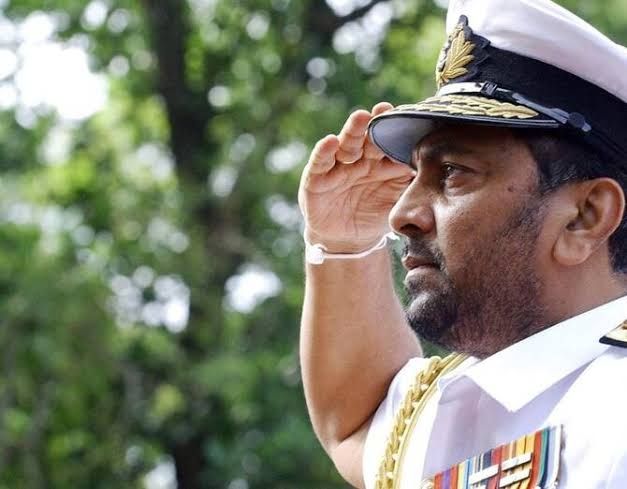
Sri Lanka's Bribery Commission has arrested Admiral of the Fleet Wasantha Karannagoda over his alleged role in securing the irregular military enlistment of Yoshitha Rajapaksa, the son of former president Mahinda Rajapaksa. The 73-year-old former naval commander was taken into custody on Friday over corruption allegations stemming from the 2006 recruitment, which the commission says occurred without the required qualifications being met. The arrest represents a significant escalation in Sri Lanka's campaign against high-level corruption and the long-shadowed influence of the Rajapaksa political dynasty, which has dominated the island's politics for nearly two decades.
Karannagoda occupied a crucial position in Sri Lanka's military hierarchy during the final stages of the country's decades-long conflict with Tamil separatists, serving as navy commander when the conflict formally ended in 2009. His subsequent elevation to the rank of admiral of the fleet in 2019 underscored his prominence within defence circles. However, his retirement from active service means he currently holds no operational role within the naval establishment, potentially simplifying prosecutorial efforts against him. The charges specifically relate to how his position allowed him to circumvent standard military recruitment procedures to facilitate Yoshitha Rajapaksa's entry into naval service.
The case against Karannagoda forms part of a broader corruption investigation involving Yoshitha Rajapaksa, who has already been arrested and released on bail in connection with related allegations. The younger Rajapaksa faces separate charges concerning the use of public funds to finance his attendance at the Royal Naval College Dartmouth, Britain's prestigious officer training institution. This aspect of the investigation highlights how military privileges were allegedly exploited to provide elite foreign education at state expense, raising questions about governance standards within Sri Lanka's defence establishment during the Rajapaksa presidency.
Yoshitha Rajapaksa, now 38, faces multiple criminal investigations that extend well beyond his military recruitment and training. He is also undergoing prosecution for his inability to satisfactorily explain the financial sources behind his purchase of residential property while his father held presidential office between 2005 and 2015. In response to investigators' questioning about these funds, Yoshitha claimed he had raised money by selling gemstones gifted to him by his grandaunt. However, this explanation has proven problematic, as his grandaunt subsequently acknowledged she could not recall how she had originally obtained the precious stones in question, creating a significant credibility gap in the account of these transactions.
Karannagoda also faces additional serious allegations that predate his current arrest. He has been accused of committing war crimes and serious human rights violations, including allegations of extrajudicial killings. These charges resulted in British sanctions imposed against him in March 2025, marking international recognition of these grave accusations. Furthermore, he confronts conspiracy to murder charges related to the deaths of eleven young men who died between 2008 and 2009, a period coinciding with the final phase of the Tamil conflict and its immediate aftermath. These charges carry particular weight given their connection to alleged violations during a sensitive period in Sri Lanka's recent history.
The revival of conspiracy to murder charges against Karannagoda represents a telling indicator of Sri Lanka's shifting political landscape. The original charges were dismissed in October 2021 when Gotabaya Rajapaksa, Mahinda Rajapaksa's younger brother, served as president. Under Gotabaya's administration, cases against the broader Rajapaksa network and their associates were effectively shelved or deprioritised. However, the political transition following President Anura Kumara Dissanayake's election in September 2024 fundamentally altered this trajectory. Dissanayake's administration explicitly campaigned on an anti-corruption platform and pledged to pursue previously unresolved high-profile criminal cases, signalling a departure from the protective approach of the preceding Rajapaksa-dominated government.
The resurgence of prosecutions under Dissanayake's watch reflects a deliberate attempt to address what many observers view as a legacy of impunity within Sri Lanka's power structures. Multiple members of the Rajapaksa family and their political associates now face criminal charges spanning various offences, with numerous cases still pending adjudication in the courts. This includes allegations ranging from corruption and financial impropriety to serious human rights violations. The sheer number and scope of these investigations suggest a systematic unwinding of the shield that previously protected these influential figures from legal accountability during periods when they or their allies controlled the executive.
Gotabaya Rajapaksa, Mahinda's younger brother and the immediate predecessor to Dissanayake in the presidency, has recently been subjected to a foreign travel ban. The restrictions were imposed amid allegations connecting him to the 2019 Easter Sunday bombings, which resulted in the deaths of 279 people across multiple coordinated attacks on churches and luxury hotels in Colombo and other locations. This sanction underscores the administration's willingness to pursue members of the broader family unit, not merely peripheral associates. The travel ban effectively confines him to Sri Lankan territory while investigations proceed, preventing any potential flight to avoid prosecution.
For Malaysian and broader Southeast Asian observers, the Karannagoda arrest carries instructive implications regarding judicial independence and the cyclical nature of accountability in post-conflict societies. Sri Lanka's experience demonstrates how authoritarian governance can temporarily shield powerful military figures and political elites from justice, only for legal mechanisms to reassert themselves under different political administrations. The willingness of successive governments to either protect or prosecute the same individuals based on political convenience raises questions about the sustainability and impartiality of institutional frameworks. Malaysia, with its own experiences navigating between periods of intensive prosecution and political interference in the judiciary, may find relevant lessons in observing how Sri Lanka manages these competing pressures.
The strategic implications of these prosecutions extend beyond individual accountability to affect civil-military relations and the normative environment within state institutions more broadly. When high-ranking military officers are subject to credible corruption and war crimes allegations without protection from political allies, it potentially signals that institutional independence has been strengthened and that no position guarantees immunity from legal processes. Conversely, the previous protection afforded to these figures under Gotabaya Rajapaksa's presidency demonstrated how executive power could be wielded to shield even serious allegations from judicial scrutiny. The tension between these two approaches reflects fundamental questions about governance that resonate throughout the region, where civilian control of military institutions and the independence of prosecutorial bodies remain contested issues in numerous democracies.

