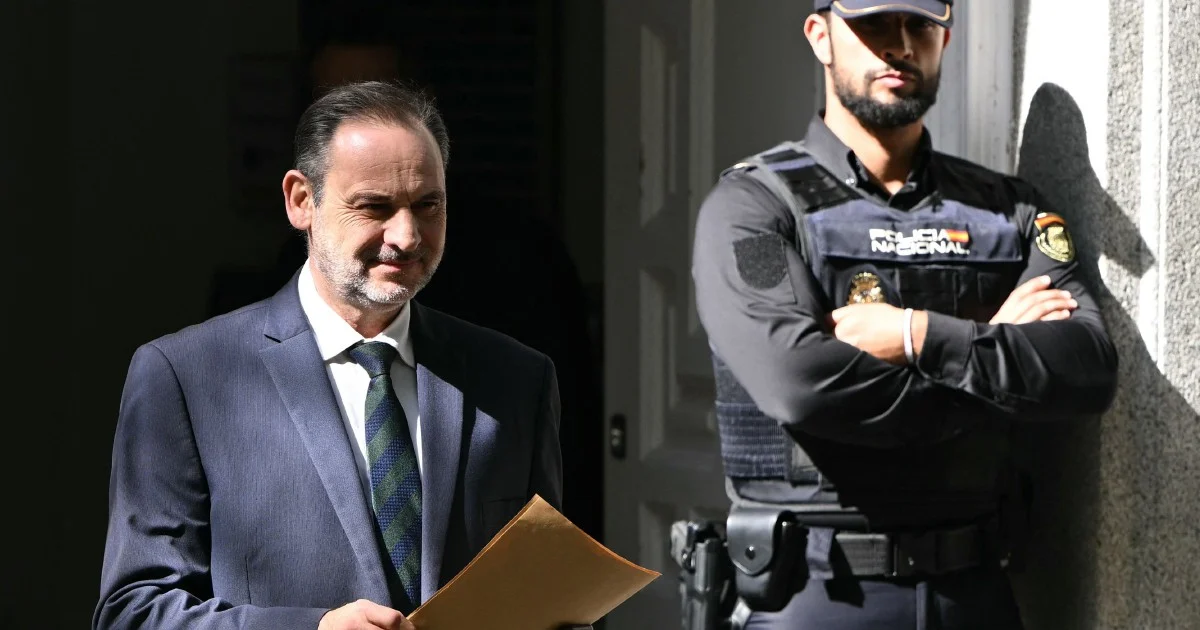
Spanish courts have delivered a damning verdict on high-level political corruption with the conviction of Jose Luis Abalos, a senior figure who once served as transport minister and as a trusted advisor to Prime Minister Pedro Sanchez. The Madrid-based court imposed a 24-year prison sentence on Monday, following investigations into graft charges that have cast a shadow over Spain's socialist government. The ruling represents one of the most significant corruption convictions to hit Spanish politics in recent years and raises difficult questions about governance and accountability at the highest levels of power.
Abalos held considerable influence within Spain's political establishment during his tenure as transport minister, a portfolio that controls substantial public resources and contracts. His proximity to Sanchez made his fall from grace particularly notable within Spanish political circles, where ministerial positions typically come with significant administrative oversight of major infrastructure projects and procurement decisions. The conviction suggests that despite holding such influential positions, the judicial system has mechanisms to investigate and prosecute those accused of abusing their authority, though critics argue such cases often take years to resolve.
The corruption charges against the former minister centered on alleged abuse of his official position for personal gain. Although specific details of the misconduct have emerged through previous court proceedings, the conviction underscores how public servants entrusted with significant decision-making power can potentially exploit their authority. The transport ministry oversees railways, highways, aviation, and maritime infrastructure investments worth billions of euros annually, making it a particularly sensitive portfolio vulnerable to corrupt practices.
The sentence carries substantial implications for Spain's ruling Socialist Party and the broader Sanchez administration, which has faced intermittent corruption allegations in recent years. When trusted ministers fall from grace following criminal convictions, it invariably raises questions about the vetting processes for high office and the party leadership's oversight of their senior colleagues. However, supporters of the government have noted that the conviction also demonstrates that Spain's judicial independence remains functional, with courts willing to pursue cases even against politically connected figures.
Spain's approach to prosecuting political corruption has historically been inconsistent compared with other Western European democracies. Previous major scandals involving other political parties have resulted in mixed outcomes, with some resulting in convictions and others in acquittals or dismissals. The Abalos case therefore carries symbolic weight as an example of judicial accountability reaching even those with strong political connections and access to resources for legal defense.
The broader context of this conviction extends beyond Spain's borders, resonating across European Union member states where governance standards and anti-corruption measures form part of the bloc's requirements for membership. The European Commission has periodically raised concerns about judicial independence and anti-corruption efforts in various EU nations, though Spain generally ranks as having functioning institutional safeguards compared with some Eastern European countries.
For Malaysia and Southeast Asian observers, the case illustrates how established democracies with long-standing judicial systems can pursue high-level corruption cases, albeit often with lengthy timelines. While Asian nations have increasingly invested in anti-corruption agencies and specialized courts, the Spanish example demonstrates both the possibility of holding powerful officials accountable and the considerable time and institutional resources such prosecutions demand. The contrast with jurisdictions where corruption convictions of senior figures are rarer provides perspective on the challenges all democracies face in enforcing accountability.
The 24-year sentence represents a substantial custodial term, reflecting the seriousness with which Spanish courts view corruption at ministerial level. Comparable sentences in European jurisdictions for similar offences suggest that Spanish courts are applying sentencing guidelines consistent with other established democracies, neither unusually lenient nor exceptionally harsh by international standards.
Abalos' conviction will likely trigger broader discussions within Spanish society about transparency and accountability in public administration. Civil society organizations and watchdog groups may use the case as evidence for strengthening ethics rules and oversight mechanisms, or alternatively, may argue that the judicial process took too long to reach its conclusion. The outcome may also influence how future governments approach ministerial appointments, potentially tightening vetting procedures or imposing stronger ethical requirements on those seeking high office.
The ruling comes at a time when Pedro Sanchez's government continues to navigate broader political and economic challenges, including inflation, regional tensions, and evolving European geopolitical circumstances. The conviction of one of his former close advisors adds another layer of complexity to his administration's political standing, though the fact that judicial processes operated independently of government influence could be interpreted as strengthening rather than undermining confidence in Spanish institutions.
For international observers, the case underscores how corruption investigations in established democracies operate within transparent legal frameworks where accused individuals receive formal trials, judicial oversight, and rights to legal defense. This procedural clarity contrasts with approaches in other contexts where anti-corruption efforts sometimes proceed through less transparent mechanisms.

