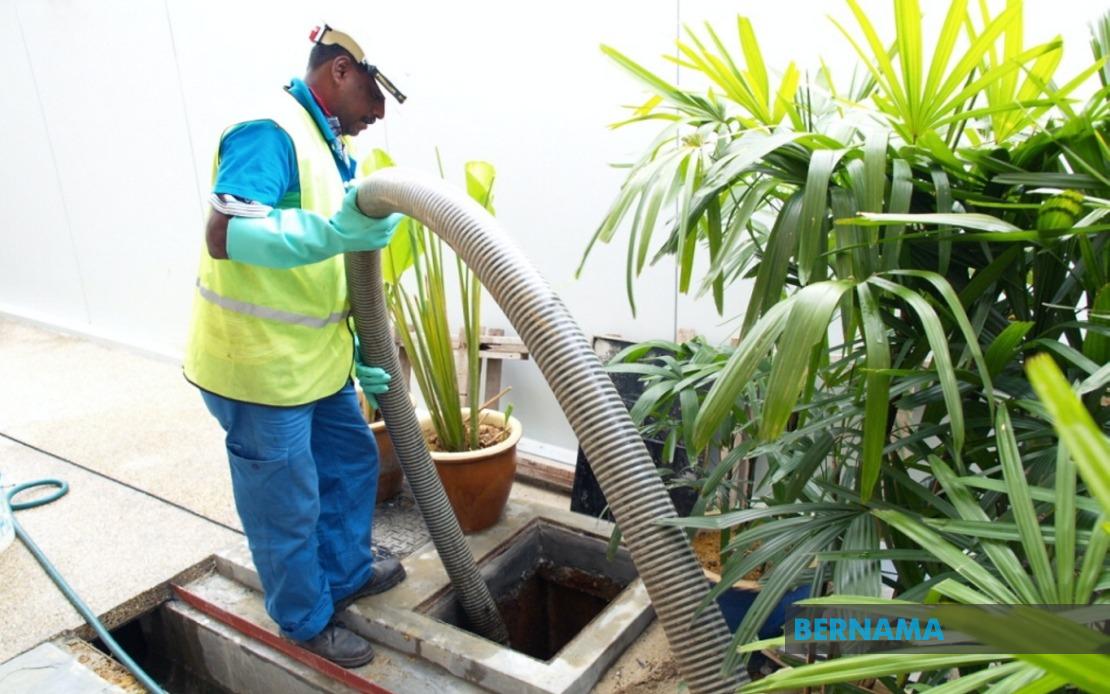
The National Water Services Commission (SPAN) has launched an aggressive enforcement campaign against septic tank negligence in Sungai Petani, issuing 270 compliance notices to premises owners who have chronically failed to maintain their systems. The operation, conducted during a three-day inspection sweep from August 4 to 6, represents SPAN's attempt to tackle a widespread and largely invisible infrastructure problem affecting hundreds of commercial and residential properties across the region.
The compliance drive examined 341 premises overall, splitting focus between 242 commercial establishments and 99 residential units scattered throughout the business district. Ainal Yusman Mohamad Yusop, director of the National Water Services Commission Operations Division Enforcement Section, explained that the systematic violations stem from property owners ignoring previous notices issued by Indah Water Konsortium Sdn Bhd (IWK), the private operator responsible for sewage management in many Malaysian jurisdictions. The operation, branded Ops Padi 2, represents a coordinated effort to translate regulatory warnings into concrete enforcement action.
What emerged during the inspections paints a striking picture of deferred maintenance and institutional neglect. Many of the premises targeted were constructed during Malaysia's rapid urbanisation in the 1970s and 1980s, a period when septic tank installation became ubiquitous before modern centralised sewerage networks reached all commercial zones. Yet unlike buildings that receive routine renovation, the underground septic systems serving these older structures have been allowed to deteriorate severely. Ainal Yusman revealed disturbing cases where septic tanks had gone unmaintained for 10 to 15 years—a staggering timeframe that suggests systematic avoidance rather than isolated oversights. More shocking still were instances where maintenance records showed the last servicing occurred in 1997 or 1999, meaning some systems have essentially been ignored for more than two decades.
This enforcement action reflects a critical gap in Malaysia's water service infrastructure management and property owner compliance culture. Septic tank desludging is not merely a maintenance nicety but a fundamental environmental and public health requirement. When these systems are neglected, they gradually fill with solid waste that cannot decompose or drain naturally, eventually compromising soil percolation and risking groundwater contamination. The failure to maintain these systems can create breeding grounds for disease vectors, compromise water quality in surrounding areas, and accelerate system failure requiring expensive replacement rather than routine service.
Under Section 65(1)(c) of the Water Services Industry Act 2006 (Act 655), property owners face clear legal obligations to maintain their septic systems by engaging licensed service providers or permit holders to perform desludging work. This regulatory framework exists precisely to prevent the situations that SPAN inspectors discovered in Sungai Petani. The law recognises that septic tank maintenance requires professional expertise—improper desludging can spread pathogens, damage the tank structure, or create safety hazards. By requiring licensed operators, Malaysian authorities attempt to ensure that maintenance meets minimum standards rather than relying on ad-hoc, potentially dangerous amateur interventions.
Property owners who received compliance notices now face a 14-day compliance window to respond and take corrective action. This represents SPAN's escalation pathway: the initial notice serves as a final formal warning before more serious consequences materialise. Failure to comply within this timeframe triggers follow-up enforcement actions, including the issuance of offence notices and potential criminal investigation. The escalation strategy reflects regulatory best practice, offering violators a meaningful opportunity to achieve compliance while signalling that indifference will not be tolerated indefinitely.
The financial penalties for persistent violations carry genuine teeth. Under the relevant legislation, any property owner convicted of violating Section 65(1)(c) faces fines potentially exceeding RM50,000—a substantial sum for many small business operators and domestic property owners. For commercial enterprises operating in Sungai Petani's business district, such penalties could represent meaningful hits to operational budgets, particularly for smaller establishments with limited profit margins. This escalation from administrative notice to substantial financial penalty creates a sliding scale of consequences designed to motivate compliance at multiple levels.
The Sungai Petani operation carries broader implications for water service management across Malaysia. Many commercial and industrial zones nationwide likely harbour similar compliance deficiencies, with aging septic systems maintained through neglect rather than active management. SPAN's enforcement initiative in this region may catalyse similar campaigns elsewhere, signalling that regulators increasingly intend to enforce septic tank maintenance standards rather than treating non-compliance as inevitable or tolerable. For business owners and property operators, this represents a clarifying moment: the period of benign regulatory neglect has apparently ended.
The root causes behind such widespread non-compliance merit examination. Property owners often view septic tank maintenance as invisible and therefore discretionary—the systems operate underground, out of sight, making their degradation gradual and unobvious. The costs of periodic desludging accumulate invisibly over years, creating incentives to defer service. Additionally, many property owners may lack awareness of legal obligations or the specific requirements imposed by water authorities. Indah Water Konsortium's earlier notices apparently failed to trigger sufficient property owner response, suggesting that initial compliance communication requires reinforcement through enforcement operations like SPAN's campaign.
For Malaysian businesses and property owners operating in Sungai Petani and similar jurisdictions, the practical implications are immediate. Any premises relying on septic tanks must now treat maintenance as a non-negotiable operational requirement. Licensed desludging providers should experience increased demand as property owners scramble to achieve compliance within the 14-day window. Local authorities and water operators will likely receive numerous inquiries from uncertain property owners seeking guidance on selecting qualified service providers and understanding their obligations. The enforcement campaign thus creates ripples throughout the service ecosystem.
Looking forward, SPAN's initiative may influence how water authorities approach septic tank regulation nationwide. Demonstrated willingness to conduct large-scale inspections and issue substantial numbers of compliance notices establishes enforcement credibility and signals that non-compliance carries real consequences. This approach differs markedly from purely advisory campaigns that rely on goodwill compliance. By combining formal notice, specified timeframes, and escalating penalties, SPAN demonstrates regulatory capacity that may eventually reshape property owner behaviour across Malaysia's commercial and residential sectors that depend on septic systems.
The Sungai Petani operation ultimately reflects tension between Malaysia's modern regulatory framework and variable compliance culture. The Water Services Industry Act 2006 provides clear authorities and substantial penalties, yet their effectiveness depends on consistent enforcement. SPAN's decision to conduct systematic inspections and issue 270 compliance notices represents enforcement implementation at scale—moving from law on paper to law in practice. Whether this single operation catalyses broader compliance shifts or remains an isolated crackdown will become evident as property owners respond to notices and as SPAN follows through with promised enforcement escalation against non-compliers.

