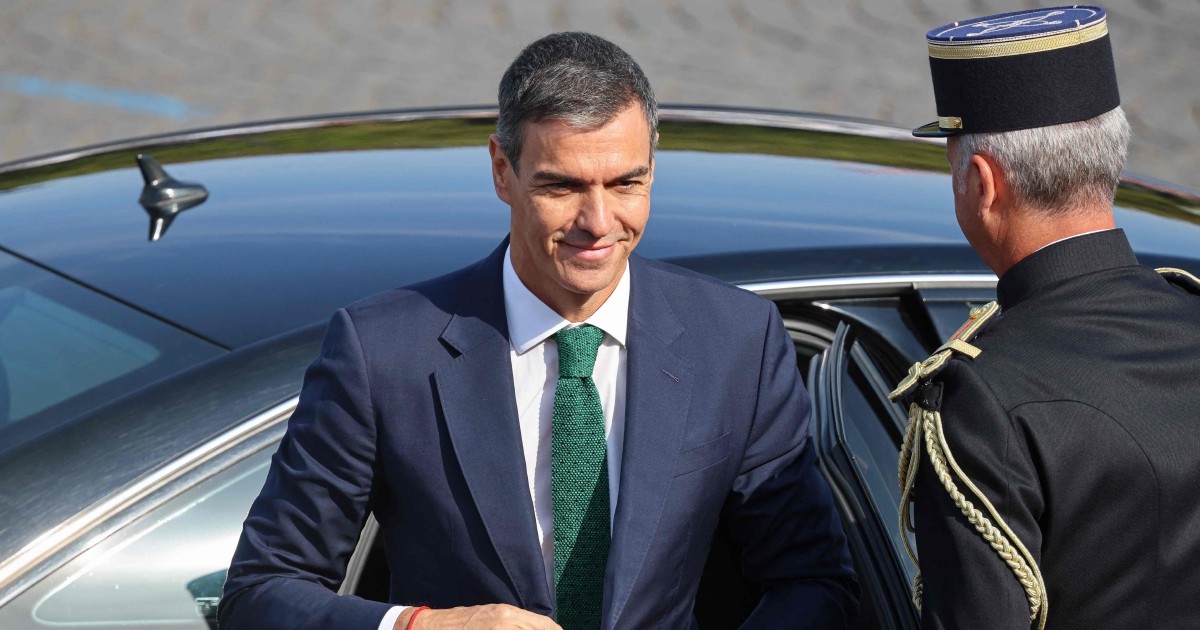
Spain's Prime Minister Pedro Sanchez threw his support behind the national football team on Saturday, emphasising the squad's remarkable cohesion as they prepare for Sunday's World Cup final against Argentina in Qatar. The endorsement comes at a particularly significant moment for the Spanish government, which has faced mounting allegations of corruption and ethical violations that have dominated domestic headlines and tested public confidence in the administration.
Sanchez's public backing of the football team reflects a broader trend among political leaders across Europe and Latin America who recognise the unifying potential of major sporting events. The Spain manager and his coaching staff have cultivated an environment of exceptional togetherness throughout the tournament, with squad members consistently emphasising their collective mission and mutual support. This emphasis on team chemistry has become a defining characteristic of Spain's run to the final, distinguishing them in a competition where individual brilliance often captures international attention.
The timing of the Prime Minister's remarks carries particular resonance within Spain, where domestic politics has become increasingly fractious. Sanchez has navigated multiple controversies related to allegations against his administration and coalition partners, each episode eroding public confidence incrementally. In this context, the football team's pursuit of World Cup glory provides a rare opportunity for the nation to unite around a shared source of pride and achievement, transcending the partisan divisions that typically characterise Spanish public discourse.
Spain's journey to the final represents a remarkable resurgence for a team that, despite winning the European Championship in 2012, had endured a disappointing period without a World Cup trophy since their victory in 2010. The squad's development over recent years has focused heavily on building a cohesive unit rather than assembling a collection of individual superstars. This philosophy, emphasised repeatedly by coaching staff and endorsed now by the Prime Minister, contrasts with some other national teams that rely heavily on marquee individual talent.
The Argentine challenge poses a formidable obstacle, with Lionel Messi's presence adding considerable star power and experience to the opposition. Argentina's path through the tournament has showcased a different model of team construction, one where a singular transcendent talent operates within a supporting cast designed to facilitate his influence. The tactical and philosophical contrasts between the two approaches will be central to how Sunday's match unfolds on the pitch.
Sanchez's intervention also signals the Spanish government's recognition that successful sporting outcomes can provide valuable momentum for domestic political narratives. Governments worldwide have historically leveraged sporting triumphs to bolster approval ratings and redirect public discourse away from contentious policy matters. For a Prime Minister currently navigating corruption allegations, a World Cup victory would undoubtedly provide temporary respite from scrutiny and offer an opportunity to reframe the political conversation around national achievement and collective pride.
Within Spain, football occupies a unique cultural position, functioning as more than merely a sporting pastime. The sport intersects with regional identity, economic interest, and national pride in ways that few other activities can match. The national team's performance carries implications far beyond the match itself, touching upon Spanish self-perception and international standing. A final appearance already represents success by recent standards, but a victory would elevate Spain's global sporting status significantly.
The squad's composition reflects modern Spanish football philosophy, combining technical proficiency with tactical discipline and organisational coherence. Young players have been integrated thoughtfully alongside experienced campaigners, creating a generational blend that provides both innovation and stability. This balanced approach has demonstrated particular effectiveness against opponents who rely more heavily on established star power or aggressive pressing systems.
For Southeast Asian observers, Spain's approach offers instructive lessons about team development and organisational philosophy in competitive sports. The emphasis on collective responsibility and systemic excellence rather than individual heroics contrasts with approaches common in the region, where star players often receive disproportionate attention and resources. The Spanish model suggests that sustained international competitiveness requires institutional consistency and long-term strategic planning.
The World Cup final will ultimately be decided by performance on the pitch rather than political circumstances or philosophical frameworks. Nevertheless, Sanchez's public endorsement reflects his government's awareness that the match carries significance extending beyond sport. For Spain, Sunday represents an opportunity to reclaim World Cup glory while providing citizens with a unifying moment amid fractious domestic politics. For Argentina and Messi, the final offers a chance to culminate a remarkable tournament performance with the trophy that has eluded the legendary forward throughout his career. The match promises to deliver compelling football while serving as a focal point for national aspirations on both sides.

