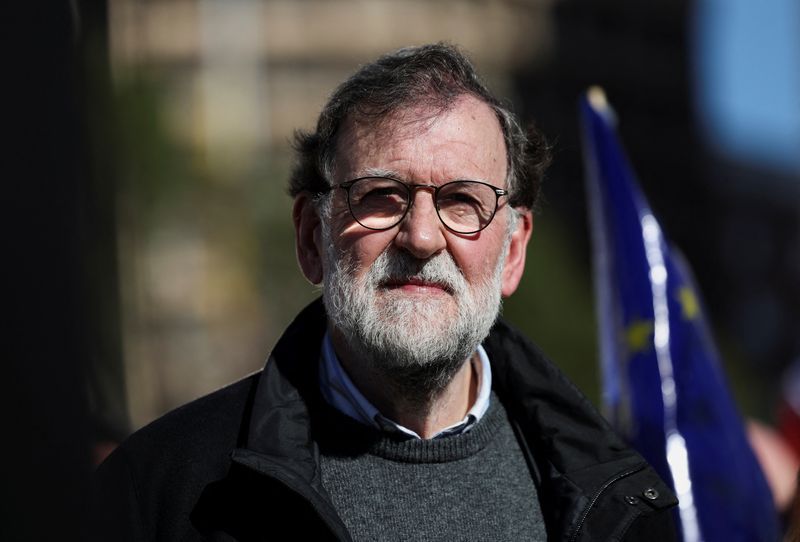
Spain's government has moved swiftly to distance itself from incendiary remarks made by conservative former Prime Minister Mariano Rajoy regarding the composition of France's national soccer team. Foreign Minister Jose Manuel Albares issued a formal apology on Tuesday, just hours before Spain and France were scheduled to face each other in World Cup semi-final action. The controversy centres on a column Rajoy published in the online platform El Debate, in which he suggested that despite France fielding a formidable squad, the team lacked players who were actually French—an apparent allusion to the African and Afro-Caribbean heritage of several key squad members.
Rajoy's provocative statement, delivered in characteristically cryptic language, stated: "France has a squad of the very highest calibre. Mind you, there are no French players in it." The remark immediately drew fierce condemnation from multiple quarters of Spanish politics, as well as from France's government and opposition parties. Albares told Cadena SER radio that Rajoy's comments were "intolerable" and "carry the poison of racism and xenophobia," emphasising that such views do not represent mainstream Spanish public opinion. The Foreign Minister underscored the gravity of the situation by highlighting the fundamental principle at stake: "It's a very serious matter to go around using skin colour to determine who can be a citizen and who cannot."
Spain's Prime Minister Pedro Sanchez, who was in Paris for France's National Day celebrations, added his voice to the criticism in a post on the social media platform X. Sanchez directly attacked "those who measure nationality by a person's surname, birthplace or skin colour," describing Rajoy's words as shamefully xenophobic. His intervention represented an unusually direct public rebuke from the sitting premier of a political rival, signalling the depth of concern within Spain's establishment about the reputational damage such rhetoric might inflict during this high-profile sporting encounter. The timing of Sanchez's Paris visit lent additional symbolic weight to Spain's official apology, demonstrating that diplomatic relations and shared values were being prioritised over partisan political considerations.
Rajoy's controversial column did not emerge in isolation. Just days earlier, Paraguay's Senator Celeste Amarilla had published a racist tirade on X targeting France captain Kylian Mbappe following Paraguay's elimination from the tournament. Amarilla's post describing Mbappe as a "colonised Cameroonian, desperately trying to pass himself off as French" triggered widespread outrage and prompted the French Football Federation to file a criminal complaint. Paraguay's government itself issued a statement dismissing Amarilla's comments as "contrary to the values" the nation promotes. Mbappe responded with characteristic dignity, defending not only himself but also the integrity of Paraguay's players, denouncing Amarilla's remarks as despicable.
The Rajoy situation proved more immediately damaging internationally because it came from a former head of government rather than a single legislator. Borja Semper, a spokesperson for Rajoy's People's Party, attempted to minimise the controversy by insisting the column was intended as sarcasm and carried no ill intent. However, this defence found few defenders in either Spain or France, where the phrasing and context were widely interpreted as a deliberate challenge to the legitimacy of France's team composition based on ethnicity. The attempt at damage control appeared to underscore rather than diminish the problematic nature of the original statement.
France's response demonstrated remarkable political unity across the spectrum. Foreign Minister Jean-Noël Barrot dismissed the remarks as "pathetic," declaring unequivocally: "Once and for all, France has no skin colour. Any statement to the contrary is a sign of idiocy, racism, or both combined." Even the far-right National Rally opposition party, typically critical of mainstream centre-left governments, condemned Rajoy's words as "scandalous, shameful, deplorable." National Rally spokesman Julien Odoul went further, stating bluntly: "Rajoy is a racist, it's as simple as that." This consensus response reflected the degree to which such commentary violates contemporary European norms around national identity and inclusion.
The broader context here involves fundamental questions about citizenship, national identity, and representation in modern multicultural democracies. Both Spain and France have experienced substantial immigration over recent decades, and both nations have grappled with how to conceptualise national identity in increasingly diverse societies. The Rajoy episode and the parallel Amarilla incident suggest that significant political figures in different countries are willing to deploy explicitly ethnic or racialist arguments about national belonging during moments of high-profile sporting competition. The fact that a former prime minister would articulate such views, even nominally as satire, indicates that such sentiments retain some currency within conservative political circles.
For Malaysia and other Southeast Asian nations, this diplomatic episode offers instructive lessons about how countries manage racism and xenophobia at the international level. The swift and unequivocal Spanish government response—explicitly apologising and characterising the remarks as incompatible with Spanish values—demonstrates a particular approach to managing controversial speech by political figures. Rather than defending free speech absolutism or treating the remarks as merely one valid opinion among many, Spain's leadership treated the matter as a serious diplomatic incident requiring formal correction. This reflects broader European consensus that certain forms of racial or ethnic commentary fall outside the bounds of acceptable political discourse.
The incident also underscores how sporting mega-events like the World Cup can become flashpoints for existing social tensions and provide platforms for inflammatory rhetoric. When national teams take the field, they become symbols not merely of sporting prowess but of national identity itself. Players of non-European heritage representing European nations have become particularly frequent targets of commentary questioning their authenticity or belonging—a pattern visible across multiple European football nations in recent years. The degree to which Rajoy's remarks generated shock and condemnation suggests, however, that such explicit ethno-nationalist questioning of team composition remains somewhat beyond the pale even in conservative political circles, at least in their public expressions.
The broader geopolitical dimension involves Spain and France's relationship within the European Union and NATO. Both nations are significant European powers with important bilateral ties and shared institutional memberships. A diplomatic crisis sparked by a former politician's inflammatory column could have complicated these relationships, particularly given the high-stakes nature of the sporting encounter itself. By moving quickly to apologise and frame the remarks as unrepresentative of Spanish society, the Spanish government effectively prevented what might have become a more serious diplomatic problem. This demonstrates how nations manage the speech of their prominent political figures and the stakes involved when such figures venture into ethno-nationalist terrain.

