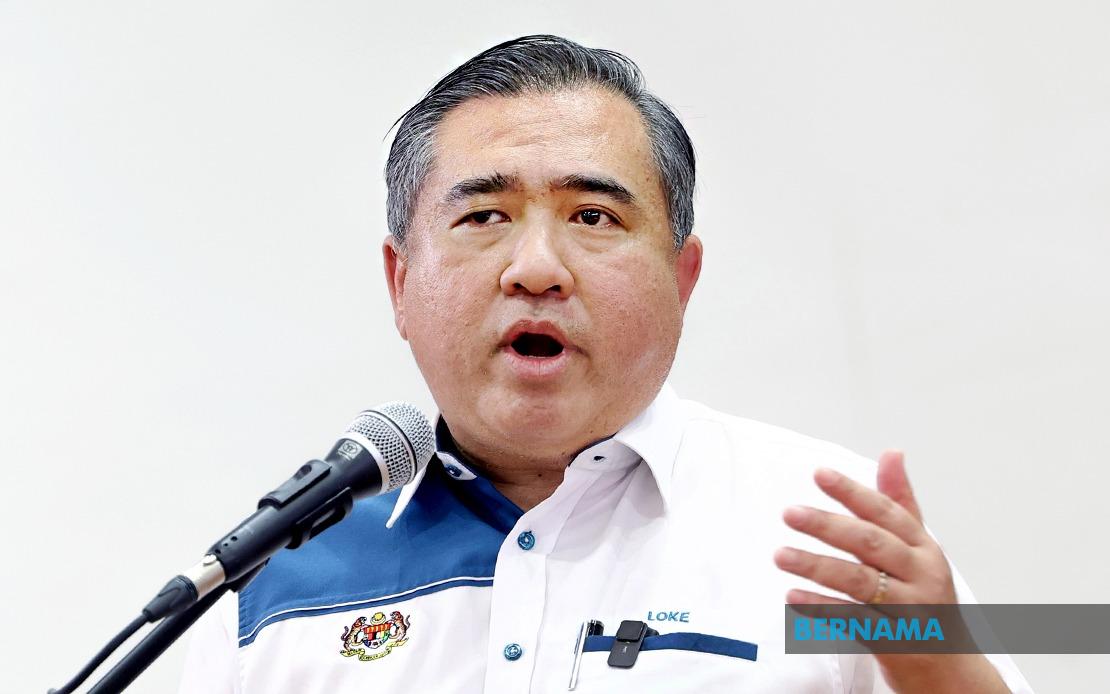
The Southern Shuttle service connecting Johor's key transport hubs will rely on diesel-powered trains as an interim solution while the government procures new Electric Multiple Unit (EMU) trains, Transport Minister Anthony Loke said this week. The decision reflects a pragmatic trade-off between immediacy and long-term modernisation, prioritising passenger access over waiting for next-generation electric rolling stock that remains years away from deployment.
Loke emphasised that the temporary shift to diesel locomotives represents a calculated choice rather than a permanent arrangement. With 10 new EMU train sets expected to enter service within two to three years, authorities have opted to begin operations now using existing diesel capacity rather than delay the service launch indefinitely. This approach acknowledges the transport infrastructure challenges facing Johor's rapidly growing urban and industrial corridors, where rail connectivity remains underdeveloped compared to Kuala Lumpur and Selangor.
The Ministry of Transport has committed annual subsidies ranging from RM11 million to RM15 million to sustain the Southern Shuttle and broaden rail-based public transport accessibility across the southern region. This financial commitment underscores the government's determination to expand modal options beyond road transport, which currently dominates inter-city and regional movement in Johor. The subsidy framework enables fare structures that remain within competitive parameters for commuters, though affordability comparisons with other Malaysian rail services have drawn scrutiny.
The Southern Shuttle presently connects three major transport nodes: Kulai, JB Sentral, and Pasir Gudang, offering journey times significantly faster than road alternatives. The Kulai-JB Sentral leg requires approximately 40 minutes, while the Kempas Baru-Pasir Gudang route takes between 40 and 45 minutes. These corridors represent critical transport arteries for the region's manufacturing, port, and logistics sectors, making reliable rail capacity essential for economic productivity and workforce mobility.
Notably, the Kempas Baru-Pasir Gudang railway corridor has been converted from exclusive freight use to accommodate passenger services for the first time. This dual-use infrastructure adaptation reflects creative utilisation of existing rail networks, allowing authorities to expand passenger capacity without major capital investment in entirely new rail construction. The transition demonstrates how Malaysia can leverage underutilised freight infrastructure to address urban mobility constraints, a model potentially replicable across other states with existing rail frameworks.
Public criticism has focused on fare pricing, with observers noting that Southern Shuttle fares exceed those charged on equivalent routes in Kuala Lumpur and Seremban by a factor of three. This pricing differential raises questions about cost allocation and subsidy distribution across Malaysia's regional rail networks. Higher fares may reflect infrastructure development costs, operational expenses in less densely populated areas, or subsidy targeting priorities that favour certain corridors over others. The disparity warrants transparent communication regarding pricing methodology and the long-term sustainability of regional rail services.
The planned Gemas-Johor Bahru electrified double-tracking project will fundamentally transform Southern Shuttle operations upon completion. Once this electrification infrastructure reaches operational status, diesel trains will become redundant, replaced by the Electric Train Service (ETS) running on modernised tracks. This infrastructure upgrade will enhance capacity, reliability, and environmental performance while reducing operating costs associated with diesel fuel procurement and maintenance.
The transition to electric rail aligns with Malaysia's broader sustainability objectives and positions the Southern Shuttle within regional rail modernisation trends. Southeast Asian nations including Thailand, Vietnam, and Indonesia are accelerating electrification of strategic rail corridors, recognising environmental and economic benefits. Malaysia's commitment to the Gemas-Johor Bahru project signals alignment with these regional developments while addressing domestic transport demands.
For Johor's economy, reliable rail connectivity carries substantial implications. Manufacturing clusters, container terminal operations at Port Klang's extension points, and industrial estates depend on efficient movement of goods and workers. The Southern Shuttle reduces road congestion, lower logistics costs, and attracts talent to regions offering convenient commuting options. As Johor positions itself for increased foreign direct investment and regional trade integration through initiatives like the Johor-Singapore special economic zone framework, transport infrastructure quality becomes a competitive differentiator.
Look forward, the arrival of new EMU trains will require investment in maintenance facilities, staff training, and systems integration to ensure seamless operations. The three-year procurement timeline provides opportunity for comprehensive planning of depot locations, signalling upgrades, and passenger amenities. The Ministry of Transport should communicate clearly regarding project milestones and expected service improvements, managing public expectations about electrification benefits including reduced noise, enhanced comfort, and improved scheduling reliability.
The Southern Shuttle initiative reflects Malaysia's recognition that transport infrastructure gaps in secondary cities require immediate action despite long-term modernisation plans. Diesel operations represent an honest interim measure that balances fiscal responsibility with service delivery obligations. As more EMU sets arrive and electrification progresses, the Southern Shuttle will become a model of modern regional rail transport in Malaysia.

