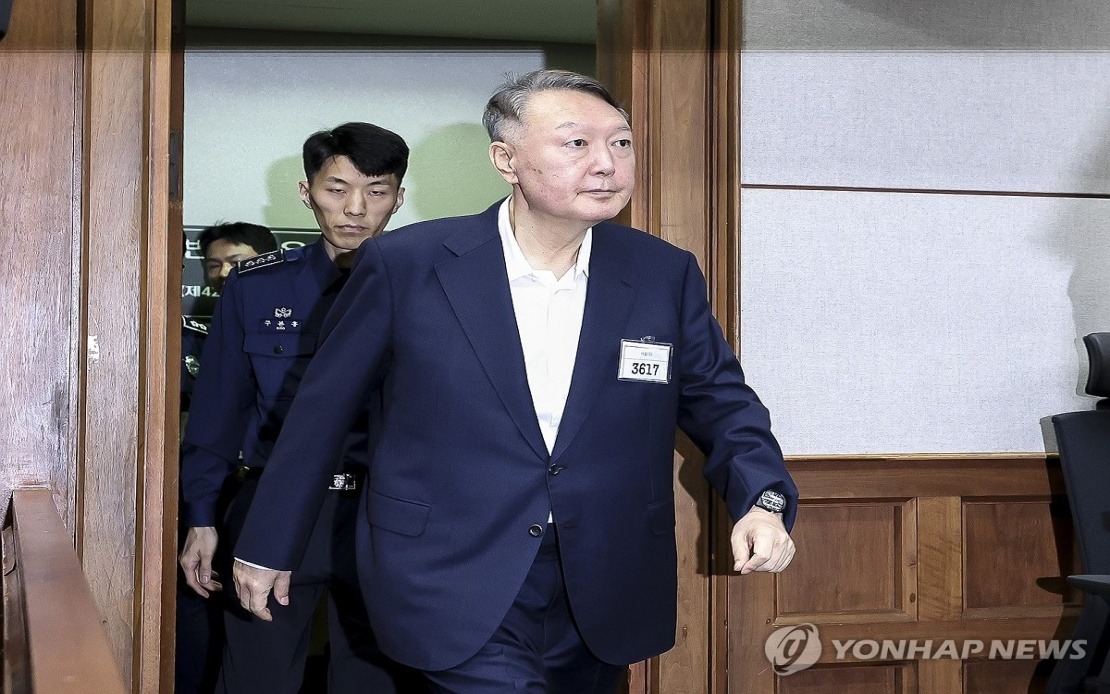
South Korea's highest court has ruled that it will televise live the delivery of its verdict against former President Yoon Suk Yeol on obstruction of justice charges, a decision that marks a significant moment of judicial transparency in a case that has captivated the nation. The Supreme Court announcement came on Tuesday, confirming that the ruling will be announced at 2 pm on Thursday through live broadcast using the court's own camera equipment, with broadcasters permitted to transmit the proceedings directly to the public. This represents the first ruling from the top court regarding charges that emerged from Yoon's unexpected declaration of martial law on December 3, 2024, an event that sent shockwaves through South Korea's political establishment and triggered a constitutional crisis.
Yoon's legal representatives had strongly opposed the live broadcast arrangement, submitting arguments that public televising of the trial verdict could inflict "irreparable harm" to his constitutional rights to a fair hearing, alongside concerns about damage to his personal reputation and privacy. Despite these objections, the court determined that the public interest in transparency outweighed such concerns, reflecting a broader judicial philosophy that high-profile cases involving former heads of state warrant public scrutiny. The decision underscores the tension between procedural protections for defendants and democratic accountability, particularly when the accused holds the nation's highest former office.
The special counsel's office, headed by Cho Eun-suk, had formally requested the broadcast permission just one week prior to the Supreme Court's decision. This prosecutorial push for transparency suggests confidence in their case and an intention to ensure the proceedings reach the widest possible audience. The live broadcast arrangement demonstrates how South Korea's judicial system continues to evolve in response to demands for openness, even as it grapples with protecting defendants' fundamental legal rights. For regional observers, particularly those in Southeast Asia monitoring democratic institutions, the case illustrates how major democracies navigate the balance between transparency and due process.
Yoon faces a constellation of serious charges stemming from his martial law declaration and subsequent actions by his administration. The most immediate charge concerns his alleged order to bodyguards to physically prevent investigators from executing a detention warrant against him in January 2025, approximately six weeks after the initial martial law proclamation. Beyond this obstruction allegation, prosecutors have brought additional charges claiming Yoon violated the constitutional rights of nine Cabinet members by failing to convene an advance meeting to brief them on his martial law intentions before implementing the decree. Prosecutors also charge that Yoon falsified official documents by amending the martial law proclamation after it was rescinded, ostensibly to conceal procedural irregularities in how the decree was originally crafted, and that he subsequently destroyed evidence related to this documentation.
An appellate court previously weighed in on these obstruction charges in April, delivering a seven-year prison sentence after finding Yoon guilty on the substantive merits. This sentence represented an increase of two years compared to the original trial court's determination, though it fell substantially short of the ten-year sentence the special counsel's team had recommended during their prosecution. The appellate court's willingness to increase the sentence from the lower court suggested judicial concern about the seriousness of the obstruction conduct, yet the justices still exercised restraint relative to prosecutorial recommendations. The Supreme Court's impending judgment could potentially result in further adjustment to this sentence, either upward or downward depending on the court's assessment of legal and factual arguments presented on appeal.
Parallel to this obstruction case, Yoon remains ensnared in substantially more serious legal proceedings addressing whether his martial law declaration constituted an insurrection against the state itself. That separate case is proceeding through appellate channels, and in its initial phase, Yoon received a life sentence, the maximum possible penalty available under South Korean law. The juxtaposition of these two trials—one addressing the immediate aftermath and cover-up of the martial law episode, the other addressing the declaration itself—demonstrates how Yoon's actions have generated multiple layers of criminal jeopardy. The Supreme Court's decision to broadcast Thursday's verdict in the obstruction case will inevitably influence public perception of the insurrection charges, as both cases involve overlapping facts and similar assessments of Yoon's judgment and respect for constitutional governance.
The Supreme Court's permission for live broadcast carries implications extending beyond South Korea's borders. Throughout the Indo-Pacific region, where several nations face questions about military interventions in politics and executive overreach, South Korea's handling of a former president's attempted martial law carries instructive weight. Malaysia and other Southeast Asian democracies, some of which have witnessed their own constitutional tensions and military-adjacent political maneuvers, may observe how a mature democratic system prosecutes its former chief executive and ensures accountability through transparent judicial processes. The decision to permit live broadcasting signals confidence in the judicial system's independence and fairness, suggesting the court welcomes public scrutiny rather than viewing it as threatening.
The contrast between the Supreme Court's ruling permitting broadcast and Yoon's legal team's concerns about prejudice illustrates enduring tensions within contemporary democracies about managing high-profile prosecutions. Yoon's attorneys framed broadcast as potentially inflaming public opinion and prejudicing the appellate court's impartial judgment, an argument that carries weight in contexts where media narratives can shape perception. However, the Supreme Court apparently determined that a former president's actions warranting criminal prosecution represent matters of such profound public consequence that denying citizens direct access to the verdict announcement would itself undermine democratic legitimacy. The ruling reflects judgment that transparency in this instance serves the broader interests of justice.
Thursday's 2 pm verdict announcement will represent a watershed moment for Yoon's legal odyssey, though the obstruction conviction would constitute merely one chapter in a lengthier judicial narrative that encompasses the insurrection charges and potentially other investigations. The Supreme Court's willingness to broadcast proceedings live suggests the court views this case not merely as an individual criminal matter but as an important test of South Korea's constitutional order and the rule of law. For a region where judicial independence sometimes remains contested and executive power occasionally eclipses institutional constraints, South Korea's approach to this case—permitting live broadcast, accepting public scrutiny, and prosecuting a former president through established legal channels—demonstrates one model for how democracies can investigate and adjudicate grave allegations against their highest former officials while maintaining procedural integrity and institutional credibility.

