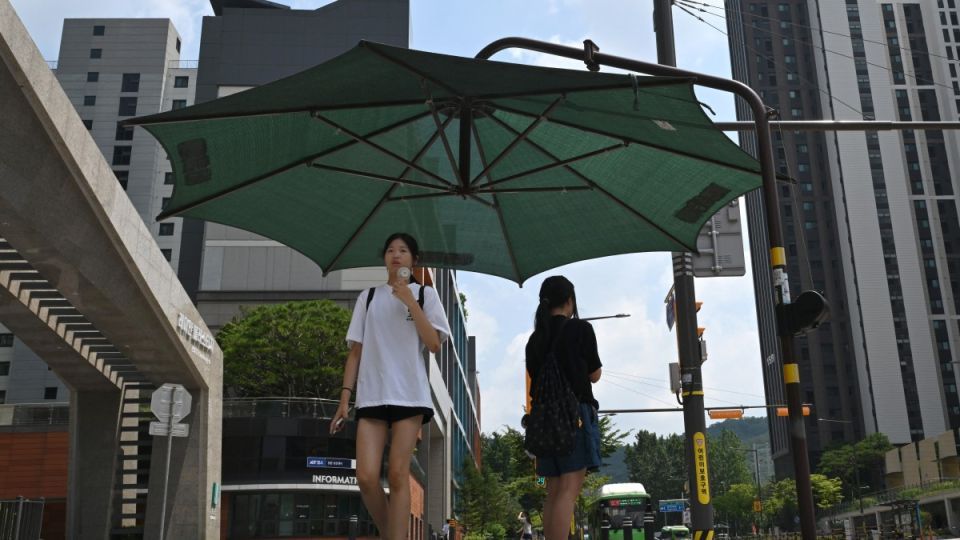
South Korea's unprecedented heatwave has forced a dramatic rethinking of workplace practices across the nation's industries, yet the response has revealed a stark gap in protection between multinational conglomerates and smaller employers struggling to adapt. With temperatures soaring to record levels—including a national high of 42.5 degrees Celsius in Yangsan, South Gyeongsang Province—companies large and small are implementing new rest protocols, installing cooling infrastructure, and restructuring daily schedules. However, the measures highlight a troubling reality: workers at smaller enterprises and outdoor worksites lack access to the resources their counterparts at major firms enjoy, leaving them dangerously exposed during the relentless summer months.
The urgency of the crisis has been underscored by sobering statistics. Between 2022 and June 2024, South Korea's Korea Workers' Compensation and Welfare Service documented 195 occupational accidents related to extreme heat, claiming 20 lives. More alarmingly, 13 cases had already been officially recognised by the end of June—before the typically deadliest months of July and August—with four resulting in fatalities. These figures have prompted both governmental and corporate action, particularly after a landmark 2023 district court conviction of a construction company under the Serious Accidents Punishment Act for a worker's heat-related death. That case marked the first time South Korea's stringent occupational safety law had been invoked in a heatstroke fatality, signalling a decisive shift toward holding employers accountable.
Large construction and heavy manufacturing firms have emerged as leaders in implementing protective measures, driven by both regulatory pressure and the industry's outsized share of industrial fatalities. Hyundai Engineering & Construction operates an incentive system rewarding workers who use designated cooling areas during breaks, recognising that voluntary compliance depends partly on overcoming productivity concerns. Lotte E&C has deployed Internet of Things technology across approximately 80 construction sites, continuously measuring perceived temperatures every five minutes and triggering escalating heat-response protocols across a five-tiered risk classification system. This real-time monitoring approach allows supervisors to implement graduated interventions before dangerous conditions develop, a luxury unavailable to smaller competitors operating on tighter margins.
The accommodation of vulnerable worker populations has also become a feature of major firms' heat strategies. Hyundai Engineering & Construction has distributed emergency reporting guides in 22 languages and supplied cooling vests equipped with built-in fans alongside oral rehydration products, explicitly targeting the migrant workforce that constitutes a significant portion of South Korea's construction labour force. Similarly, Kumho E&C has partnered with beverage manufacturer Lotte Chilsung to distribute bottled water, electrolyte drinks, cooling towels, and portable shelter structures across its construction sites through September, acknowledging that language barriers and unfamiliarity with Korean workplace protocols place migrant workers at heightened risk.
Heavy industries operating continuously throughout the year have adopted precisely calibrated work-and-rest protocols designed to balance operational necessity with worker safety. Posco, whose blast furnaces cannot be shut down during heatwaves, requires workers to pause for 15 minutes following every 45 minutes of labour when perceived temperatures exceed 35 degrees Celsius, scaling back to 10-minute breaks after 50 minutes of work when temperatures remain between 31 and 35 degrees. Hyundai Steel implements comparable thresholds, mandating minimum rest periods that increase with temperature intensity. These structured rhythms recognise that sustained exposure to extreme heat, combined with the metabolic demands of physically demanding work, creates cumulative physiological strain that accumulates dangerously over an eight-hour shift.
Shipbuilding conglomerates, another sector with substantial operational constraints, have significantly extended statutory rest periods during peak summer months. Hanwha Ocean has doubled both morning and afternoon breaks from ten minutes to twenty minutes through August, independent of temperature readings, while also extending lunch breaks by thirty minutes at 28 degrees Celsius and a full hour above 31.5 degrees. HD Hyundai Heavy Industries has lengthened lunch breaks from one hour to 90 minutes throughout the summer season and operates more than 270 distinct cooling facilities distributed across its shipyards, providing workers with cooling vests, ice water, and electrolyte supplements. Samsung Heavy Industries has created a dedicated task force specifically charged with coordinating heat-response measures and deploying additional portable cooling equipment across its operations.
Yet these comprehensive measures remain concentrated almost exclusively among South Korea's largest employers. Analysis of the 195 heat-related accidents documented since 2022 reveals a troubling pattern: more than half occurred at workplaces employing fewer than 50 people, while 42 accidents took place at microbusinesses with fewer than five employees. Labour experts and parliamentary representatives argue that smaller enterprises typically lack dedicated safety personnel, cannot justify the capital expenditure for cooling systems, and struggle to reorganise work schedules without compromising productivity or profitability. The structural disadvantages facing these employers create conditions where workers bear disproportionate risks.
Migrant workers employed in agriculture and outdoor labour represent an especially vulnerable cohort, often operating beyond the reach of regulatory oversight and corporate safety initiatives. Recent fatalities underscore this exposure: a Thai seasonal worker died while labouring in agricultural fields in Haenam, South Jeolla Province, last month, while a Vietnamese national suffered fatal heatstroke while working outdoors at a farm in Goesan, North Chungcheong Province. These deaths, occurring during the period when large corporations were implementing their most intensive cooling protocols, illustrate how geographical isolation, employment precarity, and language barriers can render even national-level heat-safety measures ineffective for populations most vulnerable to extreme weather.
Representative Kim Wi-sang of the ruling People Power Party has called for governmental intervention beyond the current focus on major workplaces. Kim has urged the government to strengthen workplace inspections and implement concrete protective measures specifically targeting seasonal migrant workers and employees at small outdoor enterprises, arguing that voluntary corporate action, however commendable at large firms, cannot adequately address systemic vulnerabilities at the periphery of South Korea's labour market. This intervention reflects growing recognition that heat-related occupational mortality represents not merely a workplace safety issue but a public health crisis demanding coordinated governmental response and enforcement mechanisms targeting the businesses and worker populations currently operating outside corporate safety frameworks.
The South Korean experience offers sobering lessons for Southeast Asian nations where outdoor labour—in agriculture, construction, and informal sectors—involves far larger workforces operating in even more intense heat. Malaysia, Thailand, Indonesia, and Vietnam all employ millions of workers in outdoor-dependent industries where informal employment predominates and regulatory capacity remains constrained. South Korea's demonstrated ability to implement sophisticated heat-safety measures among large corporations, coupled with its simultaneous failure to adequately protect smaller enterprises and migrant populations, suggests that technological solutions and corporate goodwill alone cannot address the fundamental challenge of protecting workers during climate-driven heat extremes. The policy gap revealed by South Korea's experience—between what is achievable when capital and institutional capacity concentrate resources, and what remains unprotected when they do not—points toward an uncomfortable reality: as global temperatures continue rising, nations across the region must confront not merely the technical challenge of workplace heat management, but the deeper structural inequalities that determine which workers receive protection and which remain dangerously exposed.

