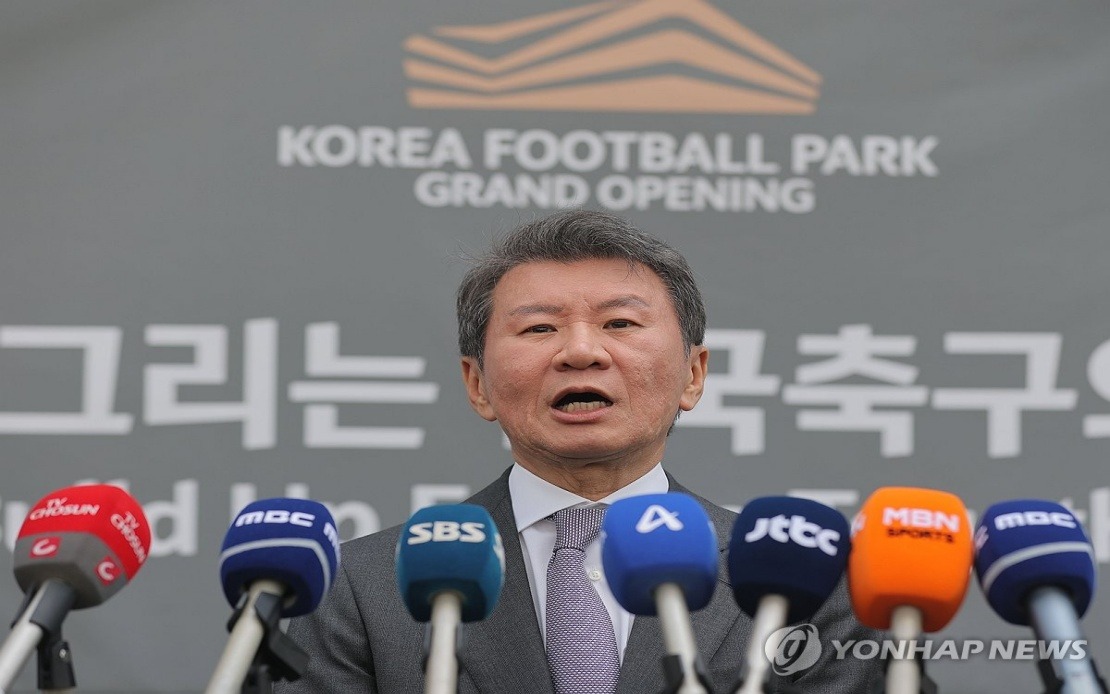
Chung Mong-gyu stepped down as president of the Korea Football Association on Monday, formally submitting his resignation letter during a final executive meeting at the organisation's headquarters in Cheonan, a city situated approximately 90 kilometres south of Seoul. The departure marks an accelerated exit from his leadership role, coming ahead of the FIFA World Cup's scheduled conclusion on July 20 South Korean time and reflecting the considerable fallout from the national team's disappointing campaign in the tournament.
The timing of Chung's resignation carries particular significance within the context of South Korea's sporting culture and national pride in football. Although he had initially announced in May that he would step aside once the World Cup concluded, the team's elimination during the group stage prompted him to leave his post sooner rather than remain as a figurehead overseeing the remainder of the competition. The national side, guided by coach Hong Myung-bo, accumulated only three points from a single victory and two defeats, finishing third in Group A and falling short of qualification as one of the eight best third-place finishers. Hong himself vacated his position immediately after the mathematical impossibility of advancing became apparent, underscoring the gravity of the outcome.
Chung's tenure as KFA president had grown increasingly contentious well before the World Cup debacle. His appointment of Hong in July 2024 drew considerable criticism for what observers characterised as a non-transparent recruitment methodology, raising broader questions about governance standards within Korean football administration. The South Korean Ministry of Culture, Sports and Tourism initiated a comprehensive investigation into the KFA's operational procedures that year, ultimately determining that Chung and other senior officials warranted disciplinary action due to multiple irregularities uncovered during the review. This regulatory scrutiny transformed what might otherwise have been a routine managerial appointment into a flashpoint for institutional accountability.
The institutional tensions have intensified rather than diminished in recent months. The KFA currently finds itself engaged in protracted legal disputes with the Ministry of Culture, Sports and Tourism, which has signalled its intention to conduct another audit of the football association specifically examining the ramifications of the World Cup exit. These competing institutional pressures have created an environment where Chung's continued leadership had become increasingly untenable, making his early departure a logical consequence of accumulated difficulties rather than an isolated response to sporting failure.
Under KFA constitutional provisions, one of the organisation's four vice presidents will assume the role of interim leader pending a formal election for Chung's successor. The procedural rules stipulate that because Chung possessed nearly three years remaining in his fourth term, a permanent replacement must be elected within 60 days of his departure. However, mounting scrutiny from government officials threatens to disrupt this standard timeline and potentially reshape how Korean football leadership selection occurs in future cycles.
Culture Minister Chae Hwi-young has publicly signalled dissatisfaction with existing KFA electoral procedures, suggesting that the federation's current methodology no longer aligns with public expectations following the World Cup performance. His remarks about the "desperate wishes of the people feeling dejected" by national team results represent an unusually direct form of governmental pressure on an ostensibly independent sporting organisation, implying that traditional election mechanisms may require fundamental reconsideration. This political dimension transforms the succession process from a routine administrative matter into a potential flashpoint for broader debates about sports governance in South Korea.
The KFA's electoral structure currently grants voting rights to representatives of regional football associations, executives from K League clubs, players, coaches, and referees—a collegiate system that produced 183 participating voters from an eligible pool of 192 during last year's presidential election. However, the Korean Sport and Olympic Committee, the nation's apex sports body that oversees the KFA, plans to examine potential modifications to this framework at a July 16 general meeting. Proposals under consideration include extending the 60-day election window beyond its current specifications and introducing a direct election system that would presumably grant voting privileges more broadly rather than restricting them to institutional representatives.
These proposed structural changes carry implications extending well beyond Korean football, potentially influencing how sports governance evolves across East Asia more broadly. Malaysia and other Southeast Asian nations with established football federations often observe developments in peer jurisdictions when considering their own administrative frameworks. The tension between maintaining institutional autonomy within sports organisations and responding to public pressure for accountability represents a challenge that transcends geographic boundaries, and the Korean Football Association's experience may offer instructive lessons about balancing these competing imperatives.
In his farewell statement, Chung expressed appreciation for supporter backing while acknowledging moments when he fell short of expectations, framing his tenure as an attempt to advance Korean football despite inevitable shortcomings. He transferred responsibility for institutional failures to himself while attributing successes to players and supporters, adopting the rhetorical posture of a departing leader seeking to preserve dignity while accepting accountability. His assertion that Korean football would subsequently overcome adversity and achieve renewed heights followed a familiar pattern of sports leadership transitions, yet the backdrop of governmental scrutiny and institutional conflict distinguishes his exit from typical end-of-tenure resignations.
The World Cup exit itself, while disappointing by South Korean standards, remains significant primarily for what it triggered institutionally rather than for its immediate sporting consequences. South Korea has long maintained competitive football programmes and would likely return to contention in future tournaments under different management. What makes this moment genuinely consequential is the opportunity it provides for potentially comprehensive reform of how the nation's football leadership operates, selects successors, and interfaces with governmental oversight bodies. The next 60 days will determine whether the KFA undergoes genuine structural transformation or whether the election proceeds under current rules while underlying governance concerns remain unresolved.

