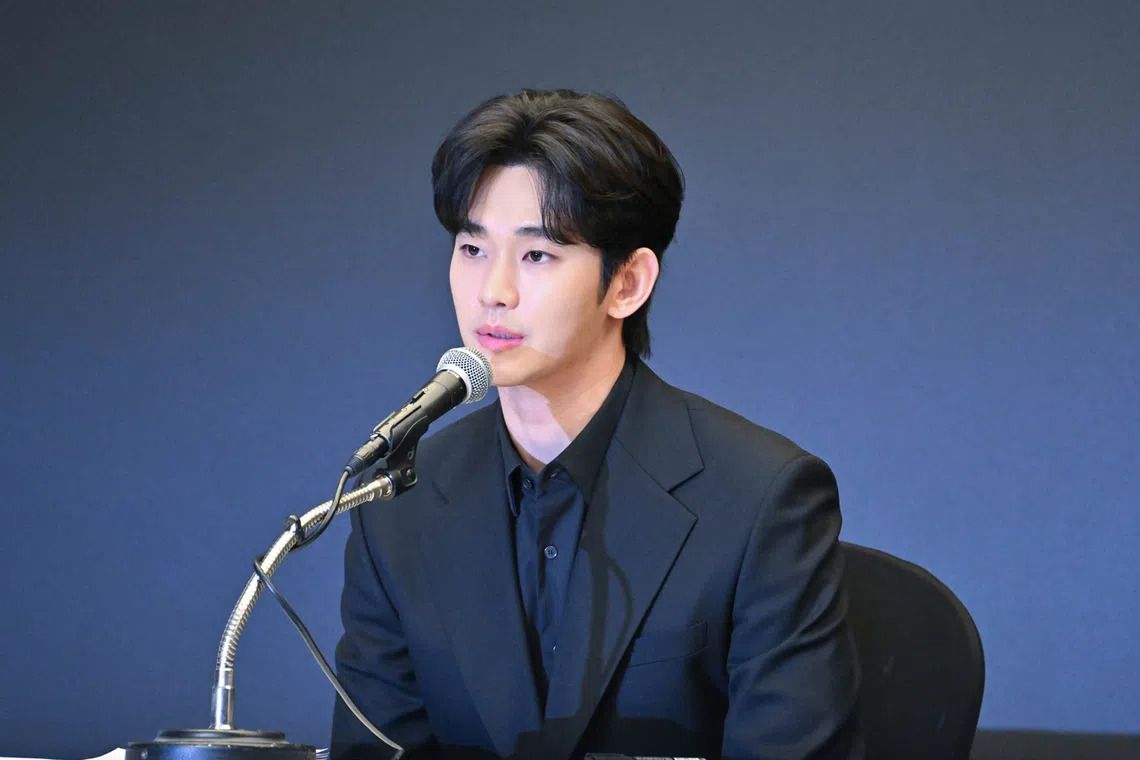
South Korean actor Kim Soo-hyun has been exonerated of allegations that he breached the country's Child Welfare Act following a police decision to shelve the case without forwarding it to prosecutors. The Seoul Seongdong Police Station wrapped up its inquiry into the 38-year-old actor, determining there was insufficient evidence to proceed with legal action against him.
The controversy began when the family of deceased South Korean actress Kim Sae-ron lodged a criminal complaint in May 2025, claiming that Kim Soo-hyun had engaged in a romantic relationship with her when she was still a minor at age 15, specifically during her second year of middle school. The family's allegation encompassed violations of South Korea's Child Welfare Act alongside other criminal charges. This case has drawn considerable attention in South Korea's entertainment industry, where celebrity conduct receives intense public scrutiny and media coverage.
Throughout the investigation, Kim Soo-hyun's legal representatives acknowledged that the two individuals had indeed dated, but they steadfastly maintained that their relationship commenced only after Kim Sae-ron had reached adulthood. This distinction proved crucial to the case, as South Korea's Child Welfare Act imposes strict penalties for relationships with minors, making the timing of when the relationship began a central factual question.
A significant point of contention was an audio recording released by Kim Sae-ron's family, wherein a voice purportedly belonging to the late actress claimed that her relationship with Kim Soo-hyun had started during her middle school years. Kim Soo-hyun's representatives dismissed this recording as fabricated, alleging that artificial intelligence technology had been used to create or manipulate the audio evidence. This assertion about AI-generated content reflects growing concerns across Asia about deepfakes and manipulated media being weaponised in legal disputes and public controversies.
The police investigation ultimately sided with Kim Soo-hyun, rejecting the allegations presented by Kim Sae-ron's family and determining that there was no valid foundation to pursue prosecution. This conclusion effectively closes a significant chapter for the actor, though the resolution comes amid broader questions about the nature of their relationship and the reliability of the evidence presented by both sides.
Kim Soo-hyun's return to public activity marks a turning point following an extended absence from the entertainment spotlight. In July, the actor re-emerged into the public consciousness by filming a commercial for a Philippine fashion brand on July 14, signalling his intention to resume his career. This international project demonstrates that despite the domestic controversy, brands remain willing to associate with him, particularly those based outside South Korea.
The backdrop to this case includes the tragic death of Kim Sae-ron, who passed away at age 24 at her residence in Seoul's Seongdong district in February 2025. The circumstances surrounding her death have added emotional weight to the allegations against Kim Soo-hyun, as public sympathy for the deceased actress ran deep throughout the country. However, her family's pursuit of the complaint against him suggests they believed justice required holding him accountable regardless of her passing.
Kim Sae-ron's career had experienced a significant decline following a drink driving incident in May 2022, an event that effectively derailed her professional momentum in South Korea's competitive entertainment sector. The incident had left her largely sidelined from major acting roles in the years preceding her death, reducing her visibility and limiting her earning capacity. The trajectory of her career troubles adds context to why her family may have felt motivated to pursue legal action during the final years of her life.
This case underscores the complexities facing South Korea's entertainment industry as it grapples with allegations of misconduct, power imbalances, and the question of how to fairly adjudicate claims when key evidence—such as audio recordings—can potentially be manufactured using emerging technology. The police's decision to close the case without pursuing charges suggests they were unconvinced by the allegations, though the exact reasoning behind their conclusion has not been fully disclosed to the public.
For Malaysian and Southeast Asian observers, this case reflects the broader regional trend of heightened scrutiny on celebrity conduct and the increasing involvement of technology in legal disputes. South Korea's experience offers lessons about how entertainment industries must adapt to new challenges posed by deepfake technology and manufactured evidence, issues that are becoming increasingly relevant across Asia as the technology becomes more accessible and sophisticated.
The outcome may provide some relief to Kim Soo-hyun as he rebuilds his career, but the controversy has already left its mark on his public image. Whether audiences and industry gatekeepers will fully embrace his return remains to be seen, particularly given the sensitive nature of the allegations and the tragic circumstances surrounding Kim Sae-ron's death. His international work with the Philippine brand suggests at least some market appetite for his talents exists beyond South Korea's borders.

