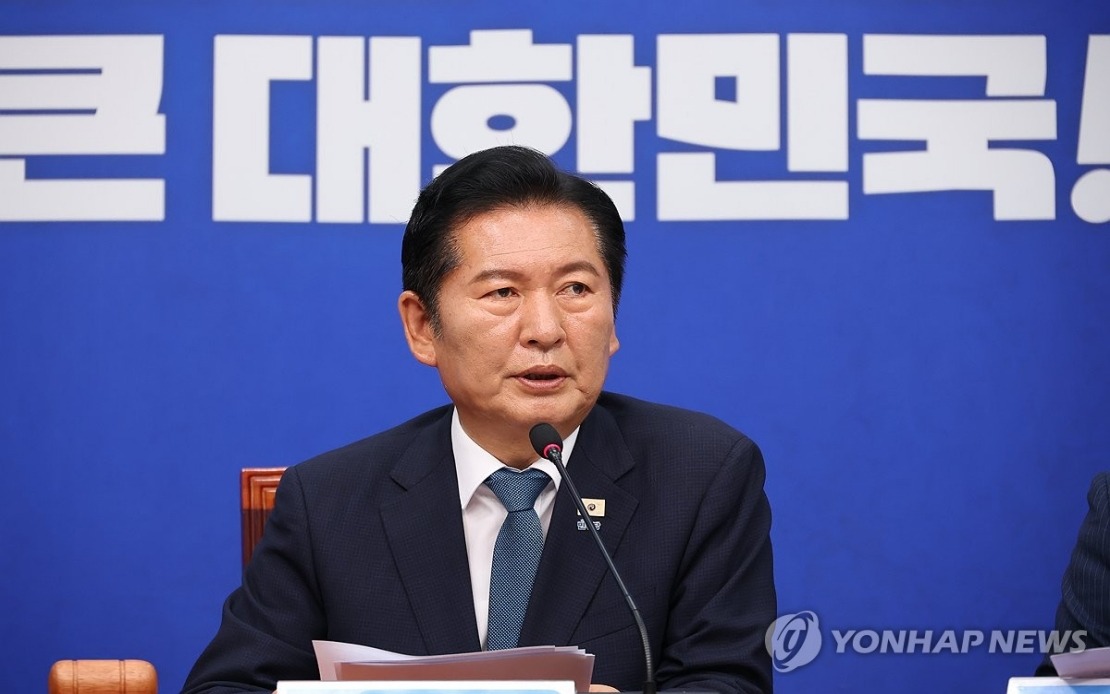
Jung Chung-rae, a prominent lawmaker in South Korea's ruling Democratic Party, announced his resignation as party chairman on Wednesday, in a calculated move that observers view as a prelude to his candidacy in the party's upcoming leadership election. The timing and circumstances of his departure signal a significant realignment within the DP as the organization grapples with internal divisions and competing visions for its future trajectory under President Lee Jae Myung's administration.
During remarks delivered to the party's supreme council at the National Assembly, Jung expressed his commitment to introspection, describing a period of soul-searching in the days preceding his resignation. He emphasized throughout his tenure as chairman that he had consistently aligned himself with the president's administration and worked toward fostering unity between the ruling party, the broader government structure, and the presidential office. This narrative of unified purpose appears designed to position him favorably as he enters the competitive race for party leadership.
Yet Jung's exit reflects mounting pressure from influential party figures who support President Lee directly. Critics within the DP have voiced concerns that Jung's leadership style favors a narrower ideological base rather than maintaining harmonious collaboration with the president on crucial policy matters. The friction between Jung's faction and Lee's allies has created a palpable tension that dominated internal party discussions, challenging the unified message Jung sought to project publicly. Despite facing what he characterized as relentless obstacles from both within and outside the party, Jung insisted he had discharged his responsibilities without complaint.
The Democratic Party's August convention will feature a competitive three-way contest involving Jung and two other significant political figures. Prime Minister Kim Min-seok, who enjoys strong backing from President Lee as a trusted political confidant, is expected to enter the race. The third candidate, Song Young-gil, a former DP leader, has signaled his intention to participate in the leadership contest. According to DP lawmaker Park Jie-won, who disclosed remarks made during a CBS radio interview, Song has indicated to the president his plans to join the race and has suggested potential coordination with Kim's candidacy, suggesting possible strategic positioning among the candidates.
The succession battle carries implications extending beyond party management, touching on how South Korea's political leadership intends to address governance priorities and policy direction in the months ahead. The internal divisions within the DP reflect broader ideological and strategic differences that will likely resurface during the campaign season. Jung's resignation effectively transforms the party leadership race from a quiet succession process into an open contest that will test party unity and determine which faction gains ascendance.
For Malaysian and Southeast Asian observers monitoring Korean politics, this internal party drama underscores the volatile nature of democratic competitions in the region. The willingness of major political figures to contest openly for leadership positions reflects a degree of institutional stability, yet the underlying tensions suggest fragility in consensus-building, a pattern not unfamiliar in Asian democracies where personality-driven politics often outweighs institutional frameworks. The outcome of the Democratic Party's August convention will shape how effectively President Lee's administration can navigate legislative agendas and maintain policy coherence.
In the interim period before the convention, DP floor leader Han Byung-do assumes the role of acting party chairman, a position that carries responsibility for maintaining organizational stability and managing day-to-day party operations. Han's appointment as interim leader represents an effort to ensure continuity during what promises to be a contentious campaign period among the three leading candidates. His background and approach may influence which candidates gain momentum and how the party machinery functions during this transitional phase.
The Democratic Party's leadership contest occurs at a time when South Korea faces pressing economic and social challenges that demand coherent policy responses. The party's ability to select leadership that can command both internal loyalty and presidential confidence will affect the administration's capacity to execute its agenda. International observers and neighboring countries including those in Southeast Asia will be watching to assess whether the new leadership can heal internal divisions and project a united front on matters of national and regional importance.
The three-candidate format suggests none of the contenders commands overwhelming party support, indicating a genuinely competitive environment. Kim's association with the president provides clear institutional advantages, yet Song's previous leadership experience and Jung's existing organizational base ensure neither challenger should be underestimated. The August convention will reveal which faction within the Democratic Party ultimately prevails and what that outcome implies for the administration's final years in office.

