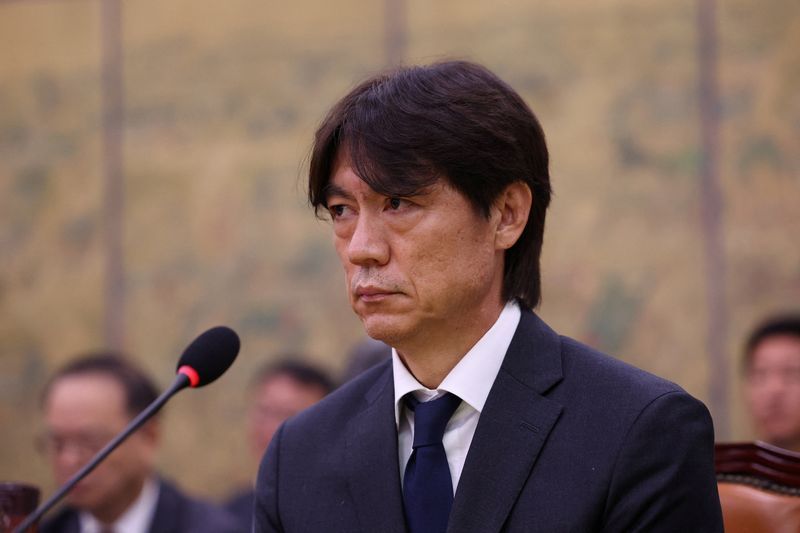
Police in Seoul descended on the Korea Football Association's headquarters Thursday to conduct a raid as investigators look into potential obstruction of business connected to the appointment of Hong Myung-bo as national team coach. Officers were acting on complaints that have shadowed the controversial hiring decision since its announcement in 2024, according to statements made to news agencies. The KFA has yet to issue a formal response regarding the operation.
Hong's return to the coaching position marked his second tenure leading the national squad, following an earlier period from 2013 to 2014. His reappointment in 2024 proved contentious from the outset, particularly regarding the process through which the KFA selected him. Rather than pursuing an extended international recruitment campaign that had already involved multiple foreign candidates under consideration, the association moved swiftly to hire Hong following what observers described as a minimal interview process.
The legitimacy of the appointment process came under intense scrutiny after South Korea's underwhelming performance at the World Cup, where the team was eliminated during the group stage. This disappointing result amplified pre-existing questions about whether the KFA had acted improperly in bypassing its established procedures. The controversy became substantial enough to warrant examination during parliamentary proceedings, where lawmakers pressed Hong about whether his hiring had received preferential treatment unavailable to other candidates.
During his appearance before parliament last month, Hong pushed back against characterisations that he had benefited from special consideration, though he acknowledged responsibility for the national team's tournament failure. His defence centred on the assertion that his appointment followed standard procedures, despite mounting evidence to the contrary from independent reviews and media investigations.
Government oversight bodies moved to address the irregularities in October 2024 when South Korea's sports ministry concluded that the KFA had violated its own internal policies during the hiring of both Hong and his predecessor Juergen Klinsmann. Ministry officials determined that a simple meeting between the KFA's technical director and Hong could not properly substitute for a formal interview process, suggesting the foundation of his appointment was procedurally flawed. Despite these findings, the ministry determined no criminal wrongdoing had occurred and declined to recommend contract termination.
The distinction between administrative violations and criminal conduct has become crucial to understanding the trajectory of this controversy. While the sports ministry identified clear breaches of protocol, such findings stopped short of establishing that laws had been broken or that officials had acted with criminal intent. This nuance has permitted Hong to remain in position even as his appointment continues attracting official attention from law enforcement authorities.
Criminal investigations into the appointment have been underway for some time, with police responding to earlier complaints that suggested improper pressure or interference had shaped the hiring decision. The Thursday raid represents an escalation in the formal investigation's intensity, shifting from preliminary inquiries to direct examination of KFA records and facilities. Such operations typically occur when investigators believe they may uncover documentary evidence relevant to their case.
The timing of the raid carries significance within Korean sports politics. Questions about governance, transparency, and accountability in sports administration have grown more prominent across the region, with Malaysia and other Southeast Asian nations grappling with similar issues regarding fairness in sports appointments and procurement. South Korea's willingness to pursue high-profile investigations into its football association may set precedents that influence how other Asian federations address similar concerns.
No criminal charges have been filed against Hong or any KFA officials to date, and investigators have made no public announcements regarding specific evidence or findings. The investigation remains at a stage where authorities are gathering information rather than making determinations about individual culpability. This distinction matters because it means Hong's standing as national coach remains unchanged despite the police action, though the cloud of investigation continues hovering over his position.
The broader context reflects ongoing tensions within Korean football regarding institutional reform and modernisation of selection processes. The KFA has faced repeated criticism over governance standards, with observers arguing that appointment procedures for coaches should be transparent, merit-based, and insulated from potential political or organisational pressure. Hong's case has crystallised these debates, forcing the association to confront questions about whether its institutional structures adequately prevent inappropriate influence.
For the national team's performance and credibility, the extended investigation creates an uncomfortable backdrop. Success on the pitch might ultimately vindicate Hong's appointment despite procedural irregularities, while continued underperformance would intensify criticism about whether the hiring process was fundamentally flawed. Either way, the KFA faces pressure to demonstrate that future appointments will follow procedures designed to ensure merit-based selection and public confidence in decision-making.
The case illustrates how sports governance controversies can become entangled with broader questions of institutional accountability and proper administration. Whether concluded as procedural mismanagement or escalated into criminal findings, the investigation will likely influence how Korean football associations approach future staffing decisions and reporting structures, with potential implications across Asian sporting organisations seeking to establish clearer governance standards.

