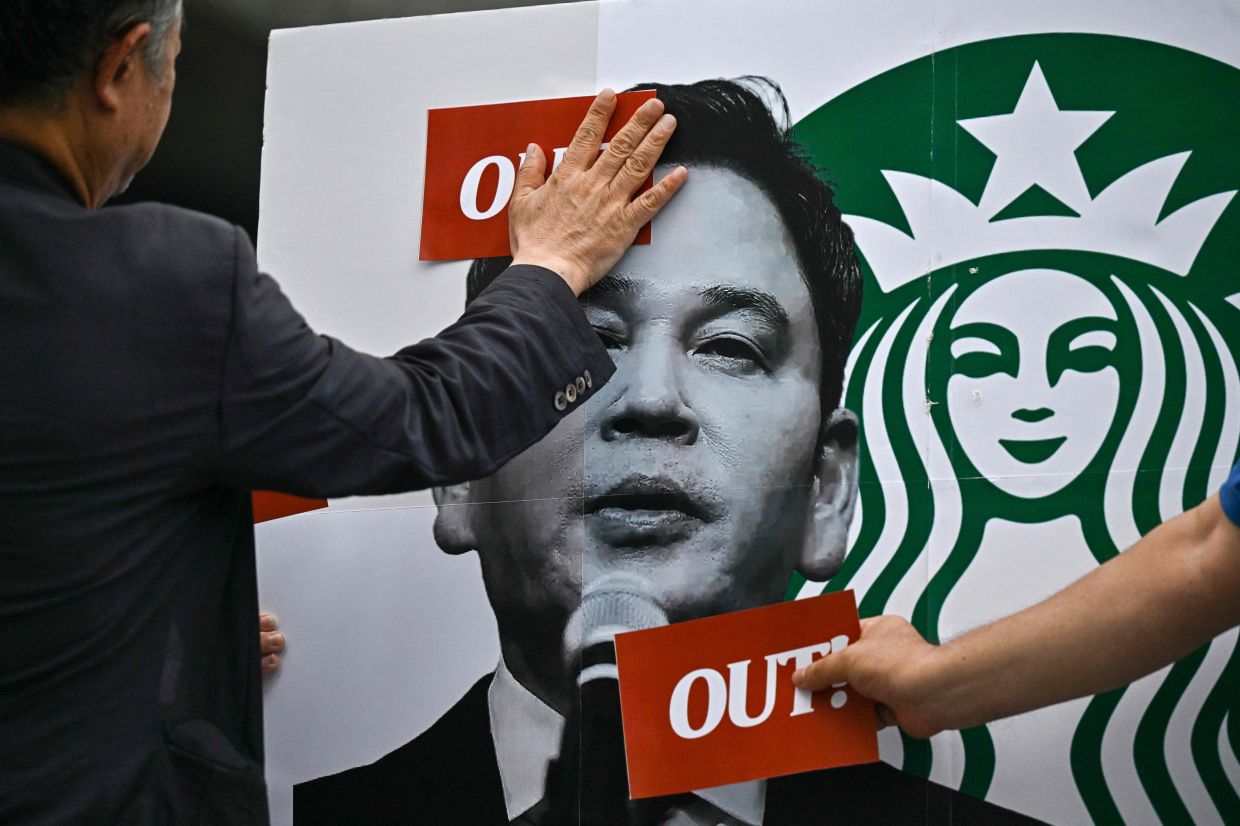
South Korean police have launched an investigation into executives at Starbucks operator Shinsegae Group following a promotional campaign that inadvertently invoked memories of one of the nation's darkest chapters. The questioning of Yang Jong-hwan, head of Shinsegae Group's audit team, marks an escalation in the fallout from what began as a routine corporate marketing initiative but transformed into a national controversy that exposed deep sensitivities around historical memory in South Korea.
The catalyst for the uproar was a campaign designated "Tank Day" featuring a reusable cup promotion scheduled for May 18, a date laden with historical significance across the nation. That date marks the anniversary of the Gwangju uprising in 1980, when military forces violently suppressed a pro-democracy demonstration, resulting in the deaths of 165 civilians according to official records, though historians and survivors' groups contend the actual toll was considerably higher. The juxtaposition of a commercial promotion with the anniversary of this tragic event immediately drew sharp criticism from civil society groups and the broader public, who viewed the campaign as deeply disrespectful to those who lost their lives.
Shinsegae Group moved swiftly to contain the damage once the backlash erupted. The company terminated its Korea chief executive immediately as the scandal broke, signalling acknowledgment of serious mismanagement. More significantly, Chung Yong-jin, the group's chairman, made a formal public apology, bowing in a gesture traditionally employed in South Korea when seeking forgiveness for grave transgressions. Despite these measures, the company's efforts at damage control proved insufficient to satisfy aggrieved parties who saw the incident as symptomatic of corporate negligence toward historical consciousness.
Civic organisations did not accept the corporate contrition as adequate resolution. A civic group filed a formal complaint against Chung and other executives, invoking the 2016 law that criminalises the dissemination of false or distorted information about the 1980 pro-democracy crackdown. This legal framework reflects South Korea's determination to protect the historical record surrounding the uprising from revisionism and trivialization. Beyond the historical law violations, the complaint also alleged defamation and insult, suggesting that the promotional blunder constituted an affront to the dignity of those commemorating the uprising.
The police investigation now underway represents the formal machinery of state becoming engaged in what ostensibly began as a marketing miscalculation. The questioning of Yang Jong-hwan as a witness indicates authorities are attempting to understand the decision-making processes that led to the campaign's approval. Shinsegae's statement that Yang was interrogated "as a witness yesterday" suggests investigators are examining the chain of accountability, determining who reviewed and authorised the promotional materials without recognising the historical implications of the chosen date.
Internal investigations by Shinsegae revealed a troubling pattern of procedural failures that permitted such an oversight to occur. The company identified negligent acts throughout the approval process, including officials signing off on the campaign's design file without conducting basic fact-checking. This systemic lapse in due diligence raises questions about corporate governance and institutional memory within one of South Korea's largest retail conglomerates, which operates over 2,000 Starbucks locations nationwide under a licensing agreement.
The ramifications for the company have extended beyond legal jeopardy. The controversy sparked organised protests in Seoul and Gwangju, the city most directly affected by the 1980 crackdown, with demonstrators expressing their outrage through public action. The commercial consequences were equally severe, with Starbucks Korea reporting a sharp decline in sales during the immediate aftermath of the scandal. For a corporation already feeling reputational damage, these economic impacts underscore how historical insensitivity in South Korea carries real business consequences.
Responding to the crisis, Starbucks has initiated mandatory historical education programmes aimed at rebuilding trust. All Starbucks stores across South Korea will close for half a day on the following Monday to permit staff to attend lessons about the Gwangju uprising and its significance to Korean national identity. The chairman of Shinsegae and other senior executives will participate in similar educational sessions two days thereafter, a step intended to demonstrate institutional commitment to understanding historical context.
The incident carries broader significance for international corporations operating in South Korea, which remains the company's third-largest market globally after the United States and China. For multinational businesses, the Starbucks case illustrates the critical importance of cultural and historical literacy when conducting operations in markets with complex and painful histories. South Korea's strong institutional commitment to commemorating and protecting historical memory means that corporate decisions touching on sensitive dates or events face elevated scrutiny.
The government has weighed in on the controversy, with President Lee Jae Myung expressing outrage at what he characterised as "inhumane and disgraceful conduct." This presidential statement signals that the matter transcends routine corporate governance and touches on national identity concerns. The formal police investigation, combined with legal complaints under the 2016 historical memory law, demonstrates how comprehensively South Korean society treats breaches of historical respect as matters warranting serious institutional response.
As the investigation proceeds and authorities determine whether criminal charges are warranted, the Starbucks incident serves as a cautionary tale about the intersection of commerce, history, and national memory. For businesses operating across Asia's diverse markets, the case underscores that local historical consciousness cannot be treated as a peripheral consideration but rather as a fundamental dimension of operational awareness that demands rigorous attention during planning and decision-making processes.