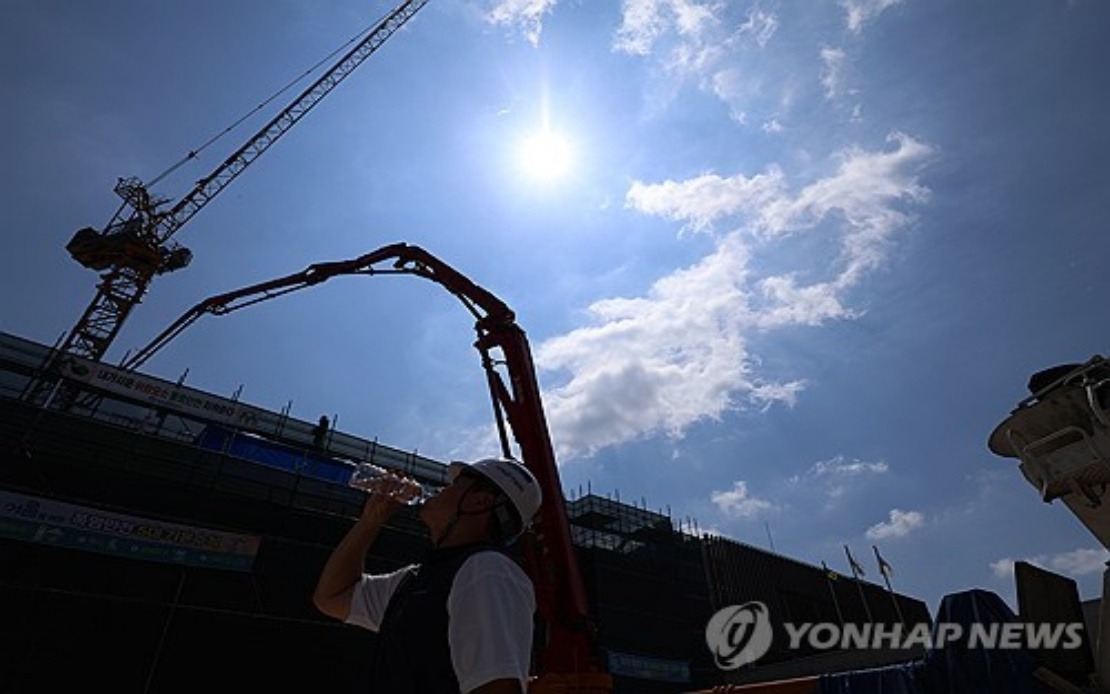
South Korea is experiencing a dangerous surge in temperatures that has pushed several southeastern cities to their highest readings on record, signalling the intensity of a heat wave expected to dominate the nation through the coming week. On Wednesday, the port city of Busan recorded 38.8°C, surpassing a 2016 peak of 37.3°C to mark the most extreme conditions since the Korea Meteorological Administration began systematic weather tracking in the city in 1904. The inland city of Yangsan, located nearby, pushed even further into dangerous territory when temperatures climbed to 40.3°C in the early afternoon, the highest measurement since data collection began there in 2008.
The string of record-breaking readings underscores how severe the current weather pattern has become across South Korea's eastern and southern regions. Yangsan had already approached critical levels on Sunday when it recorded 39.3°C, matching a benchmark previously set in 2024, but Wednesday's peak represented a significant jump that left weather officials and public health authorities concerned about the trajectory of the heat event. These measurements reflect conditions experienced on the ground rather than theoretical calculations, making the risk to public health immediate and tangible.
Meteorologists at the Korea Meteorological Administration attribute the extraordinary temperatures to a confluence of two major atmospheric pressure systems bearing down on the Korean Peninsula. The North Pacific High and the Tibetan High pressure systems are working in tandem to create a dome of heat that is effectively trapping warm air masses over the region. This dual-system dynamic is particularly formidable because it creates persistent conditions that prevent cooler air from moving into affected areas, and forecasters have warned that this pattern will likely remain entrenched through the end of the following week, suggesting extended suffering for residents and businesses throughout the country.
The intensity of the heat wave has prompted Seoul's municipal administration to escalate its alert status, with the Korea Meteorological Administration upgrading weather warnings for the capital's eastern and southwestern districts to full heat wave status rather than the less severe advisory level. This represents the second such warning issued for Seoul during the current summer season, indicating that the capital has moved beyond typical seasonal warming into territory deemed hazardous by official public health standards. A heat wave warning is triggered when the apparent temperature, which accounts for factors like humidity and wind conditions in addition to the actual air temperature, is projected to exceed 35°C for at least two consecutive days.
In central Seoul, conditions became severe enough that the apparent temperature reached 35.1°C by mid-afternoon on Wednesday, crossing the official threshold that mandates protective measures and public advisories. The Korea Meteorological Administration uses apparent temperature rather than raw thermometer readings because it better reflects the actual stress that heat places on the human body, particularly among vulnerable populations including the elderly, young children, and those with pre-existing health conditions. This metric captures the compounded effect of heat and humidity, which makes outdoor conditions more dangerous than the raw temperature alone might suggest.
Responding to the escalating health threat, Seoul's metropolitan government has activated cooling centers within local administrative offices throughout the city, keeping these facilities open continuously around the clock so that residents without adequate air conditioning can access refuge during the most dangerous hours. The city has also implemented workplace restrictions intended to reduce heat exposure during the most intense part of the day, prohibiting outdoor construction work at municipal sites between 2 and 5 pm when solar radiation is at its peak. Officials have simultaneously encouraged private construction companies to adopt similar restrictions voluntarily, though compliance cannot be mandated for enterprises outside direct municipal control.
The implications of this sustained heat event extend across multiple dimensions of South Korean society. The power grid faces intensified demand as air conditioning usage surges across residential and commercial sectors, potentially stretching electrical infrastructure. Public health systems are bracing for increased cases of heat-related illness, from heat exhaustion to heat stroke, particularly among workers in outdoor occupations and the urban poor who may lack access to adequate cooling resources. Agricultural regions in the south face risks to crop viability, with excessive heat potentially damaging harvests during critical growth phases.
For Malaysian and Southeast Asian observers, the South Korean heat wave offers a cautionary glimpse into the direction that regional climate patterns appear to be heading. While Malaysia's equatorial location has historically meant year-round warm temperatures, the intensity and persistence of events like South Korea's current heat wave suggest that even tropical nations must prepare for conditions that push beyond historical norms. The Korean response—from institutional heat warnings to emergency cooling centers—provides a model that regional governments might adapt to local contexts as extreme heat becomes an increasingly frequent challenge.
The broader climate context matters as well. The atmospheric conditions creating South Korea's heat dome reflect global weather pattern disruptions increasingly linked to climate change. The persistence of high-pressure systems and the reduced ability of traditional weather patterns to bring cooler air masses into affected regions appear more frequently in contemporary meteorological records than in historical baselines. For policymakers across Southeast Asia, the South Korean experience serves as a reminder that heat preparedness requires not just awareness of peak summer months but sustained institutional capacity to respond to extended anomalous conditions that may occur at any time.

