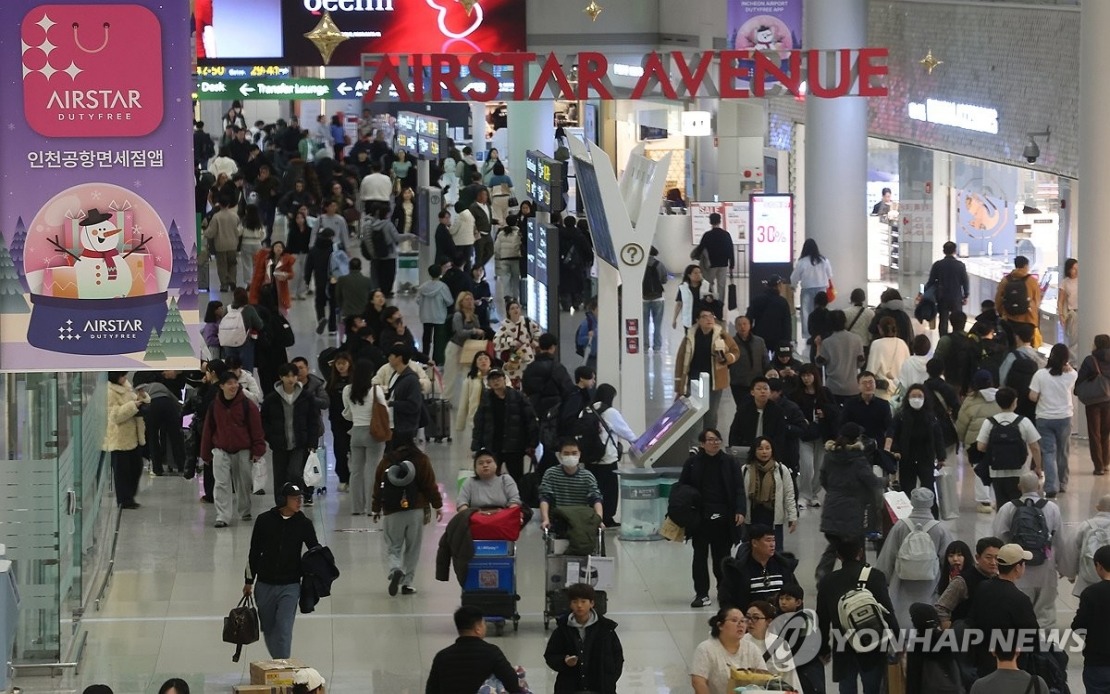
South Korea is experiencing a remarkable resurgence in international tourism, crossing the symbolic 10-million-visitor threshold roughly a month ahead of schedule. The milestone, achieved during the third weekend of June, represents a significant acceleration in recovery following pandemic-related disruptions that had suppressed travel to the Northeast Asian nation. According to the Ministry of Culture, Sports and Tourism, this marks the first instance in which the country has reached such visitor numbers within a single calendar year's opening half, positioning Seoul and other regions for what officials believe could be their strongest tourism performance on record.
The month of May provided a particularly striking snapshot of tourism momentum, with 1.95 million arrivals recorded during that period alone. This figure reflected a robust 19.4 per cent increase compared to the equivalent month the previous year, signalling sustained traveller appetite even amid global economic uncertainty and elevated fuel-related travel costs. The consistency of month-on-month growth suggests that the rebound is not merely a temporary spike but reflects structural shifts in how international visitors perceive South Korea as a destination.
Geographic diversity among visitor origins underscores South Korea's broadening appeal. Chinese nationals comprised the largest contingent in May with 560,000 arrivals, demonstrating the continued importance of regional proximity and cultural affinity. Japanese visitors followed with 360,000, while Americans numbered 210,000. This distribution reflects both South Korea's strategic position within East Asia and the sustained global interest in Korean cultural exports, from entertainment to consumer technology. For Malaysia and other Southeast Asian nations, these patterns highlight the competitive dynamics in regional tourism, particularly as neighbouring countries increasingly compete for the same markets.
Notably, tourism authorities are succeeding in dispersing visitor flows beyond concentrated urban centres. Regional airports recorded steadily climbing passenger volumes, climbing from 230,000 visitors in January to 360,000 by May. This geographic distribution indicates that provincial cities and non-Seoul attractions are capturing meaningful shares of inbound tourism, potentially reducing infrastructure strain on the capital while fostering more balanced economic benefits across the country. Such decentralisation represents a strategic tourism objective that many Southeast Asian nations, including Malaysia, have similarly prioritised.
Foreign visitor spending patterns have accelerated even more dramatically than physical arrival numbers. Card expenditures in May, encompassing both in-person and online transactions, reached 2.12 trillion won, equivalent to approximately US$1.38 billion. This exceeded the 2-trillion-won monthly threshold for the first time since systematic data collection commenced in 2018. The metric matters considerably because it reflects not merely visitor volume but their consumption intensity and length of stay, suggesting that tourists are extending their trips and spending more liberally on accommodation, dining, shopping, and entertainment experiences.
The achievement is particularly noteworthy given persistent headwinds in the operating environment. Surcharges imposed on fuel to reflect geopolitical tensions originating from the Middle East crisis have inflated airfare prices across multiple carriers serving the region. Despite these additional costs, which typically dampen price-sensitive leisure travel, inbound arrivals through May expanded 21 per cent year-on-year, indicating that demand for Korean tourism experiences has overcome price resistance. This resilience suggests that the country benefits from strong brand positioning and distinctive cultural attractions that justify premium pricing.
Kang Jung-won, heading the tourism policy office within the Ministry of Culture, Sports and Tourism, articulated the government's confidence in sustained expansion. Officials anticipate that strategic partnerships spanning entertainment sectors, particularly K-pop industries and manufacturers, will amplify the country's promotional reach. The strategy reflects recognition that Korean cultural products—music, television, film, and fashion—serve as powerful tourism marketing tools that drive visitation among demographics introduced to the country through entertainment channels. This integrated approach linking cultural exports to destination marketing represents a model that other Asian nations have attempted to replicate with varying success.
The 10-million milestone carries broader implications for South Korea's economic trajectory and regional positioning. Tourism revenues contribute meaningfully to foreign exchange generation, employment, and consumption in hospitality and retail sectors. A record-setting year would signal successful pandemic recovery and validate the government's tourism development investments. For the Malaysian tourism industry and Southeast Asian competitors, South Korea's accelerated recovery trajectory presents both benchmarks to emulate and competitive pressures to address, as the region's travellers have demonstrated willingness to travel considerable distances when destinations offer compelling cultural and entertainment propositions.
Projecting forward to year-end, several scenarios emerge plausible. If current monthly patterns persist, South Korea could feasibly welcome 15 to 16 million international arrivals annually, substantially surpassing pre-pandemic peaks. However, sustainability depends on factors including continued economic stability among key source markets, absence of new geopolitical disruptions, and consistent execution of tourism infrastructure improvements. The government's emphasis on regional dispersal and private-sector engagement suggests a forward-looking strategy aimed at institutionalising gains rather than capitalising on temporary demand surges.

