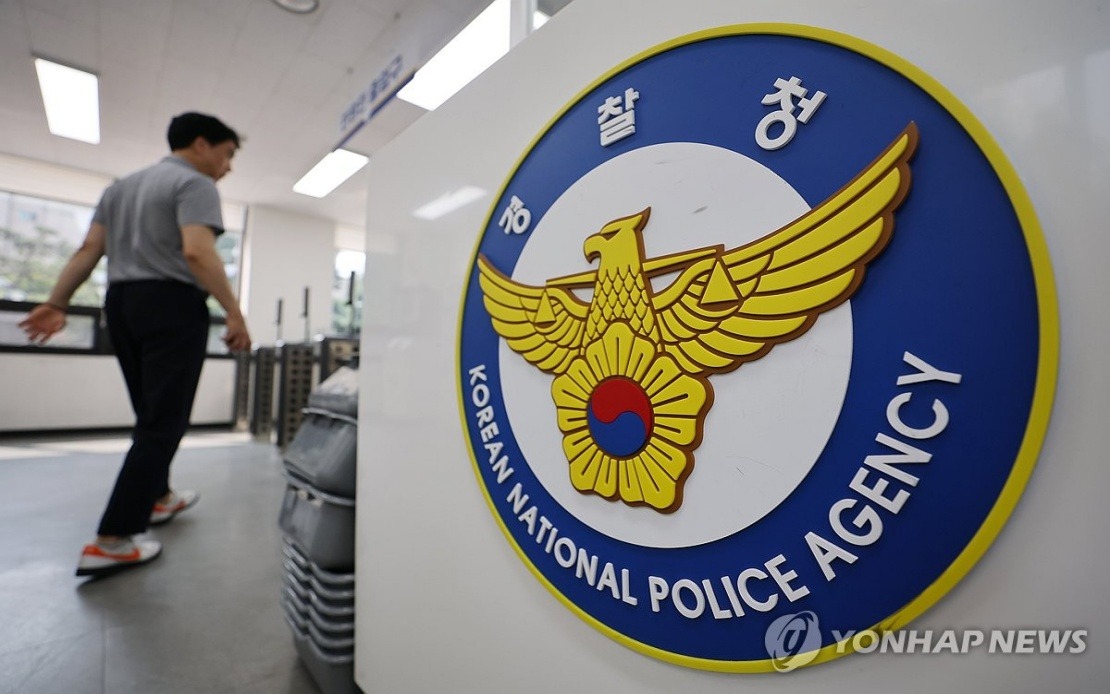
South Korea's police force has unveiled an ambitious nationwide enforcement campaign to dismantle organised crime networks and international criminal activity, signalling a significant escalation in the country's law enforcement response to rising gang-related offences. The Korean National Police Agency unveiled the initiative on Sunday, confirming that specialised operations will commence on Monday and continue through the end of October, targeting a range of sophisticated financial crimes and cross-border criminal enterprises that have increasingly involved younger perpetrators.
The enforcement drive reflects growing alarm over the diversification and modernisation of criminal operations in South Korea. Rather than concentrating solely on traditional gang violence, organised crime groups have increasingly pivoted toward financial fraud schemes, illegal lending operations, underground gambling platforms, and money laundering networks that exploit digital infrastructure. These financial crimes generate substantially higher returns than conventional criminal activities and present more complex investigative challenges for authorities, necessitating the deployment of specialised task forces and enhanced intelligence operations.
Younger offenders have become disproportionately involved in these profit-driven criminal enterprises, with individuals aged 30 and under comprising nearly two-thirds of apprehended suspects in recent operations. This demographic shift represents a notable departure from historical patterns of organised crime, suggesting that recruitment strategies and criminal enterprise models have fundamentally changed. The data indicates that among this younger cohort, fraud-related offences dominate their criminal portfolios, accounting for more than 42 percent of violations, which underscores the attraction of lower-risk, higher-reward financial crimes compared to street-level gang activities.
A critical component of the crackdown addresses the ostentatious display of illicit proceeds through social media and digital platforms. Law enforcement officials have observed that gang members increasingly flaunt wealth accumulated through criminal activity, using public displays to project power, intimidate rivals, and recruit new members. This behaviour simultaneously creates opportunities for police investigation and generates legitimate public anxiety about organised crime prevalence. The police strategy therefore includes targeting individuals who publicise criminal wealth and systematically freezing assets derived from illegal activities to disrupt criminal financing mechanisms at their source.
International dimensions of organised crime have emerged as a particularly pressing concern for South Korean authorities. Drug trafficking operations, particularly those involving synthetic substances such as ketamine, have expanded dramatically and frequently involve foreign nationals operating within the country. The police agency has committed to intensifying intelligence gathering within foreign communities and their associated work environments, as well as monitoring entertainment districts where international criminal networks frequently operate. This geographical and demographic focus reflects the reality that cross-border criminal enterprises often establish operational bases in concentrated foreign communities where language barriers and visa complexities complicate enforcement efforts.
Statistical evidence confirms the urgency driving this enforcement initiative. During a four-month period spanning March through June, police apprehended 1,185 gang members and formally arrested 225 individuals, representing substantial increases of 9.7 percent and 48.3 percent respectively compared to the previous comparable period. The surge in criminal activity extends beyond domestic organised crime to encompass international dimensions; foreign nationals booked by police during the first half of the year reached 18,130, reflecting a 9.1 percent increase from the corresponding period twelve months prior. Drug-related offences demonstrated even more alarming growth, surging by 29 percent year-over-year, indicating that synthetic drug trafficking has become an increasingly significant criminal enterprise requiring dedicated enforcement resources.
For Southeast Asian observers, including Malaysian policymakers and law enforcement officials, the South Korean operation carries important implications regarding emerging criminal trends in the region. The modernisation and financialisation of organised crime observed in Seoul likely mirrors developments occurring across other East and Southeast Asian jurisdictions. The emphasis on digital fraud, online gambling, and money laundering reflects a broader criminal adaptation to technological change and globalised financial systems that transcend national borders and complicate detection and prosecution. Malaysian authorities monitoring regional organised crime patterns may find valuable operational insights in South Korea's targeting strategies and intelligence methodologies.
The crackdown also addresses a structural challenge that extends throughout developed Asian economies: the relative youth of offender populations and their sophistication in exploiting financial systems. Young offenders often possess greater digital literacy and understanding of cryptocurrency and blockchain technologies than older crime bosses, enabling novel money laundering mechanisms that traditional law enforcement frameworks struggle to address. The South Korean police approach of combining conventional investigation with enhanced intelligence gathering and asset freezing represents a comprehensive strategy applicable to regional law enforcement cooperation frameworks.
Coordination among South Korean agencies will prove essential to the operation's success. The police agency emphasised partnership with relevant government departments and intelligence services, recognising that financial crimes and international trafficking require expertise beyond traditional police investigation. Banks and financial institutions must be mobilised to identify suspicious transactions and report unusual account activity. Immigration and customs authorities require integration into the enforcement effort to monitor border crossings and international money transfers associated with criminal proceeds. This whole-of-government approach acknowledges that compartmentalised enforcement produces suboptimal results when confronting sophisticated criminal enterprises operating across jurisdictional boundaries.
The operation's four-month timeframe also carries strategic significance. Rather than announcing an open-ended campaign, the police agency has established a defined period enabling concentrated resource deployment and intensive operational tempo. This bounded approach facilitates subsequent evaluation of effectiveness and identification of lessons applicable to future enforcement strategies. The October 31 conclusion date permits assessment of arrest statistics, asset recoveries, and dismantled criminal networks before planning subsequent phases of enforcement activity. Such structured, evidence-based enforcement reflects contemporary best practices in organised crime suppression emphasising measurable outcomes and periodic strategic recalibration.
Looking forward, the success of South Korea's crackdown will likely influence regional security discussions and bilateral law enforcement cooperation initiatives throughout East and Southeast Asia. Criminal networks spanning multiple jurisdictions require coordinated international responses, and operational lessons gained from intensive domestic enforcement operations inform the design of transnational enforcement mechanisms. Malaysian law enforcement and regional security officials should monitor the operation's progress and outcomes to identify applicable strategies for addressing similar criminal phenomena within Malaysian territory and broader Southeast Asian contexts.

