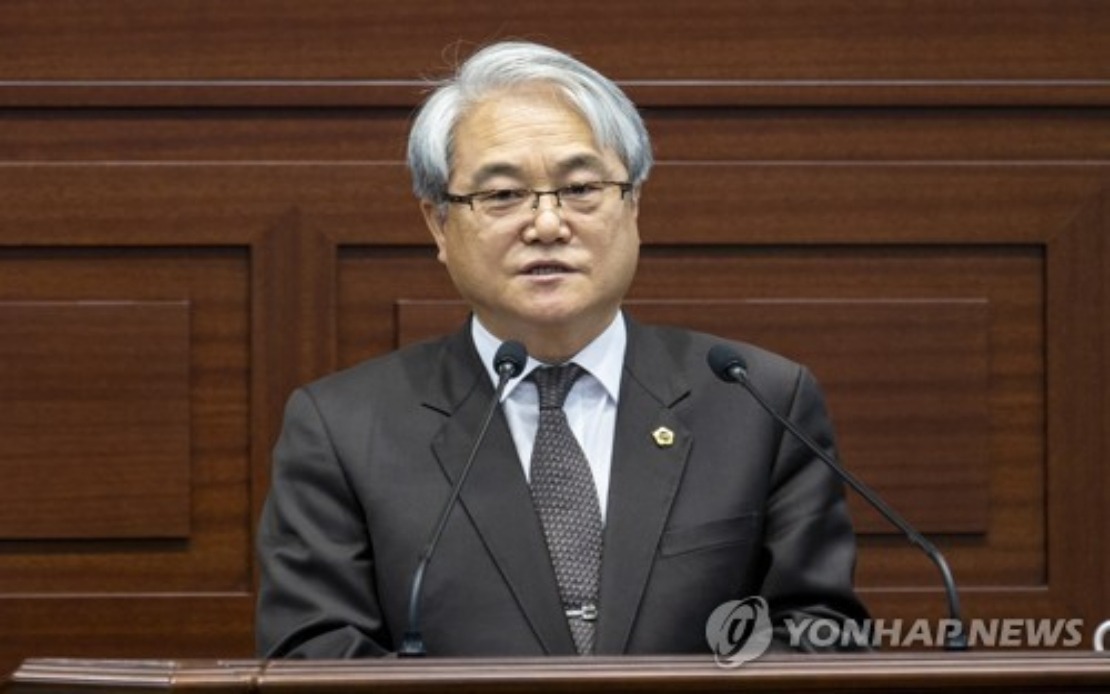
A former chief administrator of Cheongdo County in southeastern South Korea has been discovered dead on a mountainside, marking a grim conclusion to a sprawling corruption investigation that had ensnared the official in multiple criminal allegations. Kim Ha-soo was found Monday morning by rescue workers at approximately 7 a.m., with police noting the presence of what appeared to be a handwritten note at the scene, though authorities have refrained from releasing specifics about the document's contents or circumstances surrounding the discovery.
The discovery brings a tragic end to what had become an increasingly complex legal predicament for Kim, whose tenure as county chief from 2022 through earlier this year had come under intense scrutiny. Prosecutors had been building a case alleging that Kim had unlawfully solicited and accepted financial payments from government employees in his jurisdiction in exchange for securing promotions and career advancement opportunities. The scheme, if proven, would have represented a serious breach of public trust and administrative ethics that Korea's prosecution service had begun treating as a priority matter.
The network of alleged misconduct extended beyond Kim himself, demonstrating how such corruption typically involves multiple participants and beneficiaries. A man believed to have served as an intermediary in delivering bribes on Kim's behalf had already been found dead before Kim's discovery, suggesting the investigation had already claimed at least one life and potentially was creating significant pressure on those ensnared in its scope. The death of the alleged bribe courier may have intensified legal jeopardy facing Kim, who would have known that his co-conspirators could become vulnerable to prosecutorial pressure and potential cooperation with investigators.
Separately troubling the former official's legal standing was a separate referral to prosecutors concerning an alleged home invasion incident. In January of this year, Kim faced accusations of forcibly entering the residence of a nursing home director, an incident that suggested a pattern of aggressive or threatening behaviour extending beyond his official duties. This allegation, treated as a distinct matter from the bribery charges, added another layer of criminal exposure and painted a portrait of an official whose conduct had deteriorated significantly from acceptable standards of public service.
The case of Kim Ha-soo reflects broader concerns about institutional integrity within South Korea's local government structures. County-level administrators wield considerable discretionary authority over personnel decisions, budget allocations, and regulatory enforcement—powers that create obvious temptations for corruption when oversight mechanisms prove insufficient or when officials calculate that the personal financial benefits outweigh legal risks. The investigation into Kim's tenure likely prompted deeper examination of Cheongdo County's administrative practices and personnel management systems more broadly.
From a Southeast Asian perspective, South Korea's approach to investigating and prosecuting high-level corruption, despite its imperfect execution, demonstrates institutional frameworks that many regional neighbours aspire toward. The willingness of prosecutors to pursue sitting or recently departed officials, and the capacity to do so through formal investigative procedures, represents a standard that continues to challenge several economies in the region where political connections often insulate officials from legal accountability. Yet the tragic outcome in Kim's case also underscores the profound personal and psychological costs that corruption investigations can exact on subjects and their associates.
The circumstances of Kim's death—discovered on a mountainside with an apparent note—suggest he may have taken his own life amid the mounting legal pressures. In South Korea, such outcomes, while not commonplace, have occurred periodically among public figures facing serious corruption accusations. The psychological burden of public exposure, professional disgrace, and the prospect of imprisonment can become overwhelming, particularly in a society where shame and loss of face carry significant cultural weight. The phenomenon raises difficult questions about whether investigative processes adequately account for human vulnerability even while pursuing legitimate accountability objectives.
Christol authorities' careful handling of the investigation's details suggests sensitivity to how such cases are publicly communicated and the potential ripple effects on other investigations or ongoing prosecutions. The decision not to disclose the content of the note found with Kim's body reflects established protocol protecting sensitive investigative information, though it also leaves open questions about what precipitated the final crisis that led to his death on the mountainside.
The broader implications for South Korean governance and the country's sustained anti-corruption efforts remain to be fully assessed. While individual cases of official malfeasance receive public attention and prosecution, the systemic conditions enabling corruption—including inadequate transparency, weak institutional checks, or cultural normalization of informal financial relationships—require sustained institutional reform. Kim's case, tragic as it is, may yet serve as an impetus for strengthened safeguards and more rigorous oversight mechanisms within county and municipal administrations throughout South Korea.

