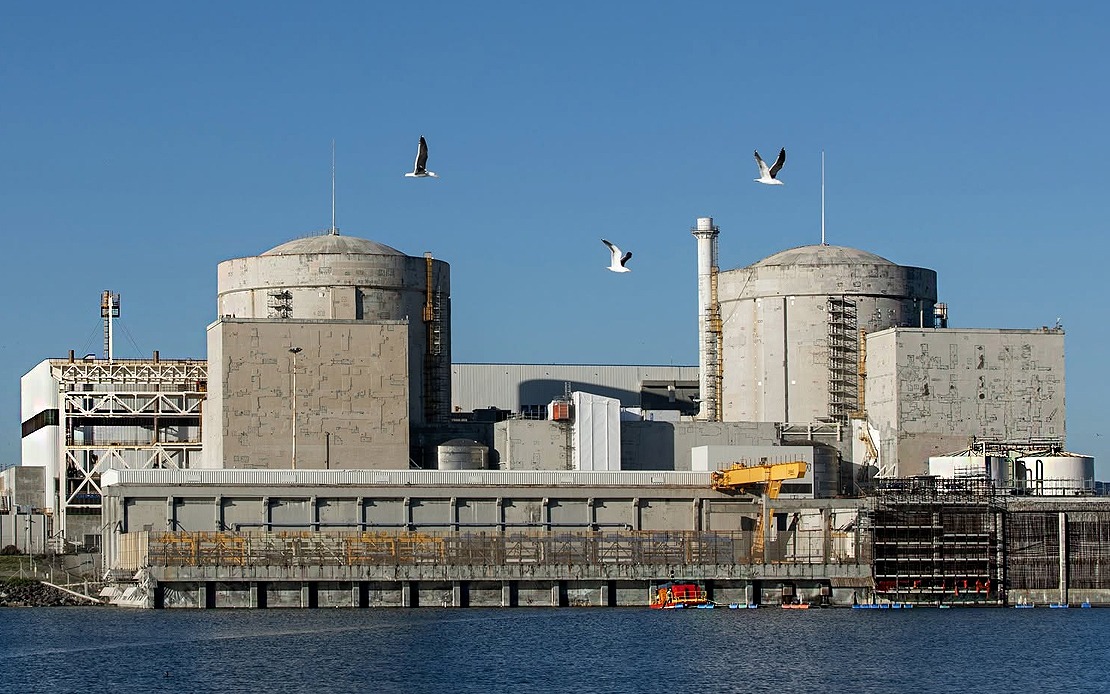
South Africa's government has confirmed that workers at the Koeberg Nuclear Power Station, situated approximately 30 kilometres north of Cape Town, were exposed to radiation during the course of routine maintenance operations spanning three separate incidents. Energy Minister Kgosientsho Ramokgopa disclosed the exposures to journalists during a media briefing on Sunday, addressing what could have become a significant public concern over nuclear safety in the country. The three incidents transpired on June 30, July 2, and July 7, each occurring as the plant underwent scheduled maintenance work.
According to Ramokgopa's statement, the underlying cause of these radiation exposure events traced back to a temporary disruption in the facility's electrical supply, which subsequently compromised the operational integrity of the plant's ventilation systems. When ventilation systems fail at nuclear facilities, internal atmospheric controls that normally contain and manage radioactive particles become compromised, potentially exposing workers in proximity to radioactive material. The minister assured the public that the radiation doses absorbed by affected workers remained well below dangerous thresholds, comparing the exposure levels to the radiation received during a conventional dental X-ray examination—a point designed to contextualise the incident for public understanding.
Velaphi Ntuli, who heads South Africa's nuclear safety regulatory division, further reassured stakeholders by stating that none of these three incidents met the formal criteria for classification as reportable nuclear safety events under the country's regulatory framework. This classification carries significance in the nuclear industry, as reportable events typically trigger mandatory public disclosure protocols and heightened scrutiny from international nuclear watchdogs. The official position that no environmental contamination occurred and that nearby communities faced no measurable danger formed the cornerstone of government communications surrounding the incident, though such assurances often require time to build public confidence.
The Koeberg plant represents a critical infrastructure asset within South Africa's energy architecture, particularly as the nation grapples with an ongoing electricity crisis that has devastated economic productivity and daily life. For nearly a decade, South Africa has endured persistent rolling blackouts caused by ageing coal-fired power stations and insufficient generation capacity, forcing businesses to operate under load-shedding schedules and prompting widespread calls for energy diversification. In this context, the government views nuclear expansion not as an optional luxury but as a necessity for national energy security and economic recovery.
Government planning documents reveal ambitious nuclear ambitions: South Africa intends to add 5.2 gigawatts of nuclear generating capacity by 2039, a substantial expansion that would meaningfully alter the nation's energy production profile. This expansion strategy, however, encounters persistent resistance from environmental advocates and civil society groups concerned about radiation safety, long-term radioactive waste storage, and the opportunity costs of investing billions in nuclear infrastructure when renewable energy alternatives continue declining in cost. The radiation incidents at Koeberg, regardless of their official severity classification, inevitably reinforce such public anxieties and may intensify political pressure on the government to justify further nuclear investment.
South Africa's electricity generation matrix has remained stubbornly dependent on coal for decades, with state-owned utility Eskom operating multiple aging coal stations whose continued reliability appears increasingly questionable. The government's comprehensive energy transition strategy envisions a fundamental restructuring of this dependency, targeting a predominantly fossil-fuel-free electricity system by 2050. Nuclear power features prominently within this decarbonisation roadmap, positioned alongside renewable sources including solar and wind, hydroelectric capacity, and emerging storage technologies. However, the practical political and financial feasibility of simultaneously decommissioning coal plants while expanding nuclear capacity remains contested territory among energy experts and policymakers.
For Malaysian observers, the South African situation offers instructive parallels and contrasts. Malaysia similarly confronts energy security challenges and has long maintained a nuclear energy option within its strategic policy discussions, though domestic political consensus around nuclear expansion has remained elusive. The Koeberg incidents underscore the persistent public perception challenge facing nuclear operators globally: even minor, well-contained incidents generate significant media attention and public concern, whereas equivalent incidents at thermal or hydroelectric facilities would pass with minimal notice. This asymmetry in public perception creates a reputational tax on nuclear expansion programmes that purely technical risk assessments cannot overcome.
The timing of these disclosures carries additional weight given South Africa's complex political environment and the government's credibility challenges on energy policy implementation. Previous ambitious electricity expansion plans have repeatedly faced delays, cost overruns, and technical failures, creating legitimate scepticism among both investors and the public regarding government capacity to deliver on nuclear commitments. The Koeberg incidents, while officially characterised as minor and contained, may influence legislative discussions around approving and financing the planned 5.2 gigawatt expansion, particularly as opposition political parties scrutinise government competence in managing critical infrastructure.
Regional energy dynamics across southern Africa also merit consideration, as several neighbouring countries increasingly view nuclear power and renewable alternatives as complementary rather than competitive pathways toward energy security. South Africa's nuclear programme exists within a regional context where energy cooperation, electricity trading across borders, and shared investment in generation capacity have become strategic imperatives. The credibility and safety record of South Africa's nuclear operator thus holds implications extending beyond national boundaries.
Looking forward, South Africa faces a critical juncture in reconciling ambitious climate commitments with pressing electricity shortages and the public anxieties surrounding nuclear safety. The government's ability to communicate transparently about incidents like those at Koeberg, while simultaneously maintaining public confidence in nuclear operations, will significantly influence the feasibility of achieving its energy transition targets. Regulatory bodies like Ntuli's division will likely face intensified scrutiny and calls for enhanced independent oversight as expansion plans advance, reflecting a broader global tension between the promise of nuclear power as a low-carbon energy source and persistent public apprehension about radiological risks.

